Jaisalmer Village Life
Overview
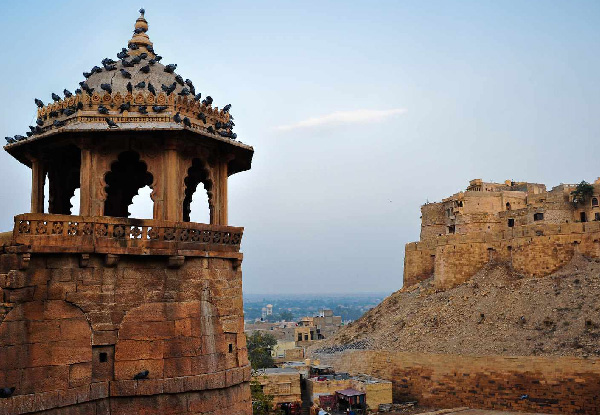
Beyond the golden fort walls and sweeping sand dunes lies another world that defines the true identity of western Rajasthan. The real essence of the desert is not only found in safaris or camps but in the quiet resilience of its villages. Jaisalmer Village Life offers a powerful glimpse into a way of living shaped by climate, culture, and centuries of adaptation.
While travelers often admire forts and sunsets, stepping into a Thar Desert Village Rajasthan reveals something deeper — simplicity, sustainability, and strong community bonds. Here, life unfolds slowly, guided by tradition rather than modern urgency.
An Authentic Village Experience Jaisalmer is not a staged attraction. It is an invitation to witness rural desert life as it truly exists.
Journey Towards the Desert Villages
Reaching rural settlements outside Jaisalmer often begins with a scenic drive across open desert stretches. Gradually, paved roads give way to sandy trails leading toward remote communities. A Desert Village Safari becomes more than transportation; it transforms into a transition between two worlds.
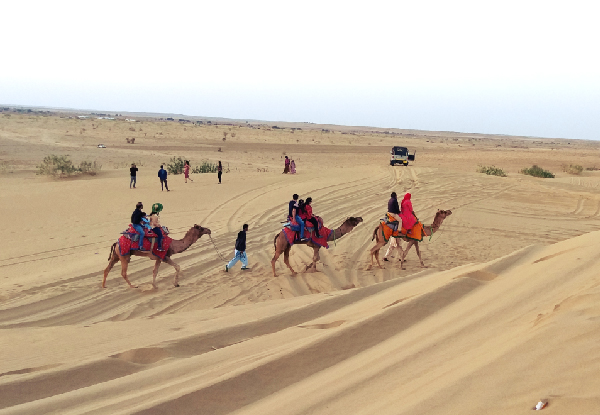
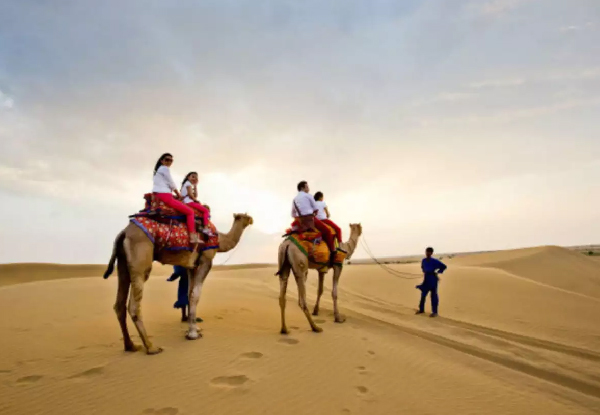
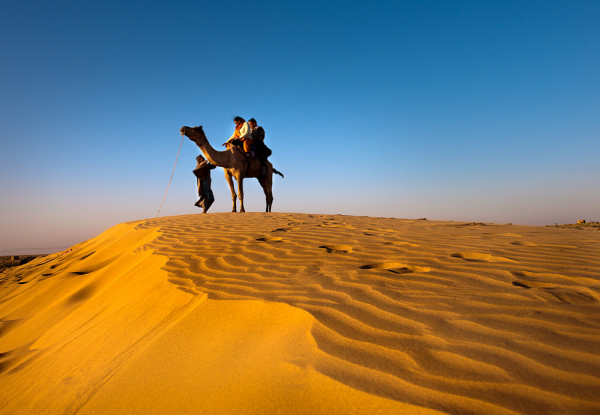
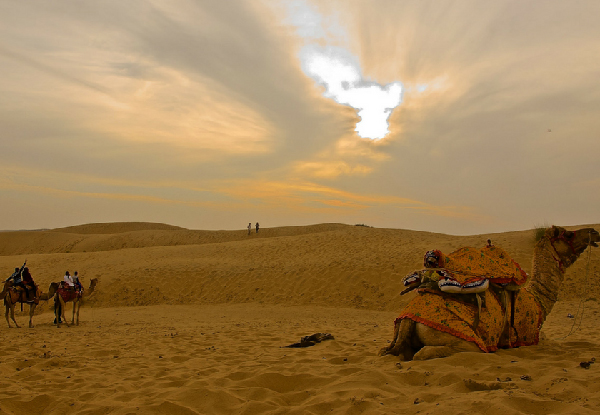
Some villages are accessed through jeep routes, while deeper interiors may require short camel rides. The landscape shifts from expansive dunes to clusters of mud homes arranged in circular formations. This gradual change in scenery builds anticipation for what lies ahead.
The quiet atmosphere of Rural Life in Jaisalmer feels noticeably different from city energy.
Village Life in Jaisalmer
Jaisalmer village life reflects the true essence of Rajasthan’s desert culture, where people live in harmony with nature and traditions.
Architecture of Survival – Traditional Desert Homes
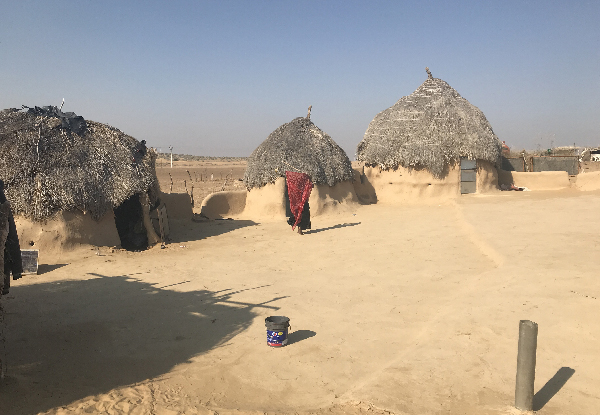
One of the first striking visuals in a Thar Desert Village Rajasthan is the distinctive architecture. Houses, locally known as dhanis, are often circular huts built using mud, clay, cow dung, and natural fibers.
These structures are not primitive — they are climate-engineered. Thick mud walls insulate against extreme heat during the day and retain warmth during cold desert nights. Thatched roofs are designed to withstand strong winds and sandstorms.
This Traditional Rajasthani Village Lifestyle demonstrates how local communities have mastered sustainable construction long before modern eco-architecture became popular.
Water, Wells and Resource Management
Water is the most precious resource in desert villages. Many settlements depend on shared wells or traditional water harvesting systems. Women often walk considerable distances to collect water, balancing metal pots gracefully on their heads.
The community well becomes more than a water source — it is a social gathering point. Conversations, shared stories, and daily interactions revolve around it.
Understanding water conservation methods during a Village Tour Jaisalmer reveals how desert communities survive in extreme conditions with minimal waste.
Daily Life and Self-Sustained Living
The rhythm of Jaisalmer Village Life is deeply connected to nature. Unlike cities governed by clocks and deadlines, life in a Thar Desert Village Rajasthan begins with the first light of sunrise and slowly winds down after sunset. The morning starts with livestock care, cleaning courtyards, and preparing traditional meals cooked over clay stoves. Every activity is aligned with the desert climate.
Most families rely on small-scale agriculture, animal husbandry, and handmade crafts for their livelihood. Goats, cows, camels, and hens are not merely animals; they are vital economic pillars of rural households. Camels assist in transport and farming tasks, cows provide milk, and goats contribute to dairy and trade. These integrated systems form the backbone of Rural Life in Jaisalmer.
Vegetables are grown wherever soil and limited water allow cultivation. Pearl millet, pulses, and seasonal greens dominate agricultural patterns. Fresh milk, homemade butter, and buttermilk form essential parts of daily nutrition. The lifestyle reflects remarkable self-sufficiency, with minimal reliance on outside markets. Observing this Eco Friendly Desert Living reveals sustainability in its most organic form — not as a trend, but as necessity perfected over generations.
Traditional Attire and Cultural Identity
In the villages surrounding Jaisalmer, clothing is more than fabric — it is identity, heritage, and social symbolism. Women continue to wear vibrant ghagras decorated with mirror work, intricate embroidery, and bold color combinations that contrast beautifully against the muted desert backdrop. Their odhnis, often draped gracefully over the head, represent modesty and tradition.
Heavy silver jewelry such as bangles, anklets, and necklaces is worn daily, not reserved for special occasions. These ornaments reflect regional craftsmanship and hold cultural meaning passed down through generations. This strong adherence to dress tradition preserves the authenticity of Traditional Rajasthani Village Lifestyle.
Men commonly wear white dhotis or kurta-pajamas paired with colorful turbans. The turban, known locally as pagdi, carries deep cultural importance. Its color, tying style, and fabric often indicate region, community, or even social standing. Witnessing villagers proudly maintaining traditional attire in modern times highlights how cultural pride continues to define Jaisalmer Village Life.
Bishnoi Village Tour – Guardians of Nature
A visit to a Bishnoi settlement offers one of the most powerful insights into desert conservation ethics. A Bishnoi Village Tour near Jaisalmer reveals a community whose values are centered on protecting wildlife and preserving trees. Their spiritual philosophy emphasizes harmony between humans and nature.
For centuries, the Bishnoi people have safeguarded desert ecosystems, often risking their lives to prevent tree cutting or poaching. Their villages demonstrate remarkable ecological awareness. Animals roam freely without fear, and trees are treated with reverence.
Interacting with Bishnoi families during an Authentic Village Experience Jaisalmer allows travelers to understand how cultural beliefs can shape environmental responsibility. This interaction transforms tourism into education, revealing sustainability as a lived philosophy rather than a modern concept.
Camel as Lifeline in Desert Villages
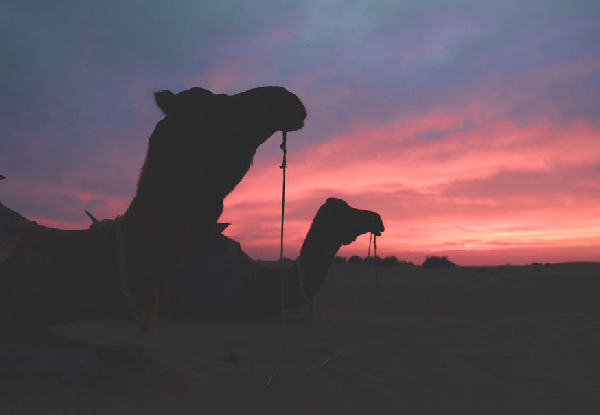
In remote desert settlements, camels remain indispensable. Known as the “ship of the desert,” camels assist in transportation, agriculture, and even social events. Despite modernization in nearby towns, camel dependency continues in deeper rural pockets of Thar Desert Villages Rajasthan.
Observing camel care practices during a Desert Village Safari shows how villagers maintain strong bonds with these animals. Feeding, grooming, and resting routines are handled with care and knowledge passed through generations.
Camels are not merely working animals; they are companions in survival. Their ability to endure harsh conditions mirrors the resilience of desert communities themselves.
Electricity and Modern Influence
Modern facilities have slowly reached certain villages, yet the transformation remains gradual. Electricity is available in many areas but may be inconsistent. Kerosene lamps and solar lanterns are still commonly used when power supply fluctuates.
Mobile phones and connectivity have begun to reshape communication patterns, particularly among youth. Younger villagers often travel to towns for education or employment, bringing new perspectives back home.
This coexistence of old and new defines the evolving face of Rural Life in Jaisalmer. Despite gradual modernization, traditions, rituals, and family structures remain deeply respected.
Interaction and Storytelling
One of the most enriching aspects of a Jaisalmer Village Experience is sitting with elders and listening to their stories. Village elders often recount memories of drought years, migration journeys, and survival challenges in the harsh desert environment.
Their narratives include tales of sandstorms, livestock protection, and water scarcity. These conversations reveal how deeply connected villagers are to the land. Storytelling remains an oral tradition that preserves history beyond written records.
For travelers, these interactions shift the perspective from sightseeing to understanding. Personal conversations add emotional layers to the overall Authentic Village Experience Jaisalmer.
Village Craft and Handmade Art
Artistic skill thrives even in remote desert settlements. Many families specialize in embroidery, weaving, leatherwork, or pottery. Handmade textiles feature geometric patterns and mirror embellishments crafted patiently by hand.
Each design carries cultural symbolism and regional identity. Purchasing these crafts directly from artisans supports sustainable income while preserving traditional skills.
Craft interaction becomes an integral part of a meaningful Desert Village Safari, allowing visitors to witness creativity rooted in daily life rather than commercial production.
Community Bond and Social Structure
Village life in Jaisalmer revolves around cooperation and collective responsibility. Families assist one another in agricultural tasks, construction, and celebrations. Weddings, festivals, and religious events strengthen communal bonds.
This strong social structure ensures support during difficult times. Shared responsibilities create resilience in harsh desert conditions. The sense of belonging contrasts with urban individualism.
Experiencing this close-knit structure during a Jaisalmer Village Tour offers insight into the emotional foundation of rural communities.
Experience Authentic Village Life in Jaisalmer
Jaisalmer’s village life offers a glimpse into the traditional lifestyle of Rajasthan’s desert communities.
Youth and Changing Aspirations
While elders preserve traditional knowledge, younger villagers increasingly seek opportunities in nearby towns and cities. Education and exposure to modern lifestyles bring aspiration for improved facilities and financial stability.
Yet many youth maintain pride in their heritage. They aim to balance progress with preservation, ensuring that traditions are not lost in transition.
This evolving dynamic shapes the future of Thar Desert Villages Rajasthan, reflecting adaptation without complete abandonment of identity.
Environmental Awareness and Sustainable Living
Desert villagers demonstrate natural environmental consciousness. Waste generation is minimal, and reuse of materials is common practice. Animal waste is used as fuel or fertilizer, and mud construction minimizes environmental impact.
Dependence on local produce reduces carbon footprint. Water conservation techniques are integrated into daily routines. Observing this Eco Friendly Desert Living reveals sustainability driven by necessity rather than policy.
Why Village Life Defines the True Desert Experience
While dunes, safaris, and camps create visual appeal, villages reveal the human essence of the desert. The simplicity, resilience, and dignity of rural communities add authenticity to any Jaisalmer Village Tour.
Travelers return with deeper understanding rather than superficial impressions. They carry memories of conversations, shared smiles, and lived traditions.
The experience of Jaisalmer Village Life offers a rare opportunity to witness a part of India that remains profoundly connected to heritage. In climate-shaped mud homes, beside community wells, among people who prioritize simplicity over excess, the desert speaks honestly.
This journey into rural Rajasthan transforms observation into appreciation and travel into awareness.