Kuldhara Village In Jaisalmer
Overview
Kuldhara Village in Jaisalmer: Haunted History, Legends and Travel Guide
Hidden within the vast golden stretches of the Thar Desert lies a village frozen in time. Crumbling walls, abandoned homes, silent pathways, and an unsettling stillness define Kuldhara Village in Jaisalmer. Often referred to as one of the most mysterious destinations in Rajasthan, this deserted settlement continues to fascinate travelers, historians, and paranormal enthusiasts alike.
Located just outside Jaisalmer city, Kuldhara is not merely a haunted site — it is a place layered with history, political conflict, migration, folklore, and unanswered questions. Whether you approach it as a historical ruin or a mysterious legend, the experience leaves a lasting impression.
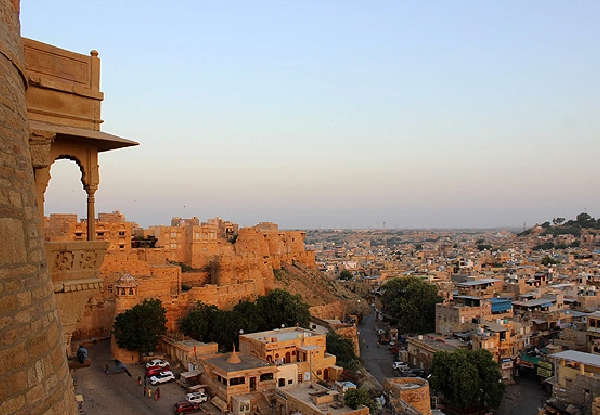
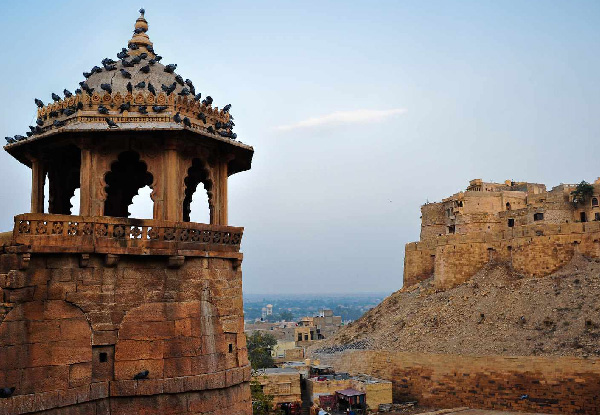
For anyone planning a Jaisalmer Sightseeing Tour, a visit to this abandoned village offers a compelling excursion into Rajasthan’s darker and more mysterious past.
The Historical Roots of Kuldhara Village
The story of Kuldhara Village Jaisalmer begins not with mystery, but with prosperity. Centuries ago, this settlement was home to the Paliwal Brahmins, a highly educated and resourceful community respected for their intelligence, administrative capability, and agricultural expertise. Historical references suggest that the Paliwals were among the most progressive desert communities of their time.
What made them remarkable was their mastery over desert survival. Living in an arid environment where rainfall was scarce and unpredictable, they developed advanced irrigation and water conservation systems that allowed them to cultivate crops successfully. They engineered small reservoirs, step-wells, and underground water channels that collected and preserved rainwater. These systems were so efficient that even modern researchers acknowledge their innovation.
The planning of the village itself reflects a sophisticated social structure. The streets were systematically laid out, homes were built in organized clusters, and community spaces were clearly defined. The architecture indicates that Kuldhara was not a random settlement but a carefully designed habitat adapted to desert conditions.
Even today, when walking through the ruins, visitors can observe remnants of these structured pathways, temple foundations, and residential courtyards. The thick stone walls and symmetrical layouts suggest stability and prosperity. The remains of temples hint at an active spiritual life, while the open courtyards reveal how families once gathered in shared spaces.
The silent stones tell a story of a community that once thrived in one of the harshest landscapes of India. Before it became associated with ghostly legends, Kuldhara was a symbol of desert resilience and intelligent adaptation.
The Mysterious Abandoned Village
Kuldhara Village, located near Jaisalmer, is one of the most mysterious and historic abandoned villages in Rajasthan.
The Legend of Salim Singh
The most widely narrated story connected with Kuldhara Haunted Village centers around Salim Singh, the diwan of Jaisalmer during that era. According to local folklore, Salim Singh was known for his arrogance and oppressive governance. His ambition and misuse of power reportedly instilled fear among surrounding villages.
The legend states that Salim Singh became obsessed with the daughter of a village chief from Kuldhara. Determined to marry her, he issued an ultimatum to the villagers. If they refused his demand, he would impose unbearable taxes and use his authority to harass the entire community.
Faced with dishonor and exploitation, the Paliwal Brahmins chose unity over submission. Rather than allowing one family to suffer injustice, the entire community reportedly decided to abandon the village overnight. It is believed that not just Kuldhara, but several neighboring villages were emptied simultaneously.
The dramatic part of the legend suggests that before leaving, the villagers cursed the land so that no one would ever be able to settle there again. Since that night, according to folklore, the village has remained deserted.
Whether fully factual or partly mythologized over generations, this narrative continues to dominate discussions about the sudden abandonment. The emotional depth of the story — involving honor, sacrifice, and collective resistance — adds powerful symbolism to the ruins that stand today.
Other Theories Behind the Abandonment
While the tale of Salim Singh is deeply embedded in local storytelling, historians have explored alternative explanations for the desertion of Kuldhara.
One plausible theory suggests severe water scarcity as a primary cause. Despite their advanced water systems, prolonged drought cycles could have made survival increasingly difficult. In a desert environment, even slight climatic shifts can drastically affect agricultural output and living conditions.
Another hypothesis proposes environmental disturbances such as earthquakes or geological changes. Structural damage combined with declining water resources might have forced migration over time.
Economic decline and shifting trade routes may also have played a role. If regional commerce weakened or political instability disrupted security, the Paliwal community might have sought more favorable conditions elsewhere.
Some scholars argue that the abandonment may not have occurred in a single night but gradually over years. However, the absence of detailed historical documentation has left gaps in evidence, allowing folklore to overshadow academic reasoning.
The unanswered questions surrounding Kuldhara Village Jaisalmer have strengthened its aura of mystery. Without definitive proof, imagination fills the void.
Why Is Kuldhara Considered Haunted?
As decades passed and the ruins remained untouched, stories of paranormal occurrences began to circulate. Locals started sharing accounts of strange experiences within the deserted village.
Visitors have claimed to hear unexplained sounds, whispers carried by the wind, or footsteps echoing in empty lanes. Some report a sudden drop in temperature while walking through certain sections. Others describe a feeling of being observed, even when alone.
Although no scientific study has confirmed supernatural presence, the psychological impact of the setting is undeniable. The abandoned houses, broken doorways, and isolated silence create an atmosphere that feels heavy and intense — particularly during late afternoon hours when shadows grow longer.
The Rajasthan government has preserved Kuldhara as a protected heritage site, recognizing both its historical significance and tourist appeal. Entry is permitted during designated daylight hours, but visitors are required to leave before sunset. The restriction after dark only deepens its reputation as a Kuldhara Haunted Excursion.
This fusion of tragic legend, abandoned architecture, and desert isolation has elevated Kuldhara into one of the most intriguing destinations near Jaisalmer.
Exploring the Ruins of Kuldhara
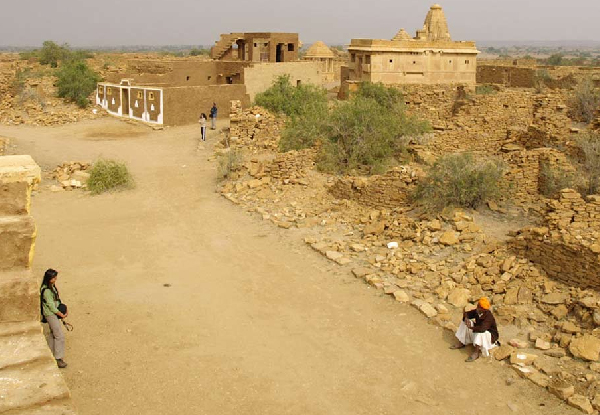
Walking through Kuldhara feels like stepping into a paused timeline. Rows of collapsed houses stretch across sandy terrain, their roofless structures exposed to open skies. The layout of the village remains surprisingly intact, with narrow lanes connecting clusters of homes.
Fragments of temple structures still stand, reminding visitors of the spiritual and communal life that once existed here. The carved doorframes and stone walls hint at craftsmanship that has endured centuries of desert winds.
As you wander through the ruins, it becomes easy to imagine the daily rhythm of life that once filled these spaces. Courtyards that are now empty may have echoed with conversation. Doorways that now frame the sky once opened to bustling family gatherings. Fields beyond the village boundaries may have been cultivated by skilled desert farmers.
The silence within Kuldhara is striking. There are no market sounds, no animals roaming freely, no visible residents. Only the occasional gust of wind passes through broken windows and cracked walls.
For photographers, the site offers dramatic compositions. The interplay of sunlight and shadow during late afternoon creates visually powerful scenes. The golden tones of sandstone structures against a vast blue sky add to the cinematic appeal.
Exploring the ruins is not merely about observing abandoned buildings. It is about sensing the weight of history and imagining a chapter of desert life that ended without clear explanation.
Location and Accessibility
Kuldhara Village is located approximately 15 to 20 kilometers from Jaisalmer city, making it an ideal half-day excursion. The road leading to the site passes through scenic desert landscapes.
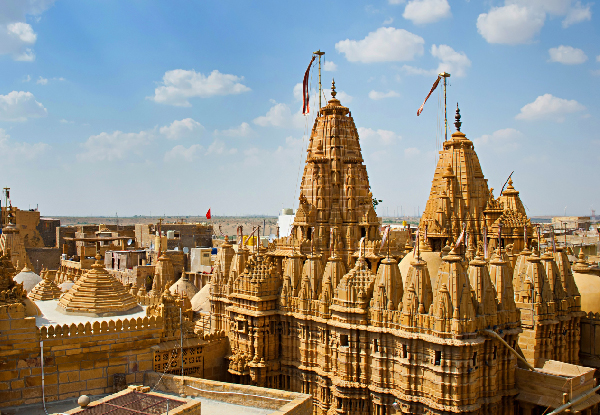
Many travelers include Kuldhara as part of a broader Jaisalmer Sightseeing Tour that also covers Khaba Fort, Amar Sagar Lake, Jain Temples, and Bada Bagh.
A jeep or private vehicle is the most convenient way to reach the site. It is recommended to carry sufficient drinking water as there are limited facilities near the village.
Best Time to Visit Kuldhara Village
The ideal time to explore Kuldhara Village Jaisalmer is during the cooler months when desert temperatures remain pleasant and manageable. The Thar Desert is known for its extreme climate, where summers can become intensely hot, making daytime exploration physically demanding. Visiting during moderate weather ensures that you can comfortably walk through the ruins, absorb the historical atmosphere, and spend enough time observing architectural details without discomfort.
Late afternoon is often considered the most visually striking time to visit. As the sun begins its descent, golden light falls across the abandoned homes, creating long shadows that enhance the haunting charm of the village. The sandstone structures glow warmly under this light, offering dramatic photography opportunities. The silence combined with soft desert winds creates a deeply atmospheric setting that feels almost cinematic.
However, it is important to plan your visit carefully. Entry to the site is restricted after dusk, and visitors are required to leave before evening hours. This regulation is implemented for both safety and preservation purposes. Exploring the village during daylight hours not only ensures safety but also allows you to fully appreciate its layout, temples, and remnants of former homes in clear visibility. A well-timed visit maximizes both comfort and the emotional impact of the experience.
Kuldhara Village – Rajasthan’s Abandoned Mystery Site
Kuldhara Village, located near Jaisalmer, is one of the most intriguing abandoned places in Rajasthan.
Important Travel Tips
A visit to Kuldhara Haunted Village in Jaisalmer requires thoughtful preparation. The site is spread across a wide open area, and exploring it involves walking on uneven terrain, sandy patches, and stone pathways. Wearing comfortable walking shoes is essential to move safely and avoid fatigue during your visit.
Carrying sufficient drinking water is highly recommended, especially since there are limited facilities nearby. Sunglasses, sunscreen, and protective clothing help shield against the desert sun, even during cooler seasons. A hat or scarf can provide additional comfort while walking under direct sunlight.
Visitors should approach the site with respect and awareness. Kuldhara is a protected heritage site, and climbing fragile walls or disturbing ancient structures can cause irreversible damage. Preserving the ruins ensures that future generations can continue to explore this historical destination.
Since the area is open and expansive, it is advisable to stay with your group or guide. A knowledgeable guide can share historical insights, legends, and lesser-known details that enrich the experience. Moving together also ensures a smooth and secure visit, especially for first-time travelers to the region.
Combining Kuldhara with Desert Safari
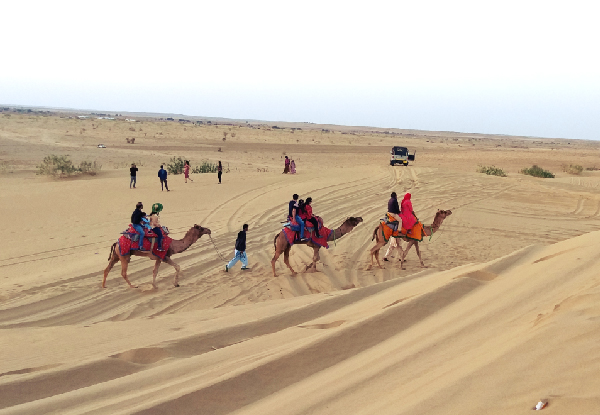
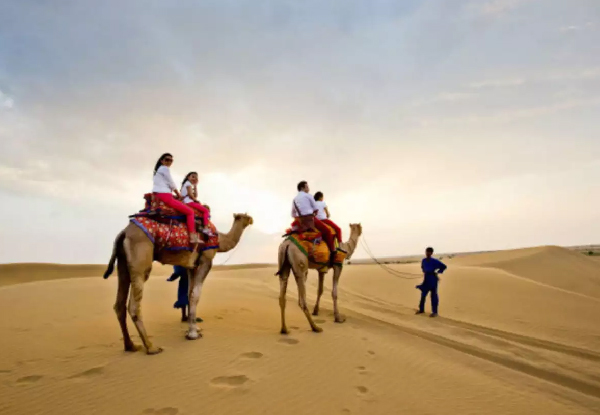
Many travelers enhance their Jaisalmer Sightseeing Tour by combining a visit to Kuldhara with a Desert Safari in Jaisalmer. The contrast between the silent ruins of an abandoned village and the vibrant atmosphere of desert camps creates a well-balanced itinerary that captures multiple dimensions of the Thar region.
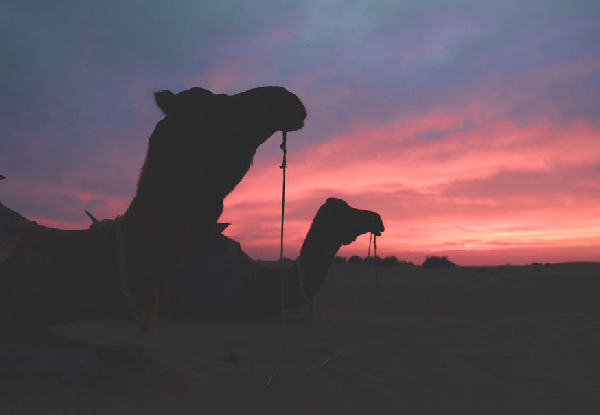
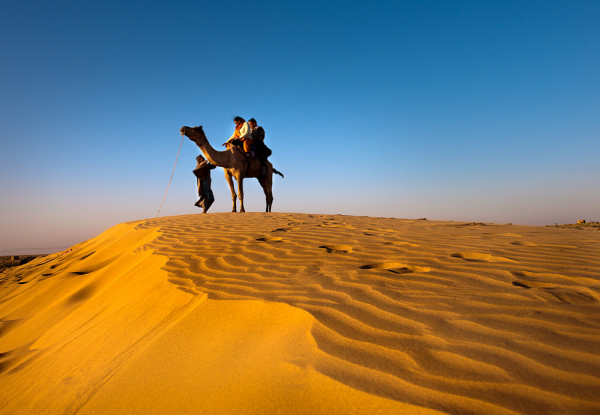
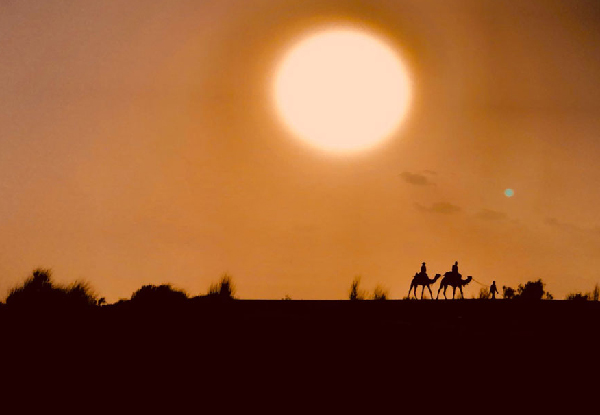
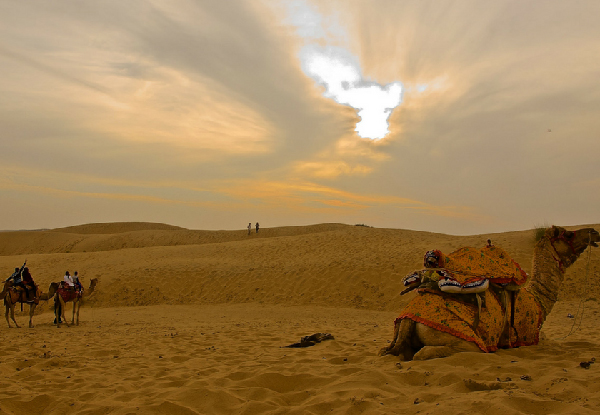
After exploring the historical remnants of Kuldhara, visitors often continue their journey toward Sam Sand Dunes Jaisalmer. The transition from quiet ruins to lively dunes filled with camel rides and cultural performances adds variety to the day. Sunset camel rides across golden dunes provide a striking contrast to the mysterious aura of Kuldhara.
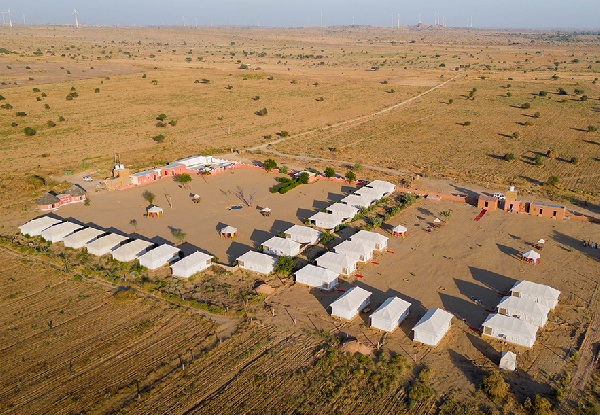
Overnight desert camping can follow the village excursion, allowing travelers to witness both the haunting history of the past and the living cultural traditions of present-day Rajasthan. This combination offers a comprehensive desert experience within a single day, blending heritage, adventure, and cultural immersion seamlessly.
Why Kuldhara Remains a Must-Visit
Kuldhara is more than a site of ghost stories and supernatural speculation. It represents resilience, migration, sacrifice, and unanswered historical questions. The abandoned structures stand as silent witnesses to a dramatic chapter in Rajasthan’s past.
Walking through the village encourages reflection. Each broken wall and empty courtyard invites visitors to imagine the lives once lived there. Whether one believes in legends or prefers historical reasoning, the emotional depth of the place is undeniable.
The village serves as a rare example of a settlement that disappeared almost overnight, leaving behind physical traces but few concrete explanations. This blend of fact and folklore makes Kuldhara Haunted Village in Jaisalmer uniquely compelling.
For travelers seeking offbeat destinations, cultural depth, and historical intrigue, Kuldhara offers an unforgettable excursion. It allows visitors to step away from mainstream attractions and engage with a lesser-known yet powerful narrative of the desert. The experience lingers long after departure, making it one of the most thought-provoking stops in the Jaisalmer region.
Plan Your Kuldhara and Desert Experience
If you wish to explore Kuldhara Village, combine it with a personalized Jaisalmer Desert Safari, or plan a complete sightseeing experience in the Thar region, you can directly connect with Sawai Dan for authentic arrangements.
For customized tours, jeep safari, camel safari, or luxury desert camp booking, you may contact via call or WhatsApp: +91-8769424955
Discuss your travel dates and preferences to design a well-organized and comfortable desert journey.