Farm Stay near Jaisalmer: Living with Thar Desert Farmers
Overview
Farming in the Thar Desert sounds almost impossible. Rain arrives for a few weeks a year, sometimes not at all, the soil is sandy and summer temperatures pass 45 degrees Celsius. Yet thousands of families around Jaisalmer have farmed this land for generations, growing millet, beans, sesame and, where canal water now reaches, cumin, mustard and wheat.
A farm stay near Jaisalmer places you inside one of these households for a night or two. You sleep in a farmhouse or a simple guest room beside the fields, eat what the family eats, wake to the sound of goats and cattle, and spend the day helping with whatever work the season demands. It is slower and more personal than a desert camp, and it shows a side of the Thar that most visitors never see: the careful, practical business of growing food in one of the driest places in India.
This guide covers what a farm stay looks like, how the farming year works, what a day and night involve, what rooms and food to expect, which tasks you can join, what it costs and who is most likely to enjoy it. Farm stays here are small and arranged personally rather than listed on hotel websites, so knowing what to ask makes all the difference.
What a Farm Stay near Jaisalmer Actually Means
A desert farm stay in Rajasthan is not a resort with a vegetable garden. It is a working family farm that opens its doors to a few guests at a time. Most are located 20 to 60 kilometres from Jaisalmer city, in villages along the Sam, Khuri or Pokhran roads, and often a short walk from small dune fields. The family lives in a compound of stone or mud-plastered rooms surrounded by fields that may stretch across several hectares.
Livestock is part of almost every farm: goats, sheep and cows for milk, and often a camel or two for transport and ploughing. Some farms have a tube well or a connection to canal water, which lets them grow winter crops. Others depend entirely on rain and grow only one crop a year.
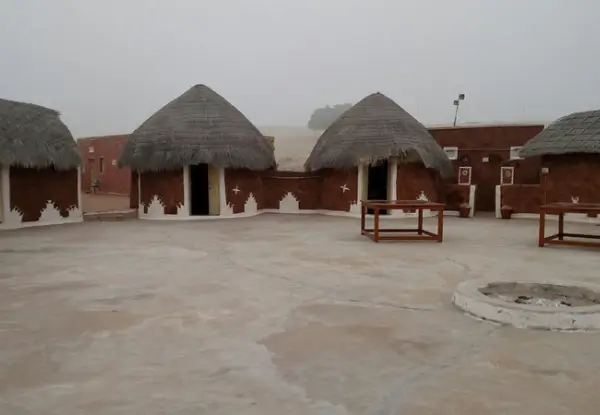
Guests stay either in a spare room in the family home or in a separate guest hut built in the same style, with thick walls and a thatched or flat roof. You are not a spectator here. The family goes about its normal routine and you join in as much or as little as you like. Your host will usually speak some Hindi and the local dialect, and possibly a little English, so most stays are arranged through a local operator who provides a guide or interpreter for at least part of the time. This guide helps with conversation, explains farming practices and makes sure the family is properly paid.
Farm stays differ from village day tours in one important way: time. On a day tour you see a village for a few hours and leave before evening. On a farm stay you are present for the slow parts of the day: dawn milking, the long afternoon rest, the evening when animals return and the family gathers around the fire. That is when the real conversations happen and when you begin to see how the household works. It is also worth being clear about what a farm stay is not.
There is no swimming pool, no room service and usually no menu. Electricity may come from a solar panel and be limited to a few lights and phone charging. Hot water is heated over a fire or in a small solar tank. Bathrooms may be shared or outside the main room.
For travellers who value comfort above all, a hotel or tented camp will suit better. For those who want to understand desert farming from the inside, a farm stay is the most direct way to do it, and many guests say it is the part of their Rajasthan trip they remember most clearly.
Escape to a Peaceful Farm Stay Near Jaisalmer
Discover a refreshing side of Rajasthan with a relaxing farm stay near the Thar Desert. Enjoy peaceful rural surroundings, open landscapes, and authentic local charm away from busy tourist spots. Let Real Desert Man Safari help you plan a memorable countryside escape.
WhatsApp Now Contact Us
The Farming Calendar of the Thar
What you do on a farm stay in the Thar Desert depends heavily on the season, so it helps to know the farming calendar before choosing your dates. The year revolves around the monsoon. In a normal year, the first rains reach Jaisalmer in July. As soon as the soil is moist enough, families sow rain-fed crops, known locally as the monsoon crop. Pearl millet is the most important, followed by cluster beans, moth beans, mung beans and sesame. Sowing is done quickly, sometimes with a camel pulling a simple plough, because the moisture disappears fast.
If you visit in July or early August, you may help with sowing or with weeding the young plants. The fields turn green, which surprises most visitors who expect a permanent brown landscape. From late September to October the monsoon crop is harvested. Millet heads are cut and dried, beans are pulled and stacked, and threshing takes place on hard-packed ground beside the house.
This is one of the best times for a farm stay, with plenty of activity, cooler weather and the satisfaction of seeing the year's food brought in. Millet stalks are stored as fodder for the animals through the dry months. In areas with canal water or tube wells, a winter crop follows. From October to November farmers sow cumin, mustard, wheat, chickpea and sometimes psyllium, a medicinal seed crop.
These fields need careful irrigation and protection from frost on very cold nights. Visiting between December and February lets you see bright yellow mustard fields and help with irrigation and weeding, while enjoying pleasant daytime weather of around 22 to 25 degrees. Harvest of winter crops runs from late February to March. Cumin in particular is a valuable cash crop for desert farmers, and its harvest is a busy, careful job since the small seeds are easily lost. From April to June the fields are mostly bare and the heat is intense.
Farming slows down to caring for animals, collecting fodder and repairing walls and water tanks. Farm stays still operate in this period, but the experience is quieter and focused on livestock, with outdoor work done only in the early morning and evening. Good rain years and drought years feel very different, and your hosts will happily talk about recent seasons. A farmer who lost a crop to drought two years running sees the land differently from a visitor, and hearing that perspective is one of the most valuable parts of the stay.
A Day and Night with a Farming Family
Most guests arrive at a rural homestay near Jaisalmer in the afternoon. A typical pickup from the city is at 2:00 or 3:00 pm, and the drive takes 45 minutes to an hour and a half depending on the farm's location. On arrival, the family welcomes you with tea, often made with fresh goat or cow milk and plenty of sugar. You are shown your room, and then there is time to walk around the fields with your host or guide while the light is still good.
Late afternoon is when the animals come home. Between 5:00 and 6:00 pm in winter, goats and sheep return from grazing, cows are tied in their enclosure and the camel is unsaddled. You may help with evening milking, carrying fodder or filling water troughs. Sunset over the fields is usually around 5:45 to 6:15 pm in winter and later in other months. As darkness falls, the kitchen fire is lit. Dinner is cooked by the women of the family, often with help from guests who want to learn.
The meal is served between 7:30 and 8:30 pm, usually on the floor or on rope cots in the courtyard. Afterwards the family sits around a small fire or under the stars, and this is when you hear stories about rain, crops, weddings, camels and the changes the canal and the city have brought. Many families go to bed early, around 9:30 or 10:00 pm, because the day starts before sunrise. You will sleep in a guest room or on a rope cot under the open sky if the weather allows. In winter, heavy quilts are provided.
The morning begins between 5:30 and 6:30 am, depending on the season. Women are already up, sweeping courtyards, lighting the stove and churning buttermilk. Men take the animals out or check the fields. Tea arrives early, followed by a breakfast of millet or wheat flatbread, butter, yoghurt and sometimes a vegetable dish around 8:00 am.
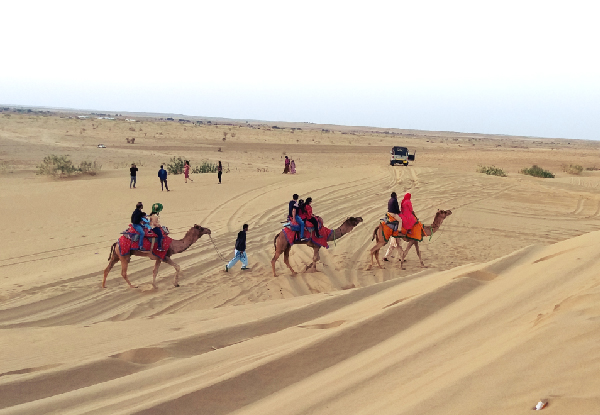
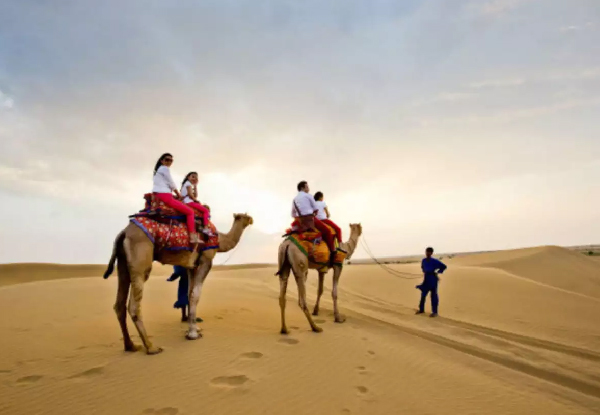
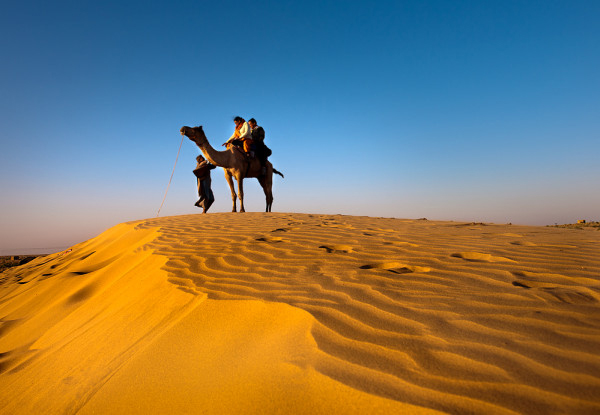
After breakfast there is time for farm work, whether that is harvesting, irrigation, threshing or simply feeding animals. If you are staying for two nights, the middle day can include a walk to a neighbouring farm, a camel ride across nearby dunes, a visit to a water source or a trip to a local market. One-night stays usually end around 10:30 or 11:00 am with a drive back to the city. The pace is gentle throughout, and you are free to rest whenever you like. Many guests are surprised by how quickly the routine starts to feel natural.
Rooms, Beds, Bathrooms and Food
Setting the right expectations about comfort is the key to enjoying a stay with farmers in Rajasthan. Rooms are simple but clean. A typical guest room has thick mud or stone walls, a packed earth or cement floor, a wooden or rope bed with a mattress, clean sheets and pillows, and enough quilts for the season. There may be a small table, a few hooks for clothes and a mirror. Light comes from a single bulb powered by solar or grid electricity, and a fan may be available in the warmer months.
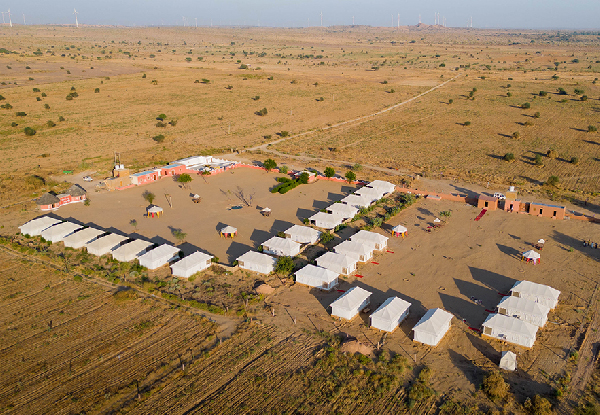
Windows are small to keep out heat and dust. Some farms have built guest huts in the traditional round style with a conical thatched roof, which stay pleasantly cool in summer and warm in winter. A few have tents pitched beside the fields for guests who want a little more privacy. Bathrooms vary. Better-prepared farm stays have a separate guest bathroom with a western or squat toilet, a tap and a bucket shower with water heated on the fire or by a small solar heater. Simpler ones may have a shared family bathroom or an outdoor toilet block. Ask the operator in advance and request photographs if this matters to you. Bring your own toiletries, a small towel, a torch and toilet paper.
Food is the family's everyday food, cooked fresh at each meal. Expect thick millet flatbread in winter and wheat flatbread for much of the year, lentil curries, a dry curry of desert beans and berries, seasonal vegetables such as cluster beans and okra, yoghurt, buttermilk and plenty of fresh milk. Clarified butter and jaggery appear often, especially in the cold months. Most farming families are vegetarian, and meat is rarely served.
Meals are filling and moderately spicy; ask for less chilli if needed. Drinking water should be bottled or filtered water brought by your operator, as local well or tank water may not suit visitors' stomachs. Tea is offered constantly, and it is polite to accept at least a little.
There is no menu and no fixed portion size. Hosts will keep filling your plate until you insist you are full, so eat slowly. If you have allergies or strict dietary needs, inform the operator before arrival so the family can prepare. Mobile signal varies by location. Charging is usually possible, but a power bank is wise. Above all, approach the stay with patience and curiosity. A slightly uneven bed or a bucket shower is a small price for the chance to live, even briefly, inside a desert farming household.
Experience the Quiet Beauty of Rural Rajasthan
Trade the usual tourist rush for the calm of the countryside near Jaisalmer. Enjoy open spaces, a relaxed atmosphere, and the distinctive beauty of the Thar Desert with a farm stay designed for a refreshing getaway.
WhatsApp Now Contact Us
Farm Work You Can Join
The best part of an agritourism experience in Rajasthan is being useful, and farming families are usually happy to let guests help, provided you are willing to follow instructions and laugh at your own mistakes. Milking is the most common activity. Goats are milked in the early morning and evening, and your host will show you how to hold the animal and squeeze gently.
It looks easy and is not, so expect a few failed attempts before you get any milk into the pail. Cows are milked by experienced family members, but you can help hold the calf or carry the milk. Churning buttermilk is a daily morning task in most homes. Yoghurt is placed in a tall clay pot and churned with a wooden stick spun by a rope. After 20 to 30 minutes of steady rhythm, butter rises to the top. It is a calm, satisfying job and a good way to start the day. Feeding and watering animals happens twice a day. You may carry bundles of dried millet stalks, mix fodder with water, or lead goats to a trough.
If the family has a camel, you can help with saddling it or bringing it to water. Field work depends on the season. In July and August you might help sow seeds or pull weeds. In late September and October you can cut millet heads, pull bean plants or help thresh grain by beating it on hard ground or with a tractor if the farm has one. Winnowing, where grain is tossed in the air from a wide basket so the wind carries away the husks, is a skill worth learning and makes a lovely photograph. In winter on irrigated farms you may guide water channels between rows of cumin or mustard. In February and March, harvest work on these crops is delicate and done by hand. Household work is also open to guests.
Women may invite you to help make flatbread, grind spices or plaster a wall with fresh clay and dung, a job done before festivals and weddings. Children often show guests how to make toys from clay or play local games. Wear old, comfortable clothes and closed shoes for all of this, and carry a hat and water. Work in the fields is usually done in the morning and late afternoon, with a rest in the hottest hours. There is no pressure to work. Some guests prefer to watch, read or walk. But even an hour of milking or threshing changes how you look at the food on your plate for the rest of your trip.
Cost of a Farm Stay and How to Arrange One
Farm stays around Jaisalmer are small and informal, so they are usually arranged on request through a local operator rather than booked on a hotel platform. This also means prices vary, but the ranges below give a realistic picture for the season from October to March.
A one-night farm stay near Jaisalmer with return transfers from the city, dinner, breakfast, a guide or interpreter for the main part of the stay and farm activities generally costs Rs.3,000 to Rs.5,500 per person. A two-night stay with all meals, transfers and a camel ride or village walk on the middle day typically costs Rs.6,500 to Rs.10,000 per person. Private stays for a couple, where the family hosts only your party and the operator's guide stays throughout, usually range from Rs.8,000 to Rs.14,000 for two people per night.
Children under five usually stay free and children between five and eleven are charged around half. Most quotes add five percent tax. Prices may rise during festivals, harvest season and the Christmas and New Year period. How much reaches the family? A fair arrangement pays the host family a fixed amount per guest per night for food and lodging, often Rs.800 to Rs.1,500, with the operator covering transport, guiding and coordination. Do not hesitate to ask the operator how payment is shared; reputable operators will be open about it. Tips for the family are optional.
A gift is often better received than cash, for example school supplies for children, a solar lamp, a set of good kitchen knives or a box of sweets from the city. When contacting an operator, ask these questions.
Where exactly is the farm and how long is the drive? What crops and animals does the family have, and what will be happening in the season you are visiting? What type of room and bathroom will you have? Is a guide or interpreter included, and for how long? Is drinking water provided? Can dietary needs be met? Is there any option to combine the stay with a night on the dunes or a village tour? Book at least a week in advance in peak season, since most farms host only one or two groups at a time.
Confirm the final itinerary, price and what is included in writing. Finally, be flexible. Weather, harvest timing or a family event can change the day's schedule, and the most memorable moments often come from those changes.
Who Will Enjoy a Farm Stay, and Who Will Not
A farm stay is not for everyone, and being honest about that saves disappointment. Travellers who enjoy it most tend to share a few traits. They are curious about how people live and work, comfortable with simple accommodation and happy to rise early. They enjoy food cooked at home more than restaurant meals and are willing to try new tasks, even if they look clumsy doing them.
Families with children often find a desert farm stay wonderful. Children love animals, open space and real jobs such as feeding goats or carrying milk. They also tend to break through language barriers faster than adults, playing games with the host family's children within minutes. Bring a few simple toys, a ball or drawing materials to share. Couples looking for a quiet, unusual break also do well, especially if they combine one night on the farm with a night on the dunes.
Solo travellers who want a deeper connection with local life appreciate the long evenings around the fire and the chance to ask questions without rushing. Photographers find endless subjects in farm life: dawn milking, winnowing in the wind, animals returning at dusk and wide fields under huge skies.
Travellers who will probably not enjoy a farm stay include those who need a private bathroom with constant hot water, air conditioning, reliable internet, a choice of menu or complete quiet at all hours. Farms are working places with animals that make noise, families that wake early and dust that gets everywhere. People who dislike being around livestock, or who are uncomfortable with very limited shared language, may also find it hard. If you are unsure, start with a single night combined with other experiences such as a desert camp or a city stay.
That way you sample farm life without committing to more than you are comfortable with. It also helps to read about the region's farming before you go, so you can ask better questions. Talking to your hosts about water, crops, prices and the future of farming in the desert gives the stay real depth. Remember too that you are a guest in someone's home, not a customer in a hotel. Courtesy, patience and gratitude go a long way. Families who host visitors often say they enjoy the conversations as much as the income, and many guests return years later to see how the farm and the children have grown.