International Tourists' Complete Guide to Visiting Jaisalmer: Visa, Currency, Safety & Local Tips
Overview
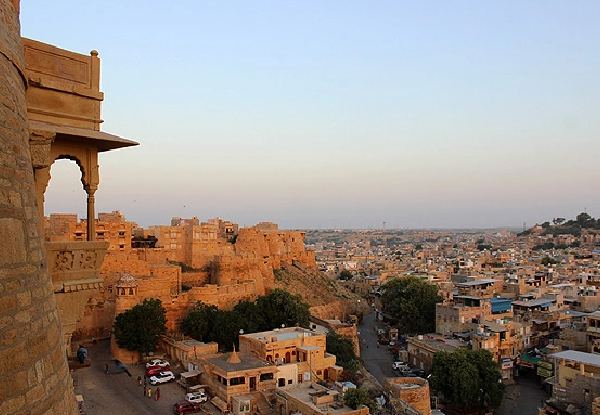
Jaisalmer is one of the most rewarding places in India for international visitors, and also one of the most remote. It sits close to the Pakistan border, about 285 kilometres from the nearest big city, Jodhpur, with a small airport and limited public transport. That remoteness is part of its appeal, but it also means a little preparation goes a long way. This guide covers the practical side of visiting Jaisalmer as a foreign tourist: visas, money, SIM cards, daily costs, safety, health, local etiquette, foreigner ticket prices and how to book a desert trip without stress. It is written by a local team that hosts guests from Europe, the Americas, Australia and Asia every season.
Visa, Arrival and Paperwork
Most visitors enter India on the India e-Tourist Visa, applied for online through the official government portal at least four days before arrival. For the majority of nationalities, a 30-day double-entry e-visa costs US$25 for arrivals between July and March and US$10 between April and June. A one-year multiple-entry e-visa costs about US$40, and a five-year multiple-entry visa ranges from about US$80 to US$200 depending on nationality, with a bank charge of roughly three percent added. US, UK, Canadian and Japanese citizens can stay up to 180 days per visit on the longer visas, while most others are limited to 90 days per visit. Avoid unofficial websites that charge extra service fees; the only official site is the Indian government's e-visa portal, and its address ends in gov.in.
You will need a passport valid for at least six months from arrival, with two blank pages, a recent digital photograph and a scan of your passport bio page. Approval normally arrives by email within 72 hours. Print the electronic travel authorisation and carry it with your passport. On arrival, biometric details and a photograph are taken at immigration in Delhi, Mumbai, Jaipur or whichever international airport you land at. From there, domestic flights reach Jaisalmer seasonally from Delhi, Mumbai, Bengaluru and other cities, or you can connect through Jodhpur and drive about five to six hours.
Foreign tourists staying in India for less than 180 days do not need to register with the Foreigners Regional Registration Office. Instead, every hotel, guesthouse and licensed camp records your passport and visa details and submits them to the authorities, which is why you will be asked for copies at each check-in. Keep three or four printed copies of your passport and visa pages along with digital copies on your phone, and email scans to yourself so you can retrieve them from any device. If your passport is lost, report it to the police in Jaisalmer and contact your embassy in Delhi without delay.
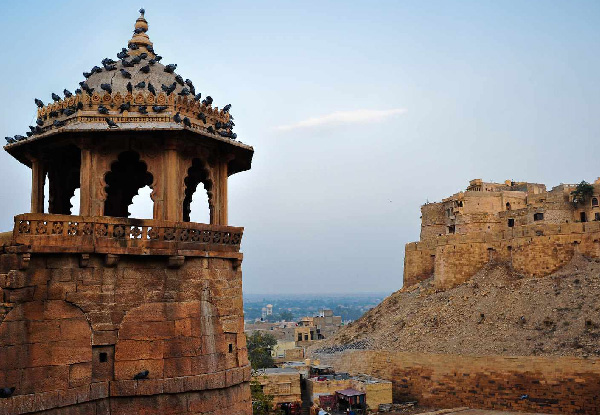
Border areas need special attention. Jaisalmer city, the fort, Sam, Khuri, Kuldhara and the main tourist sites are open to foreign visitors without permits. Tanot Mata Temple and the Longewala war memorial, about 120 kilometres away, are also visited regularly, though checkposts record names and passport numbers. Travelling beyond Tanot towards the international border requires prior permission from the Border Security Force, which foreign nationals rarely receive. Photography of military installations, vehicles and personnel is strictly prohibited throughout the district. Our border tour packages follow these rules and handle the paperwork with checkposts.
Make Your India Journey Effortless
From arrival transfers to desert adventures, make every part of your Jaisalmer holiday easier. Enjoy personalised assistance, local expertise and thoughtfully arranged experiences throughout your visit.
WhatsApp Now Contact Us
Money, SIM Cards and Daily Costs
The currency is the Indian rupee. ATMs from State Bank of India, HDFC, ICICI, Axis and other banks operate in Jaisalmer town, mostly around Gandhi Chowk, Hanuman Circle and the main roads, with typical withdrawal limits of Rs.10,000 to Rs.20,000 per transaction and foreign card fees of Rs.200 to Rs.500 per withdrawal plus your own bank's charges. ATMs near the fort run out of cash on busy weekends and festival days, so withdraw in the city a day ahead. Currency exchange counters at airports and some agents in town offer cash for euros, dollars and pounds, but rates are better from ATMs.
Card payments work in hotels, larger restaurants and established shops, sometimes with a surcharge of two to three percent. Indian digital payment, known as UPI, dominates everyday transactions, and many small sellers prefer it to cards. Foreign visitors at some major airports can buy UPI-linked prepaid wallets with a passport. In Jaisalmer itself, keep cash for autorickshaws, street food, tips, village purchases and entry tickets, since many small counters do not take cards. A good habit is to carry Rs.5,000 to Rs.8,000 in small notes daily and leave the rest in your hotel safe.
An Indian SIM card makes life far easier. Airtel and Jio are the most reliable networks around Jaisalmer and on the main desert roads. Buying a SIM requires your passport, visa, a photograph and a local address, usually your hotel, and costs about Rs.500 to Rs.800 for a month of unlimited calls and generous data. Activation can take a few hours. Airports in Delhi and Mumbai have counters that handle tourist SIMs quickly, which is easier than buying in Jaisalmer. International eSIM packs also work but cost more per gigabyte.
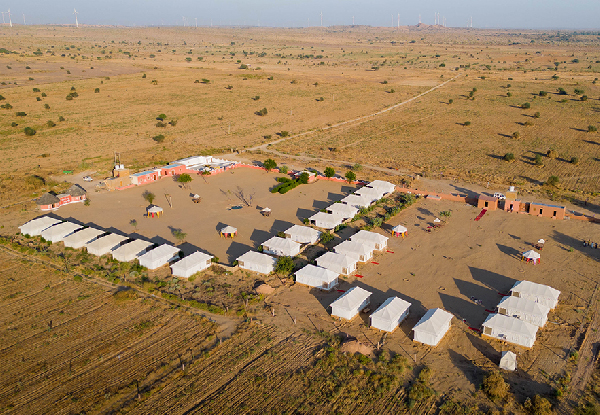
Daily costs vary with travel style. A backpacker staying in a guesthouse, eating at local restaurants and joining a shared desert trip can manage on Rs.2,500 to Rs.4,000 per day. A mid-range traveller in a heritage hotel with a private car and good restaurants spends about Rs.8,000 to Rs.15,000 per day per person. Luxury travellers staying in palace-style hotels with private guides and premium camps often spend Rs.25,000 or more per day. A desert night with Real Desert Man costs Rs.2,500 plus tax per adult for an overnight camel safari with open-dune sleeping, Rs.3,500 plus tax for a luxury Swiss tent, and solo travellers pay one and a half times the listed rate.
Tipping is customary but modest. Drivers usually receive Rs.200 to Rs.500 per day, private guides Rs.500 to Rs.1,000 per day, camel handlers and camp staff Rs.200 to Rs.500 per night from a couple, and restaurant servers about five to ten percent where service charge is not included. Hotel porters expect Rs.50 to Rs.100. Tips are always appreciated but never required, and many guests prefer to give one combined amount at the end of a safari to be shared among the team.
Safety, Health and Local Etiquette
Jaisalmer is generally safe for international travellers, including solo women, with very low levels of violent crime. The common problems are touts, overcharging and persistent sellers rather than danger. Agree on autorickshaw fares before starting, book desert trips with operators who have strong recent reviews, and avoid anyone who approaches you at the station or bus stand with an unsolicited "special deal". Save the national emergency number 112, the ambulance number 108, the women's helpline 1091 and the Ministry of Tourism's multilingual helpline 1800-11-1363.
Health precautions are simple but important. Drink bottled or filtered water only, and check that bottle seals are intact. Eat street food that is cooked fresh in front of you and served hot, and avoid raw salads and cut fruit from roadside stalls in the first few days. Jaisalmer's sun is intense even in winter, so wear a hat, sunglasses and high-SPF sunscreen, and drink at least three litres of water a day in warmer months. Carry oral rehydration salts, basic medicines for stomach upsets and any personal prescriptions. The district hospital and several private clinics in Jaisalmer handle common problems, while serious cases are referred to Jodhpur.
Some shops in Jaisalmer legally sell bhang, a cannabis preparation used in local tradition, in lassis and cookies. Its strength is unpredictable and its effects can last many hours, causing anxiety, nausea and disorientation, particularly for first-time users. Many travel problems in Jaisalmer start with an unexpectedly strong bhang lassi, so the safest advice is simply to avoid it, especially before a desert trip or long drive. Alcohol is available in licensed shops and bars, and on desert trips you may bring your own drinks in moderation.
Local etiquette is easy to follow. Dress modestly in the fort, temples and villages, covering shoulders and knees. Remove shoes before entering temples and homes, and leather items such as belts are not allowed inside the Jain temples. Ask before photographing people, especially women, and accept that some will say no. Use your right hand for eating and passing things. Public affection is frowned upon for all couples. Cows wander freely through the old city lanes; give them space and do not feed them unknown food. A smile and a simple greeting open more doors than any phrasebook.
Weather is the safety factor many visitors overlook. From October to March, days are warm and nights cold, sometimes near 5°C in the desert. From April to June, afternoons routinely exceed 45°C, which is dangerous for outdoor sightseeing without strict precautions. July to September brings occasional rain and humidity. The best and safest window for a first visit is mid-October to mid-March, which is also when all desert camps operate fully.
Explore Jaisalmer Beyond the Guidebooks
Discover golden sandstone architecture, hidden desert landscapes and authentic local culture. Experience Jaisalmer through meaningful journeys designed around your interests, comfort and travel preferences.
WhatsApp Now Contact Us
Getting Around, Sightseeing Fees and Desert Trips
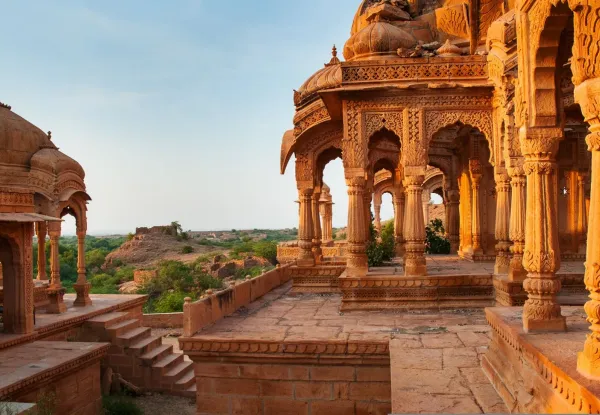
Jaisalmer Airport, about 12 kilometres from the city, has seasonal domestic flights and prepaid taxis costing Rs.500 to Rs.800 to central hotels. The railway station, about 3 kilometres from the fort, receives trains from Delhi, Jaipur, Jodhpur and Ahmedabad, many arriving early in the morning. Autorickshaws within town cost Rs.100 to Rs.250. For full-day sightseeing or trips to Kuldhara, Bada Bagh and Longewala, a private car is the practical option. Our car rental in Jaisalmer offers sedans from roughly Rs.2,500 to Rs.3,500 per day locally and Innova Crysta SUVs from Rs.3,500 to Rs.5,000, with English-speaking drivers on request.
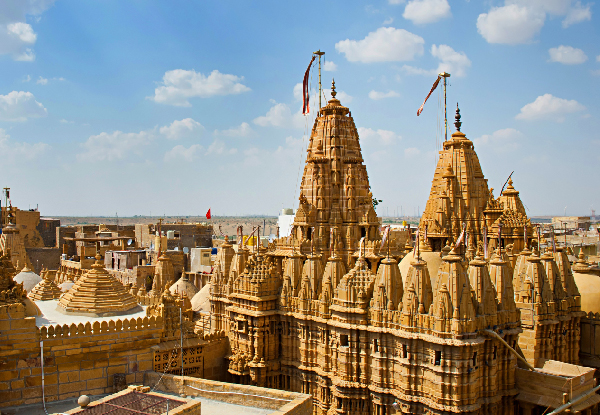
Foreigner ticket prices are higher than Indian rates, as is standard across India. The Jaisalmer Fort palace museum charges about Rs.250 or more for foreign nationals, plus camera fees. Patwon Ki Haveli charges roughly Rs.100 to Rs.250 depending on the section, the Jain temples inside the fort charge about Rs.150 to Rs.200 including camera, Bada Bagh costs Rs.100 or so, and boating at Gadisar Lake runs Rs.100 to Rs.300. Most sites open between 8:00 and 9:00 AM and close around 5:00 to 6:00 PM, and the Jain temples allow non-Jain visitors only in the late morning, roughly from 11:00 AM to 1:00 PM.
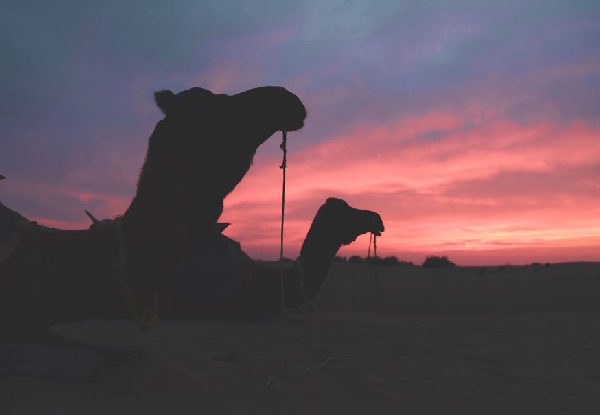
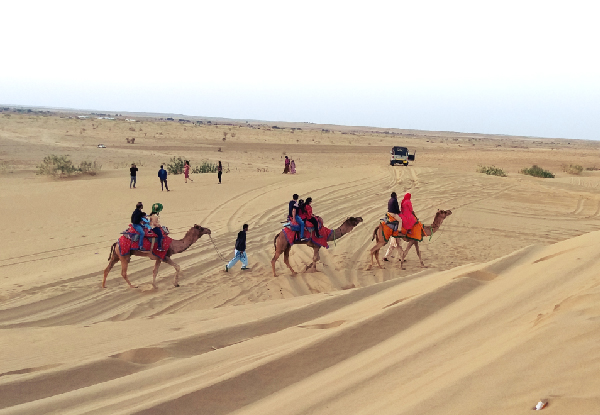
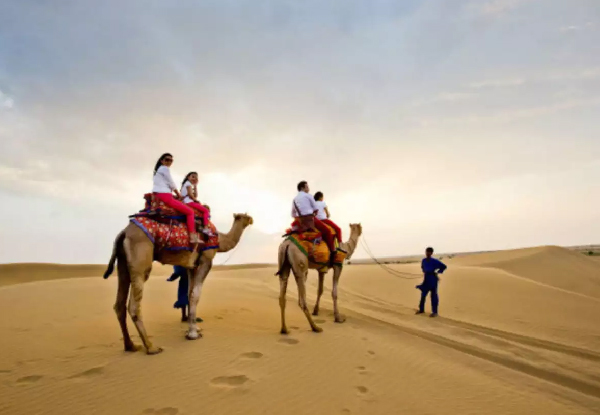
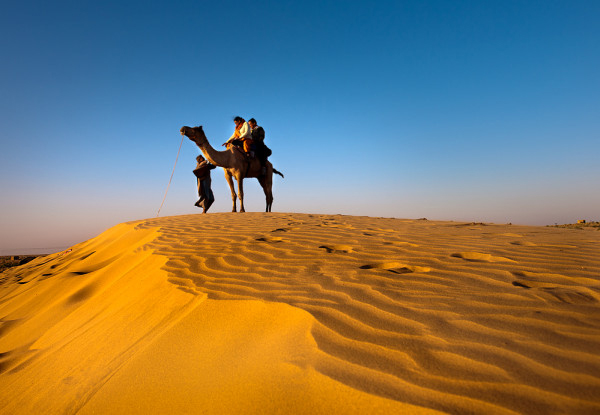
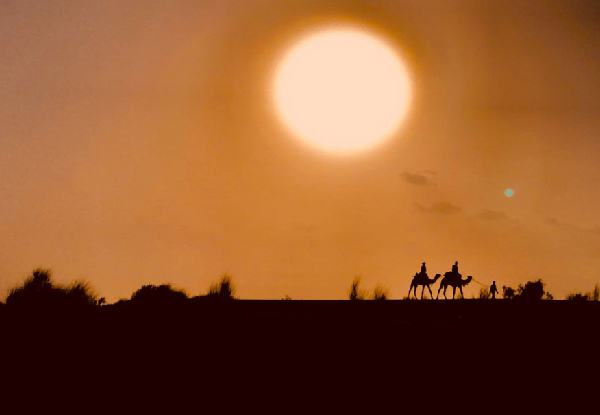
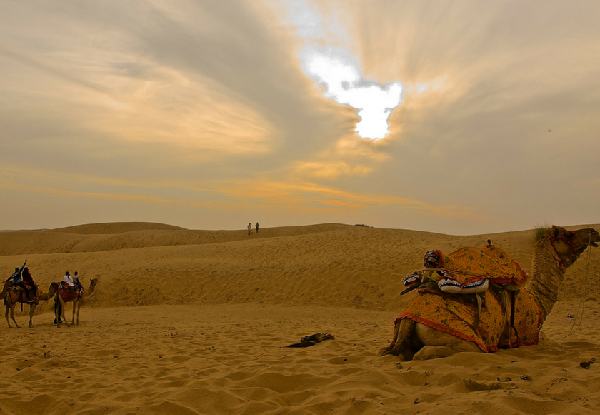
A two to four day stay works best. Spend one day on the fort, havelis and lake, one night on the dunes and, if time allows, a day trip to the border temples or a village visit. The desert night is the highlight for most international guests. Our overnight camel safari runs from 2:00 PM to 11:00 AM the next morning with a Kuldhara stop, about one and a half hours on camelback, sunset on the dunes, dinner cooked over an open fire and a night under the stars on proper beds. Luggage can be stored at our office while you are in the desert, and early-morning train arrivals can rest in a room before departure.
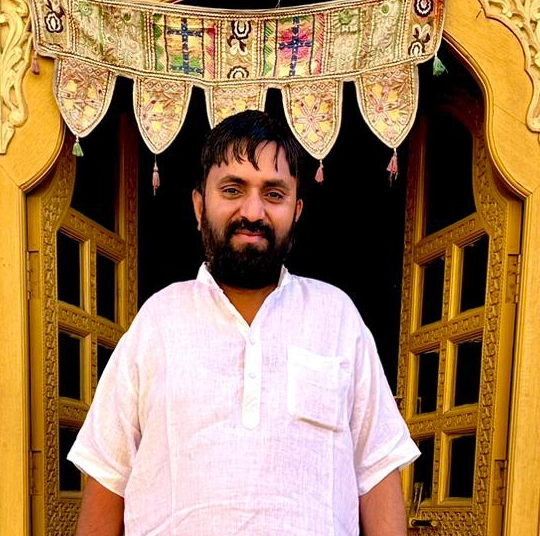
Booking is easiest by WhatsApp. Message Sawai Dan, founder of Real Desert Man Camel Safari, at +91-8769424955 with your dates, number of travellers and any dietary needs, and you will receive clear inclusions, timings and prices in English. Many guests mention in their reviews how helpful it was to speak directly with the owner before arrival, ask questions about safety and packing, and arrange station pickups or onward transport with one contact. For a destination this far from the main tourist circuit, that direct line is often the most useful travel tip of all.