Jaisalmer vs Dubai Desert Safari: 10 Reasons Jaisalmer Wins Every Single Time
Overview
Every season we meet travellers who have already done the Dubai desert safari and want to know if the Thar Desert is worth the trip. The question is fair. Dubai sells a slick evening package with Land Cruisers, belly dancers and a barbecue buffet, and millions of people book it every year. Jaisalmer offers something older and slower: camels instead of convoys, villages instead of theme camps, and nights spent on open dunes rather than a coach ride back to the hotel at 9:30 PM. This comparison sets the two side by side with real prices, real timings and real inclusions, and lists ten specific reasons why a Jaisalmer desert safari gives far more for the time and money you spend.
Landscape, Distance and Time on the Sand
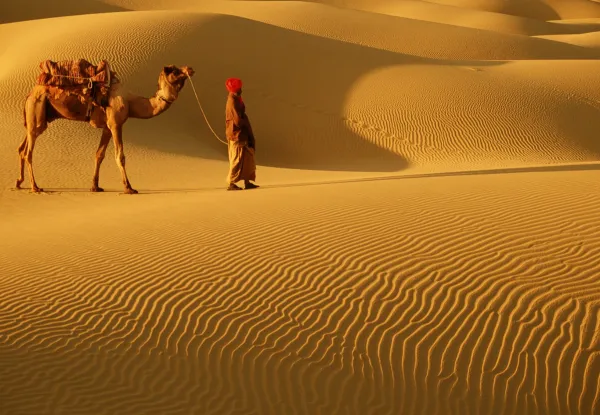
Reason one: the Thar is a living desert, not a staging ground. Dubai's evening safaris run mostly in the Lahbab and Al Awir areas, about 45 to 60 minutes from the city, on red dunes that are visited by hundreds of vehicles every afternoon. The sand is beautiful, but the area exists almost entirely for tourism. The Thar Desert around Jaisalmer is a working landscape. Camel herders move their animals across it, families farm millet and guar beans after the monsoon, and clusters of mud houses with thatched roofs sit between the dunes. When you ride through it, you pass shepherds, wells and goats, not other safari jeeps. That difference shapes the whole day.
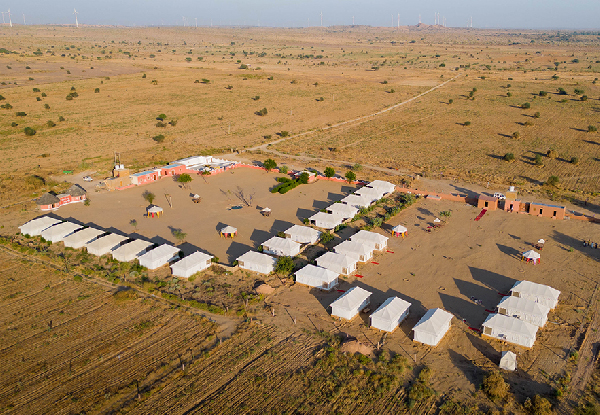
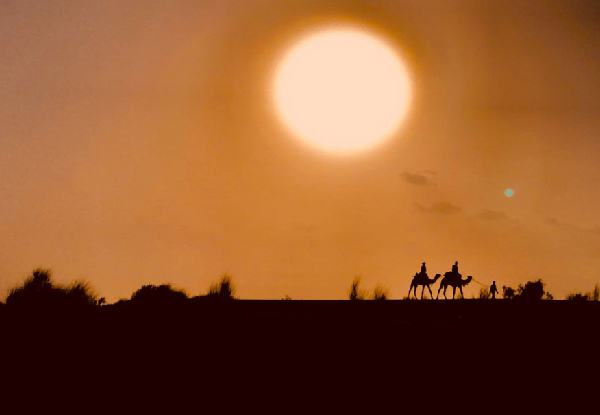
Reason two: you stay overnight instead of leaving at sunset plus three hours. A standard Dubai evening safari picks you up around 3:00 to 3:30 PM and drops you back at your hotel between 9:00 and 9:30 PM. An overnight desert camp exists in Dubai, but it costs considerably more and still sits inside a fenced camp. In Jaisalmer, the classic overnight camel safari tour starts at 2:00 PM and ends at 11:00 AM the next morning. You watch sunset from the dunes, eat dinner by the fire, sleep under the sky and wake up to sunrise on the same sand. You get roughly 21 hours in the desert instead of six.
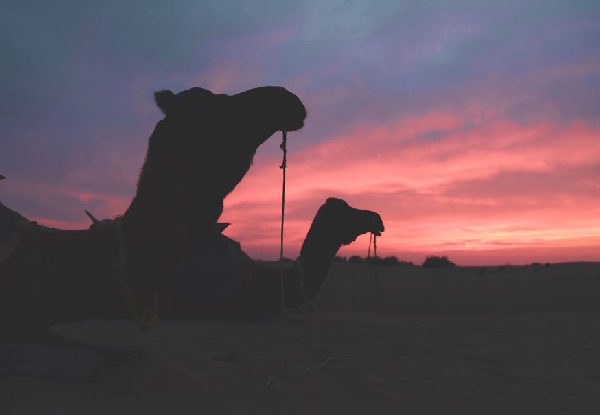
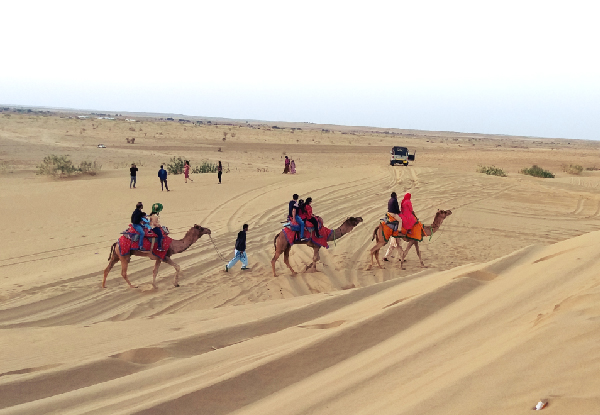
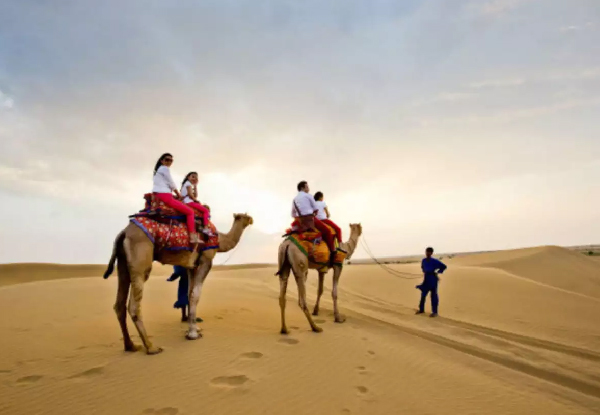
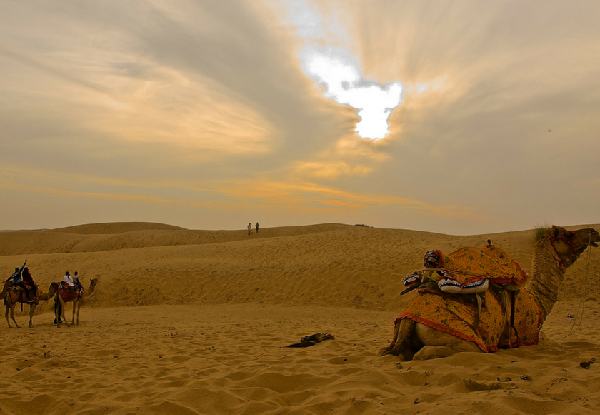
Reason three: real camel time, measured in hours. The camel component of most Dubai packages is a five to ten minute loop around the camp, often on a tethered line of animals. In Jaisalmer, the camel is the vehicle. Our overnight safari includes about one and a half hours of riding to reach the sleeping dunes, and longer routes such as the three-day deep desert safari in Jaisalmer spend several hours each day on camelback, moving between villages, shaded lunch spots and campsites. You learn how to mount, how to sit when the camel kneels and how the handler talks to the animal. Many guests say the camel ride is the part they remember most clearly years later.
The distance factor is real. From Jaisalmer city, the quiet dune areas we use are 40 to 50 kilometres away, which takes about an hour by jeep including a stop at the abandoned village of Kuldhara. That drive is part of the experience, passing windmills, grazing herds and stone villages. In Dubai, the drive is on a multi-lane highway followed by deflating tyres at a desert gate alongside dozens of other vehicles. Neither drive is long, but only one of them shows you how people actually live around the desert. For travellers who care about context as much as photographs, this matters.
Discover the Authentic Thar Desert Experience
Choose Jaisalmer for golden dunes, traditional camel rides and authentic Rajasthani hospitality. Experience desert culture, peaceful sunsets and memorable overnight stays beneath Rajasthan's beautiful starry skies.
WhatsApp Now Contact Us
Price Comparison in Rupees and Dirhams
Reason four: Jaisalmer costs a fraction of Dubai for more hours and more inclusions. A shared evening desert safari in Dubai costs around AED 150 to 350 per person, which is roughly Rs.3,600 to Rs.8,400 at an exchange rate of about Rs.24 to the dirham. Premium packages with private vehicles, VIP seating or upgraded dinners cost AED 600 to 1,500 per person, or Rs.14,400 to Rs.36,000. An overnight desert camp in Dubai typically adds AED 400 to 800 on top. Quad bikes, sandboarding upgrades, photography packages and alcoholic drinks are usually charged extra, and a private 4x4 for a family can cross AED 2,000.
In Jaisalmer, the numbers look very different. The Real Desert Man overnight camel safari costs Rs.2,500 plus tax per adult on a two-sharing basis, and includes transport from Jaisalmer, a guided stop at Kuldhara, the camel ride, tea and snacks, dinner cooked on an open fire, an overnight stay on the dunes with proper beds and blankets, and breakfast. The luxury overnight camping tour with a Swiss tent, attached bathroom, folk music and a vegetarian buffet costs Rs.3,500 plus tax per adult. Even the two-night Real Desert Adventure Safari with a village tour, at Rs.7,200 plus tax, costs less than a mid-range Dubai evening package.
Hidden costs tell a similar story. In Dubai, entry to the safari is just one line on the bill. You may pay for a separate hotel night near the city, tips for the driver and dancers, VAT, a photographer's package and extra activities. In Jaisalmer, your safari price covers most of the day's needs, and the main extras are alcohol, personal shopping and peak-season supplements around Christmas and New Year. Single travellers pay one and a half times the listed price, which is still lower than many shared Dubai tours. Families with children find the gap even larger, since a Thar camel safari for a family of four rarely touches what Dubai charges for two.
Value is about more than the final number. A Dubai safari gives you roughly six hours, a large group and a fixed format. A Jaisalmer safari gives you up to a full day and night, a smaller group or a private dune, and the option to adjust the route. If you travel from India, you also save on flights and visas. A return flight from Delhi or Mumbai to Jaisalmer costs around Rs.10,000 to Rs.20,000 per person in season, while flights to Dubai, a UAE visa and Dubai hotel rates push the same weekend well above Rs.60,000 per person. For the price of one Dubai evening, you can spend two nights in the Thar.
Culture, Food and the People Behind the Safari
Reason five: the music is real, not a tourist cabaret. Evening entertainment at Dubai camps usually features belly dancing, a tanoura whirling show and a fire act, performed by artists hired for the tourist circuit. Belly dance has little to do with Emirati heritage. In Jaisalmer, the evening music comes from the Manganiyar and Langa communities, hereditary musicians whose families have sung desert ballads for generations, often accompanied by the kamaicha bowed string instrument and the dholak drum. The Kalbelia dance, recognised by UNESCO as intangible cultural heritage, is performed by women from the Kalbelia community itself. Guests at camp nights often comment that the performers interact with the audience in a way that feels like a village gathering rather than a stage show.
Reason six: the food is cooked in front of you over wood fire. Dubai camps serve buffets of grilled chicken, kebabs, rice and salads, prepared for hundreds of guests. On a Real Desert Man open-dune night, the cook prepares dinner on the spot for your small group: lentils, seasonal vegetables, rice and flatbread baked directly on embers, followed by sweet spiced tea under the stars. Guests are welcome to roll their own bread, and many say it is the best meal of their trip. Vegetarian food is the default, and non-vegetarian dishes can be arranged with notice. On luxury camp nights, a fuller Rajasthani vegetarian buffet includes desert specialities such as Ker Sangri, made from desert beans and dried berries.
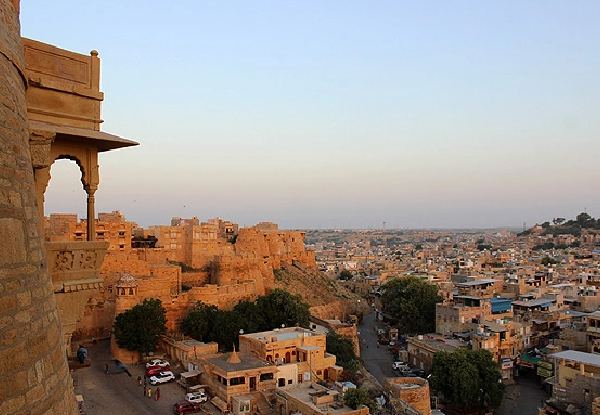
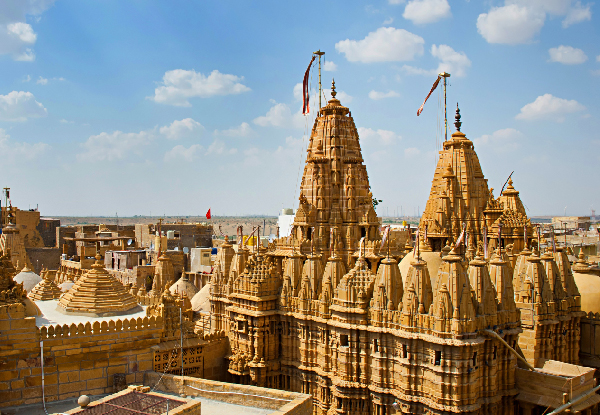
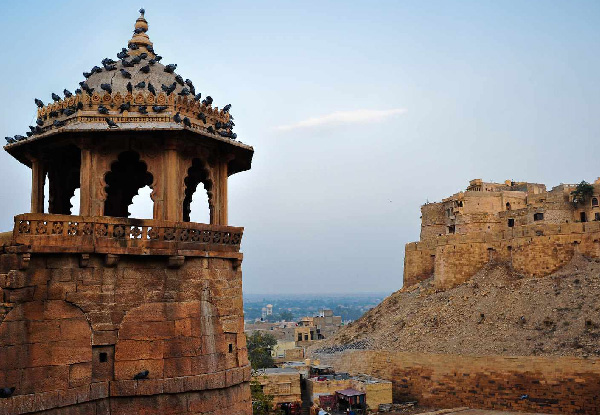
Reason seven: Jaisalmer itself is a living fort city. Dubai's desert safari is an add-on to a modern city of malls and towers. Jaisalmer is a destination in its own right. Its sandstone fort, built in the twelfth century and part of the UNESCO-listed Hill Forts of Rajasthan, still houses thousands of residents, shops, temples and guesthouses inside its walls. The fort palace museum costs about Rs.50 for Indians and Rs.250 or more for foreign nationals, and is open roughly from 9:00 AM to 6:00 PM. Patwon Ki Haveli, a cluster of carved merchant mansions, charges a small separate fee. Combining a heritage morning in the city with an afternoon departure into the dunes gives you two very different worlds in one day.
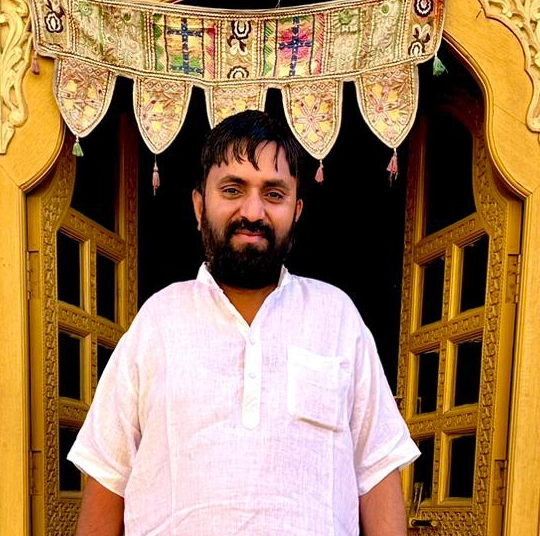
The people make the biggest difference of all. Real Desert Man Camel Safari is led by Sawai Dan, who was born in a desert village and comes from a line of camel herders. The camel handlers, cooks and drivers on our team come from nearby villages, and a share of profits supports camel drivers' families and village needs. In Dubai, the guide is usually a driver on a shift, rotating between several companies. In Jaisalmer, the person leading your camel may have spent forty years with these animals and can tell you which plants they eat, how they find water and how weather changes the dunes from one season to the next.
Experience the Beauty of Jaisalmer's Golden Dunes
Escape into the Thar Desert and enjoy breathtaking sunsets, scenic camel rides and unforgettable landscapes. Discover a traditional desert adventure filled with natural beauty and cultural charm.
WhatsApp Now Contact Us
Heritage, Seasons and Booking Flexibility
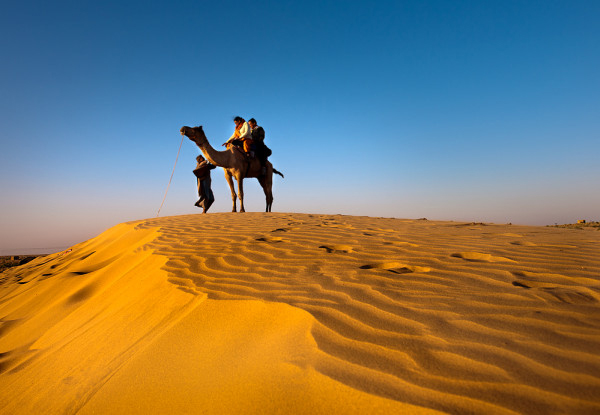
Reason eight: private dunes instead of convoys. A typical Dubai evening involves a convoy of several 4x4 vehicles driving the same dune circuit before reaching a camp that may host two or three hundred guests. Even premium options rarely escape the crowd entirely. In Jaisalmer, a private non-touristic desert safari takes you onto dunes where yours is the only campfire in sight. Couples, families and solo travellers can choose a route that suits them, start earlier or later, add a village visit or a candlelight dinner, and set their own pace. That flexibility is rare in Dubai, where the format is fixed by the camp schedule.
Reason nine: the night sky is far darker. Dubai's desert camps sit within reach of one of the brightest cities on earth, and the glow from the city plus camp floodlights limits stargazing. The dunes west of Jaisalmer are remote, with little artificial light for many kilometres. On a clear winter night, the Milky Way is visible to the naked eye, and guests regularly see shooting stars and satellites crossing the sky. Our open-dune beds are set up away from any generator, and the team keeps lights off after dinner so you can lie back and watch the sky until you fall asleep. Stargazing alone justifies the overnight option.
Reason ten: the experience is owner-led and directly bookable. Most Dubai safaris are sold through resellers, hotel desks and booking apps, with commissions built in and little contact with the people running the trip. In Jaisalmer, you can message Sawai Dan directly on WhatsApp at +91-8769424955 to ask questions, change dates or request special arrangements. There is no call centre and no middle agent. This direct link makes a real difference when dates change, when a flight is delayed or when you want a pickup from the railway station at 5:00 AM, which our team arranges regularly.
Seasons matter for both destinations. Dubai safaris run all year, though summer afternoons often exceed 45°C and some camps reduce hours. Jaisalmer's prime season runs from October to March, when days are around 24°C to 30°C and nights drop to 5°C to 12°C, with December and January the coldest. Summer temperatures in Jaisalmer can pass 45°C, so we adjust routes and timings during April to June. Book at least two to four weeks ahead for late December, New Year and the Desert Festival in February, when demand peaks and prices rise. For most of the season, a safari can be confirmed within a day or two.