Most LGBTQ+ Friendly Cities in Rajasthan: Jaipur vs Udaipur vs Jaisalmer Compared
Overview
Rajasthan pulls couples and solo travellers from every corner of the world, and a growing share of them are LGBTQ+ travellers who want palaces, forts and desert nights without hiding who they are. The honest answer is that comfort levels change from city to city. Jaipur, Udaipur and Jaisalmer sit on the same tourist circuit, yet each one treats same-sex couples, gender-diverse visitors and queer solo travellers a little differently. This guide compares the three cities on the things that matter in real life: hotel check-in, street behaviour, nightlife, local support networks and the private experiences that let you relax. It is written from the ground in Jaisalmer, where our team hosts international guests in the Thar Desert every season, so the advice comes from daily practice rather than theory.
Where Rajasthan Stands for LGBTQ+ Travellers
India's Supreme Court struck down the colonial-era law that criminalised consensual same-sex relations between adults, so being gay, lesbian or bisexual is legal everywhere in the country, Rajasthan included. Transgender people have legal recognition as a third gender, and a national law protects them against discrimination in education, employment and access to services. What India does not yet offer is legal recognition of same-sex marriage or civil unions; the Supreme Court declined to create it and left the question to Parliament. For a visitor, this means you will never face legal trouble for sharing a room, booking a double bed or travelling as a couple, but a foreign marriage certificate carries no weight in Indian paperwork.
Social attitudes lag behind the law, particularly outside big cities. Rajasthan is a traditional state where family, community and religion shape daily life, and public displays of affection are frowned upon for every couple, straight or not. In one way this works in your favour: men holding hands or walking arm in arm is a normal sign of friendship here, and two women sharing a room raises no questions at all. Hotel staff rarely comment when two adults of the same sex check into a double room; they simply assume you are friends. Most visitors describe the mood as curious rather than hostile, and the main risk is unwanted attention, not violence.
Transgender and non-binary visitors face a slightly different picture. Rajasthan has a visible, long-established transgender community, so a gender-diverse traveller is not an unfamiliar sight, but airport security in India still separates passengers by gender at frisking booths. Choose the queue that matches your presentation, keep your passport name handy and allow extra minutes at the airports in Jaipur, Udaipur and Jaisalmer. Toilets at monuments are gendered, and gender-neutral facilities are rare outside upscale hotels and modern cafes.
A few habits make every city easier. Keep affection private, especially in old bazaars, temples and villages. Book directly with hotels and operators who already host international guests, because their staff are used to discretion. Ask for a double bed when you book instead of at the reception counter. Carry a photocopy of your passport and visa, since every hotel in India must record foreign guest details. If anything feels wrong, the national emergency number 112 works across Rajasthan, and the Ministry of Tourism runs a multilingual tourist helpline on 1800-11-1363. These small steps turn a queer-friendly Rajasthan trip from a gamble into a relaxed holiday.
Jaipur: The Most Open City in Rajasthan
Jaipur is the state capital, home to more than three million people, two universities with large student populations and a steady flow of domestic and international business travellers. That size gives it the most relaxed atmosphere of the three cities. Jaipur also hosts Queer Gulabi Pride, the annual pride walk organised by a local community organisation, which has grown from about a hundred marchers at its first edition to a regular fixture in the city calendar. A queer women's collective based in Jaipur runs social events and food walks through the old city, and several modern cafes in C-Scheme, Malviya Nagar and around MI Road have become informal meeting points for younger LGBTQ+ locals.
For accommodation, Jaipur offers the widest choice of LGBTQ+ friendly hotels in Rajasthan. International chains such as Marriott, ITC, Taj and Hyatt follow global diversity policies, and their front desks will not blink at a same-sex couple asking for a king bed. Expect to pay between Rs.9,000 and Rs.25,000 per night for a five-star room in the cooler months from October to March. Boutique heritage hotels in converted havelis cost Rs.6,000 to Rs.15,000 per night and are run mostly by families who have hosted foreign guests for decades. Budget guesthouses near Hathroi Fort and Bani Park start around Rs.2,500, but here the welcome depends on the owner, so read recent reviews before booking.
Nightlife in Jaipur is modest by Delhi or Mumbai standards, yet it exists. Rooftop bars in the old city, hotel lounges and a handful of clubs on Tonk Road stay open until about 11:30 PM to midnight, which is the legal closing time for most licensed venues in Rajasthan. There is no dedicated gay bar in the city, but certain venues host occasional queer nights promoted through Instagram and community groups. Dating apps work in Jaipur, though meeting strangers carries the same caution you would apply anywhere: meet in public, tell someone where you are going and avoid isolated spots after dark.
Sightseeing in Jaipur is easy for couples of any kind. Amber Fort opens from 8:00 AM to 5:30 PM, with tickets around Rs.100 for Indians and Rs.500 for foreign nationals, and the composite ticket covering City Palace, Jantar Mantar, Hawa Mahal and other sites costs around Rs.1,000 for foreigners. Crowds are large, which ironically gives anonymity. The city is best for travellers who want a little social life, a choice of polished hotels and the chance to meet local queer people, and it works well as the first stop on a loop that ends in Udaipur or the desert.
Udaipur: Boutique Stays and a Relaxed Lake Atmosphere
Udaipur is smaller than Jaipur, with around half a million residents, but it carries a reputation as the most romantic city in India, and that reputation shapes how locals treat visitors. Hoteliers here host honeymooners and international couples all year round, and many of the lakeside boutique hotels in the Lal Ghat and Gangaur Ghat area are run by people who have travelled widely themselves. Same-sex couples consistently report that Udaipur feels calm, polite and private. The city has no public LGBTQ+ scene to speak of, yet its pace and its focus on couples' tourism make it one of the most comfortable gay-friendly destinations in Rajasthan.
The accommodation spread is wide. Palace hotels such as Taj Lake Palace and The Oberoi Udaivilas charge Rs.45,000 to Rs.1,20,000 per night in peak season, and their staff are trained to the standard of any luxury resort in Europe. Mid-range lake-view havelis cost Rs.6,000 to Rs.14,000 per night, often with rooftop restaurants facing Lake Pichola and City Palace. Budget rooms in the old city start around Rs.2,000, though thin walls and shared terraces mean less privacy. Booking a room with a private balcony or terrace gives couples a place to sit together at sunset without an audience.
Daily life in Udaipur suits slow travel. The City Palace museum is open from 9:00 AM to 5:30 PM, with tickets around Rs.300 for adults, and a sunset boat ride on Lake Pichola costs about Rs.500 to Rs.1,000 per person depending on the departure point. Bagore Ki Haveli runs a folk dance show every evening around 7:00 PM, with tickets near Rs.200 for foreigners. Private cooking classes, painting workshops and vintage car museum visits give couples quiet activities away from crowded ghats. Restaurants along the lake stay open late enough for a relaxed dinner, but the city winds down by 11:00 PM.
The limits are worth knowing. Udaipur is still conservative in its old neighbourhoods, and temple areas such as Jagdish Temple expect modest dress and no displays of affection. Street touts around the ghats can be persistent with every foreign visitor, regardless of orientation. Overall, Udaipur scores very well for comfort and privacy but offers little in terms of community or nightlife. It suits couples who want beauty, good food and a romantic hotel more than parties or social networking. Getting there is easy: Maharana Pratap Airport has direct flights from Delhi, Mumbai and Bengaluru, and the drive from Jaipur takes about six to seven hours by private car, which costs Rs.9,000 to Rs.13,000 one way in a sedan.
Jaisalmer: Small-Town Rules and Private Desert Freedom
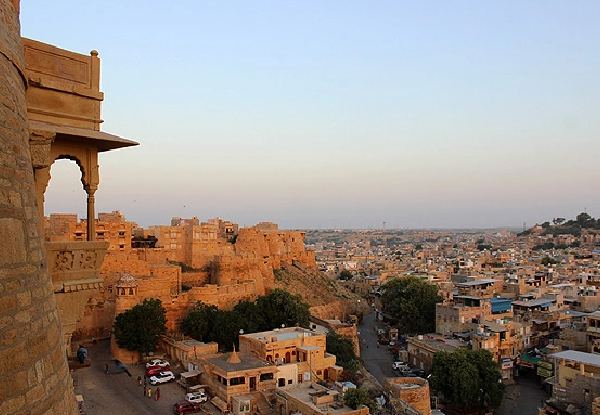
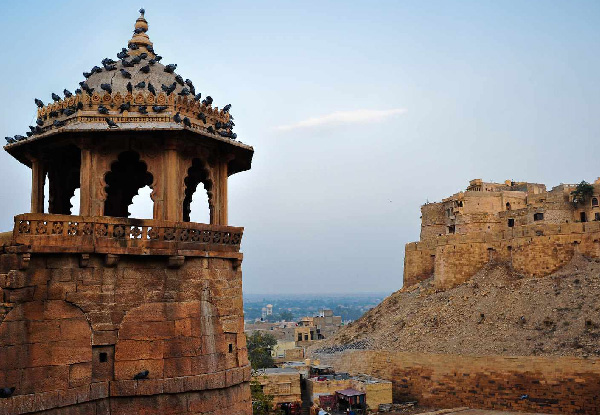
Jaisalmer is the smallest of the three cities, with roughly 80,000 people living around a twelfth-century sandstone fort on the edge of the Thar Desert. It is the most traditional city on this list, and it has no LGBTQ+ venues, no pride events and no visible queer community. That said, it is also a town that has lived on international tourism for decades. Shopkeepers, guides and hotel owners in Jaisalmer meet visitors from Europe, Israel, Australia, Japan and the Americas every day, and most of them treat a couple of any combination with friendly curiosity. Inside the fort and in the old city lanes, discretion is wise; in your hotel and in the desert, you have far more freedom.
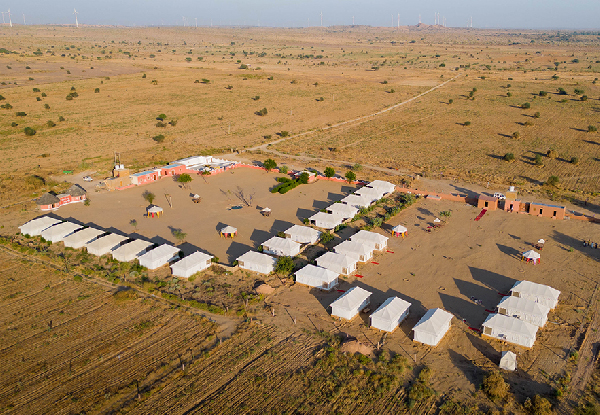
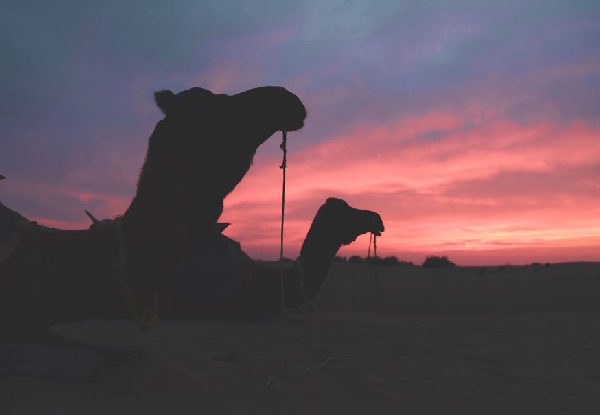
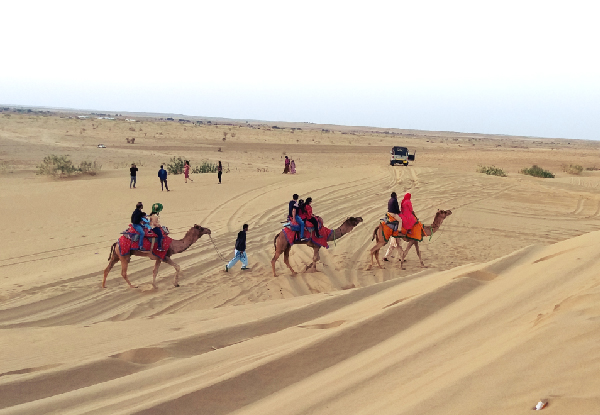
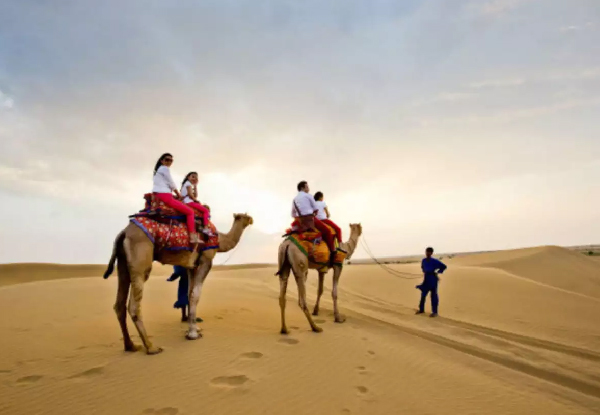
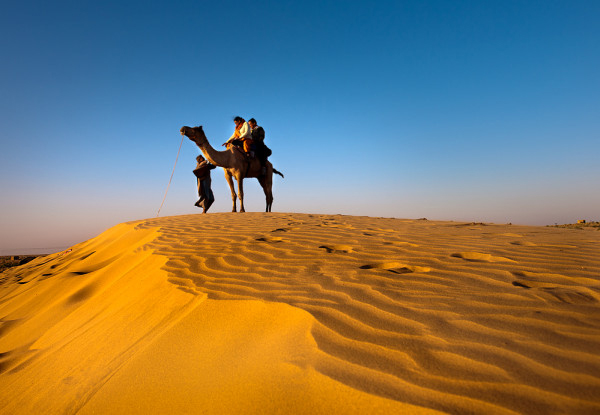
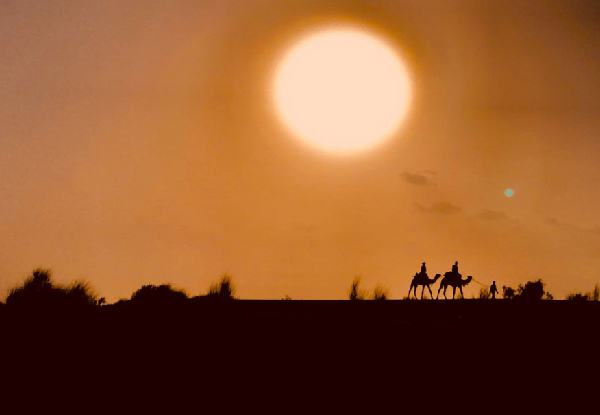
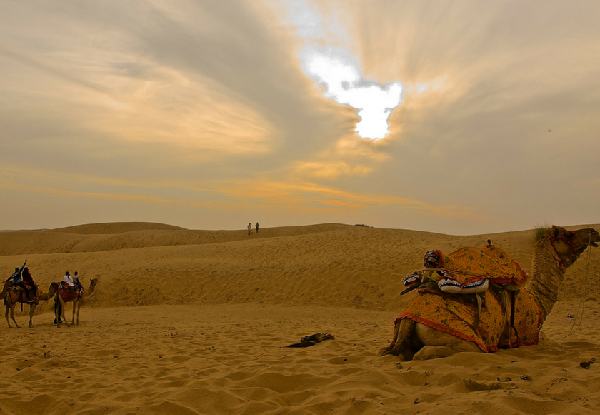
The real advantage of Jaisalmer is privacy in nature. Mass-market camps at Sam Sand Dunes are loud, packed with large groups and staged around a shared stage show, which can feel exposed for a same-sex couple. A private desert safari in Jaisalmer takes you onto quiet dunes away from Sam, with only your camel handler and cook nearby. You can choose to sleep under the open sky on beds placed directly on the sand, or in a private Swiss tent, and nobody watches who shares which bed. Many of our LGBTQ+ guests describe that night as the most relaxed moment of their whole India trip.
Costs in Jaisalmer are lower than in Jaipur or Udaipur. Heritage hotels near the fort cost Rs.4,000 to Rs.12,000 per night, and The Rising Haveli, our family-run sister property a short walk from the fort, offers fort-view rooms with rooftop dining. An overnight camel safari with dinner, breakfast and a night on the dunes starts from Rs.2,500 plus tax per adult on a two-sharing basis, while a luxury camp night with a Swiss tent and attached bathroom starts from Rs.3,500 plus tax. Private arrangements with exclusive dunes, candlelight dinners or two-night routes cost Rs.7,000 to Rs.15,000 per person depending on comfort level and season.
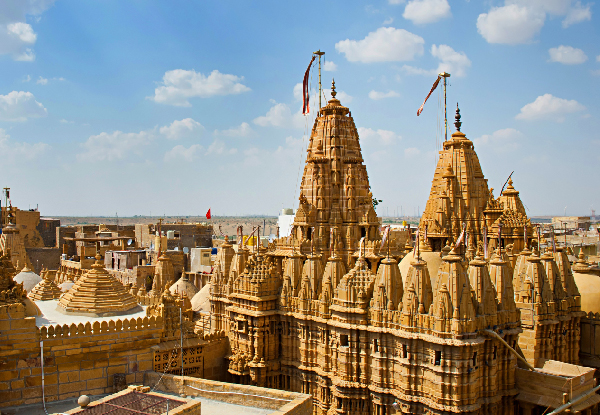
Practical tips for Jaisalmer are simple. Dress modestly in the fort and at the Jain temples, where shorts and sleeveless tops are refused at the entrance. Keep hand-holding for the hotel rooftop or the desert. Book directly with an operator you can reach on WhatsApp, so any request for privacy is clear before you arrive. Sawai Dan, who runs Real Desert Man Camel Safari, speaks directly with every guest before the trip and arranges private dunes, separate tents or a shared open-sky bed exactly as you prefer, with no questions and no commentary.