Offbeat Desert Camp in Jaisalmer: Sleep on Open Dunes, Away from Crowds
Overview
There are two kinds of nights in the Jaisalmer desert. One happens in a large camp beside the Sam road, with rows of identical tents, a stage, a loudspeaker and a buffet queue. The other happens on a quiet dune where the only sounds after nine o'clock are the wind, a camel shifting in the sand and the crackle of the last embers. The second kind is what people mean when they search for an offbeat desert camp in Jaisalmer. It might be a simple bed laid out under the open sky or a small cluster of tents with no neighbouring camp in sight. Either way, the night is the whole point.
This guide covers how these quieter camps are set up, the difference between sleeping in the open and sleeping in a tent, what happens from arrival to breakfast, what you will eat, how toilets and water work, what it all costs and how to stay warm when the temperature drops close to freezing. If you have only ever seen the big camps in photographs and wondered whether there is a calmer way to spend a night in the Thar, there is, and it is easier to arrange than most people think.
What Makes a Desert Camp Truly Offbeat
A camp is not offbeat just because a website calls it that. Around Sam Sand Dunes there are well over a hundred commercial camps, many of them built side by side along the same stretch of road. Each one may look peaceful in photographs taken at noon, but at night the music from one camp carries easily to the next. A genuinely quiet desert camp near Jaisalmer has three features. The first is distance from other camps. On a good site you should not see another camp's lights from your bed, and you should not hear another camp's sound system. This normally means the camp is set up away from the main Sam strip, on dunes near villages such as Kanoi or Damodara, around Khuri village rather than its main ridge, or deeper into the scrubland where only camels can reach. The second feature is scale. Offbeat camps are small. An open-dune camp might host one group of two to ten guests.
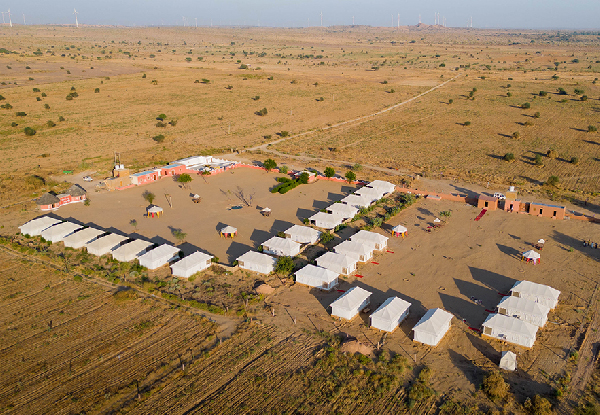
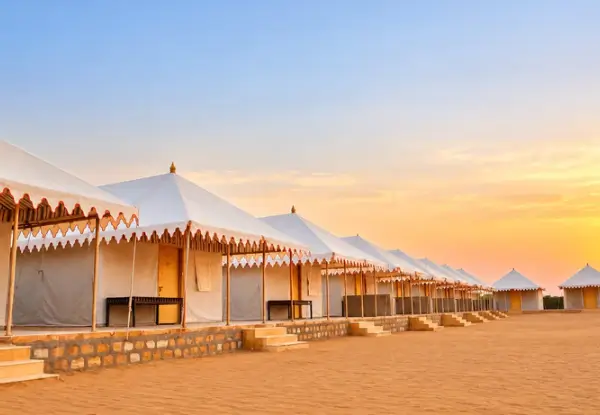
A quiet tented camp might have six to fifteen tents at most, compared with fifty or more at a large Sam camp. Smaller numbers mean the staff remember your name, dinner is cooked rather than reheated and there is space on the dune to sit alone. The third feature is the absence of a stage show built for crowds. Many quiet camps still offer folk music around the fire, often played by a couple of local musicians or simply by the crew themselves, but there is no amplified dance floor and no performance timed for two hundred guests. You can join in or sit back with a cup of tea and watch the sky. It also helps to think about what you are giving up. Offbeat camps rarely have swimming pools, bars, generators running all night or televisions in the tents. Mobile signal can be weak. Electricity in tented camps is often solar, enough for lights and phone charging but not for hair dryers.
For most guests this is part of the appeal, but it is worth knowing in advance. When you contact an operator, ask how many guests the camp hosts on a busy night, whether any other camp is visible, and whether there is any amplified music. Clear, specific answers are a good sign. If the reply is vague or simply repeats that the camp is "peaceful", ask for photographs taken at night or recent reviews that mention the noise level. Real non-touristic desert camps are proud of their silence and will happily tell you about it.
Discover Jaisalmer’s Hidden Desert Retreats
Escape the crowded tourist camps and experience the quieter beauty of the Thar Desert. Stay close to nature, enjoy breathtaking golden dunes, and discover a more authentic side of Jaisalmer with Real Desert Man Safari. Your extraordinary desert escape begins here.
WhatsApp Now Contact Us
Open-Dune Bed or Swiss Tent: Two Ways to Sleep
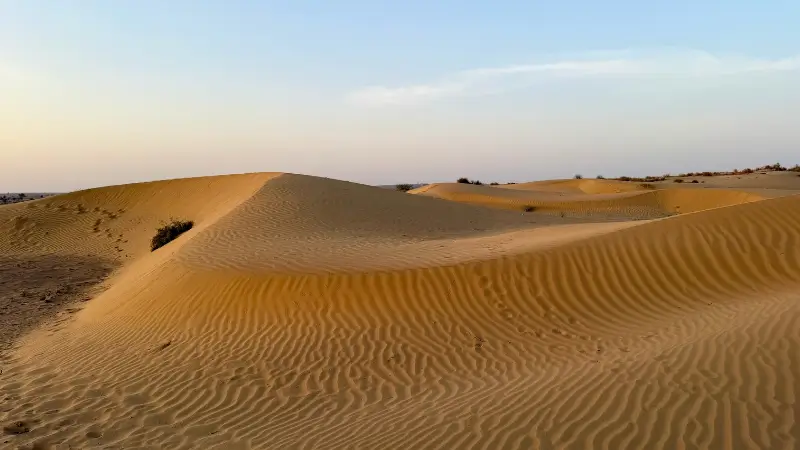
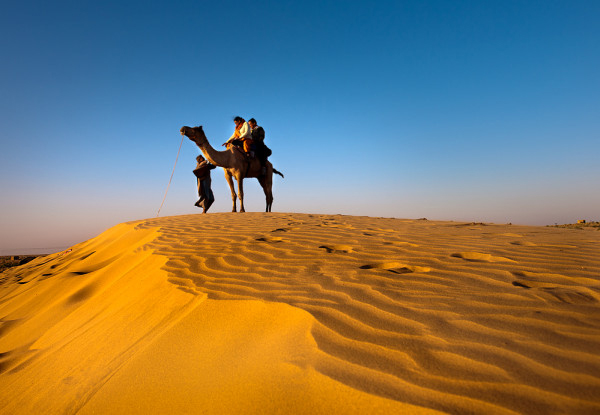
The choice between sleeping in the open and sleeping in a tent shapes the whole night, so it is worth weighing both. Sleeping under the stars in Jaisalmer is the more traditional option. The crew smooths a patch of sand on the dune, sets down folding rope cots or thick mattresses, and covers them with clean sheets, pillows and several heavy quilts. Your bed faces the open sky. On a clear winter night with no moon, you will see thousands of stars and the band of the Milky Way stretching across the dark. Many guests wake at 3:00 or 4:00 am simply to watch it turn, and shooting stars are common. The downside is exposure.
There is no wall between you and the wind, and dew can make the outer quilt damp by dawn. You also share the dune with the camels, which usually rest a short distance away and sometimes grunt during the night. Most people find this charming; light sleepers may want earplugs. Toilets are a walk into the dunes with a torch. The second option is the Swiss tent camp in a quiet location. These are canvas tents on a solid base, with a proper bed, side tables, a lamp and, in better camps, an attached bathroom with a flush toilet, a sink and a shower with hot water from a solar or gas heater. You get privacy, a lockable space for your bags and shelter from wind and dew. The trade-off is that you see the stars only when you step outside, and some of the wild feeling is lost.
Several operators now offer the best of both. You sleep one night in the open on the dunes and a second night in a tent, or you sleep in a tent but have your bed carried out onto the sand for a few hours of stargazing before moving back in when it gets cold. Couples on special occasions sometimes ask for a private open-dune setup with a lantern-lit dinner, which is easy to arrange with a day's notice. For families with small children, older travellers or anyone visiting in late December and early January when nights are coldest, a tent is usually the more comfortable choice. For young travellers, photographers and anyone who has dreamed of falling asleep with nothing but sky above them, the open dune is hard to beat. Whichever you choose, ask the operator how many quilts are provided, whether the beds have a raised frame or sit directly on the sand, and if you can switch to a tent if the weather changes.
An Evening at the Camp, Hour by Hour
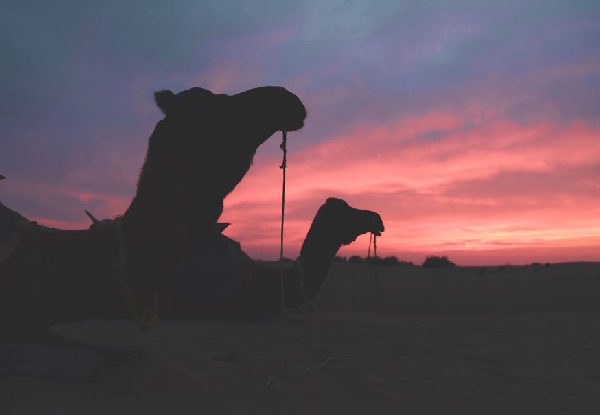
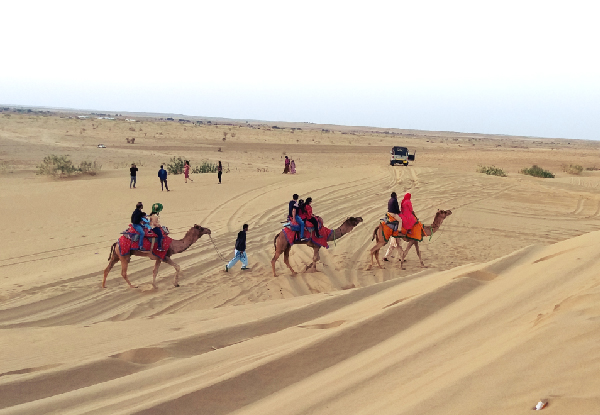
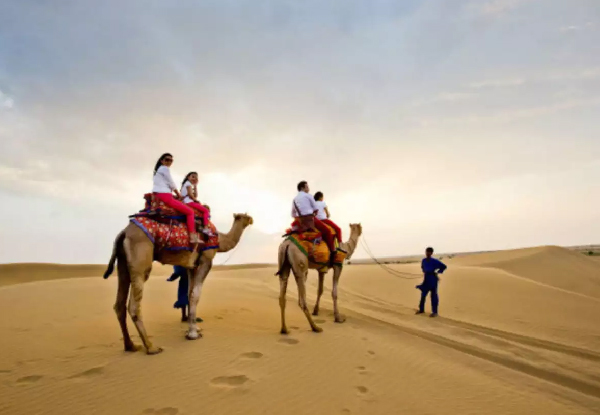
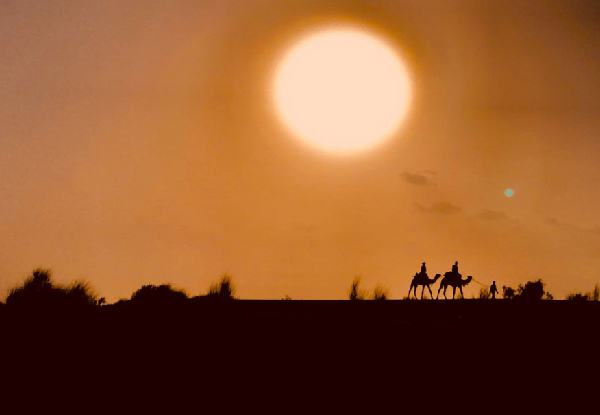
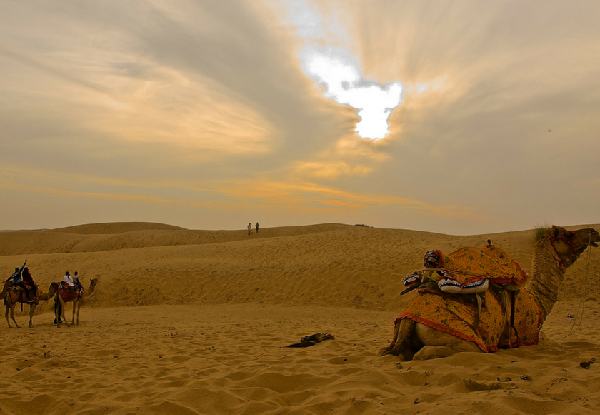
Most guests arrive at an offbeat camp in the late afternoon after a jeep transfer and a camel ride, so the evening has a gentle rhythm. Between 5:30 and 6:15 pm in winter, or closer to 6:45 pm in spring and autumn, you reach the camp just before sunset. Bags are unloaded and you have a few minutes to wash your face and pull on a warm layer. Then everyone climbs the nearest ridge to watch the sun drop. On a quiet dune this is a slow, silent half hour. The colours move from gold to orange to deep pink, and the shadows of the dunes stretch far across the sand. Back at camp, the crew lights the fire and serves hot spiced tea with fried snacks such as onion fritters or potato chips.
This is when conversation starts. The camel handlers talk about their animals, the weather and life in their village, and guests trade travel stories. If a couple of local musicians have come out from the village, they begin playing desert folk songs on a bowed string instrument and a pair of hand-held clappers around 7:00 pm. Dinner is usually ready between 7:30 and 8:30 pm. At an open-dune camp it is cooked right in front of you: a lentil curry, one or two vegetable dishes, rice and fresh flatbread baked on the embers. Tented camps often serve a set meal at a long table or on low seating around the fire. Food in either case is simple, fresh and generous.
After dinner the fire becomes the centre of the evening. Some guests stay up until 10:00 or 11:00 pm talking and stargazing. Others head to bed early, especially after a long day of travel. There is no fixed lights-out, but the crew usually starts tidying around 9:30 pm, and the camp becomes very quiet by 10:30 pm. In winter, the temperature falls sharply after 9:00 pm, so keep your warm layers close. Many guests set an alarm for the early hours to catch the clearest view of the sky. Sunrise in winter comes between 7:00 and 7:20 am. Tea arrives first, often brought right to your bed if you slept in the open. Breakfast follows around 8:00 am, usually toast, butter and jam, eggs cooked to order, porridge or a savoury dish, plus fruit and more tea or coffee. By 9:00 or 9:30 am you are packed, and depending on the itinerary you ride or drive back to the city, arriving by 10:30 or 11:00 am.
Food, Water and Toilets: The Practical Details
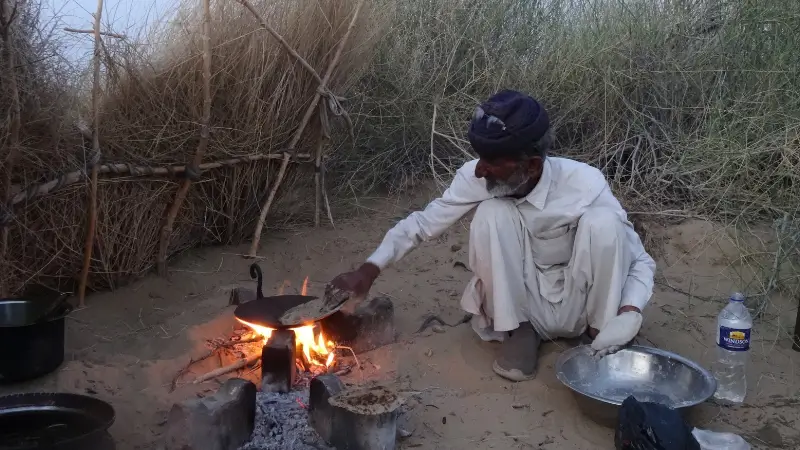
The practical side of desert camping is what most guides skip, yet it decides whether a night is comfortable. Start with food. At an open dune camping site, everything is cooked on a wood or gas fire by the crew. Menus are almost always vegetarian by default, built around lentils, beans, seasonal vegetables, rice and freshly made flatbread. Spice levels are moderate for visitors, but if you prefer mild food, say so at the start. Eggs, chicken or mutton can usually be arranged if requested a day ahead. Quiet tented camps often have a small kitchen tent and may offer a slightly longer menu, including soup, a sweet dish and a choice of breads. Water is carried in.
Good operators bring large sealed containers of filtered drinking water and refill your bottle, which saves plastic. Bottled water is also available. Ask for at least two to three litres per person for the night and morning. Water for washing is limited at open-dune camps, so expect a basin and a jug rather than a tap. Wet wipes are your friend. Toilets are the question most people are shy to ask. At an open-dune camp there is no toilet structure. You walk a short distance away with a torch and a small trowel or simply dig into the sand, then cover it.
Some operators carry a portable toilet tent for guests who request one; ask in advance. Swiss tent camps in quiet locations generally have attached bathrooms with flush toilets, a sink and a shower. Hot water is often available only in the evening and early morning, when the solar or gas heater has been running, so time your shower accordingly. Electricity is usually solar. Expect a few lights, a charging point in a central area or in each tent, and no high-power appliances. Bring a power bank for your phone and camera, especially if you are spending two nights in the open.
Mobile network coverage near Sam and Khuri is patchy; some networks work on top of the dunes, others not at all. Tell family that you may be offline for the night. Alcohol is generally not served at quiet camps, but most operators allow guests to bring their own beer or wine, provided it is consumed responsibly and bottles are carried back. Finally, ask how rubbish is handled. Responsible camps carry all waste back to the city rather than burning plastic or burying it in the sand. A camp that thinks about these small details is usually one that takes care of its guests as well.
Your Exclusive Escape into Jaisalmer’s Golden Sands
Make your desert holiday more personal with a stay in a quieter part of the Thar Desert. Explore offbeat camp options with Real Desert Man Safari and find an experience that suits your travel style.
WhatsApp Now Contact Us
Cost of an Offbeat Desert Camp and What You Get
Prices for an offbeat desert camp in Jaisalmer depend on the type of bed, the location and the season. The figures below reflect peak-season rates from October to March and include transfers, dinner and breakfast unless stated otherwise. A night on the open dunes with a camel ride, simple dinner, breakfast and bedding generally costs Rs.2,500 to Rs.4,000 per person on a shared basis. A night in a quiet Swiss tent with an attached bathroom costs roughly Rs.3,500 to Rs.6,000 per person, again including the camel ride and meals.
Larger cottage-style luxury tents in a remote setting, with better furniture, private seating and more attentive service, usually range from Rs.7,000 to Rs.12,000 for two people. A private open-dune setup for a couple, with your own crew, lanterns, a set dinner and decoration for a birthday or anniversary, typically costs Rs.12,000 to Rs.20,000 for two. Two-night combinations, such as one night on the open dune and one in a tent with a village visit in between, often fall between Rs.7,500 and Rs.10,000 per person. Most quotes add five percent tax.
Christmas, New Year and the Desert Festival period can push all these prices up by 25 to 50 percent. Some quiet camps hold special evenings on 31 December with a bonfire, live folk music and a set menu, priced from about Rs.5,000 to Rs.8,000 per person for a single night. It is also worth checking how the price is presented. Some operators quote per adult, while others quote for two people sharing a tent or bed, with single travellers paying around one and a half times that figure. Children under five often stay free, and children between five and eleven are usually charged half. When comparing with a big Sam camp, look beyond the headline figure.
A Sam camp might advertise Rs.1,500 to Rs.3,000 per person, but extras such as jeep dune bashing (Rs.1,500 to Rs.3,000 per jeep), longer camel rides, drinks and a tent upgrade quickly close the gap. In an offbeat camp, the main thing you are paying for is space and quiet, and very little is sold to you once you arrive. Tips are optional, but Rs.200 to Rs.500 per guest for the crew after a night in the open is a kind gesture. If you book directly with a local operator rather than through a third-party website, you also get the chance to talk to the people who will actually run the camp, ask questions and adjust the details to suit your group.
Staying Warm, Comfortable and Safe Through the Night
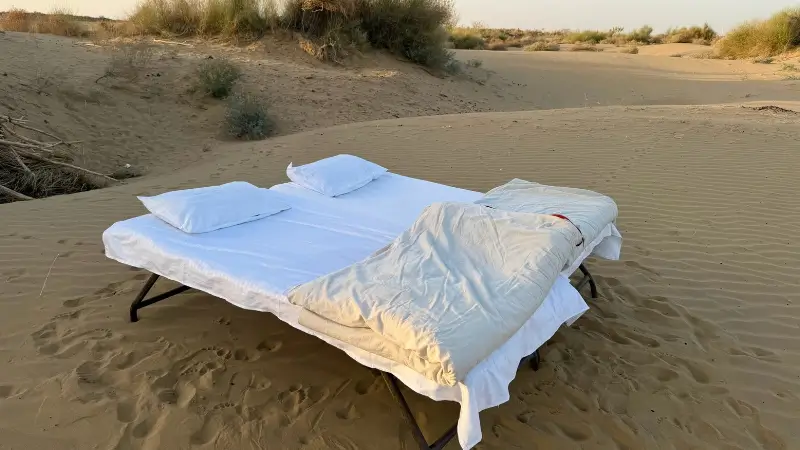
Desert nights surprise almost everyone. A December afternoon in Jaisalmer can feel like 25 degrees, yet by midnight on the dunes the temperature can fall to 4 or 5 degrees Celsius, and on rare cold nights in early January it can approach freezing. Comfort starts with the right clothing. Bring thermal leggings, a long-sleeved base layer, a fleece or sweater, a warm jacket, a woollen hat and thick socks. Sleep in your base layers and keep the hat on, since much body heat escapes from the head. The quilts provided by a good crew are heavy and warm, usually three or four per person in winter. Tuck the edges under the mattress to stop wind sneaking in. If you are sleeping in the open, ask the crew to set your bed in a dip or on the lee side of a dune, which cuts the wind noticeably.
A camping pillow or a scarf wrapped over your face keeps sand and cold air off. In a tent, close all flaps before dark and keep the door zipped; small gaps let in surprisingly cold air. Comfort in the warmer months is different. In March, April and October, nights are mild and a single sheet or light blanket is enough. Mosquitoes are rare on the dunes but a small bottle of repellent does no harm. During the monsoon months, choose a tent so you have shelter if rain arrives.
Safety on a quiet dune is mostly about choosing a reliable operator. A good crew stays with the group through the night, sleeping a short distance away, and keeps a torch and a phone handy. They know the area, the nearest village and the route back to the road. Solo travellers, including women, regularly sleep on the open dunes with reputable operators and describe feeling well looked after. Read recent reviews and look for mentions of solo or female guests.
Wildlife is not a real concern. You may see a desert fox, a hare or a beetle, and occasionally hear stray dogs in the distance, but none pose a threat to sleeping guests. Scorpions exist in the desert but are rarely seen in cold months; shake out your shoes in the morning as a simple precaution. Keep the fire under the crew's control and never leave candles burning near bedding. Finally, carry any personal medicines, a small first-aid kit with plasters and pain relief, and let the crew know about allergies or medical conditions. If anyone in the group feels unwell during the night, the jeep can return to the city in under an hour from most offbeat sites.
Matching the Camp to Couples, Families and Solo Travellers
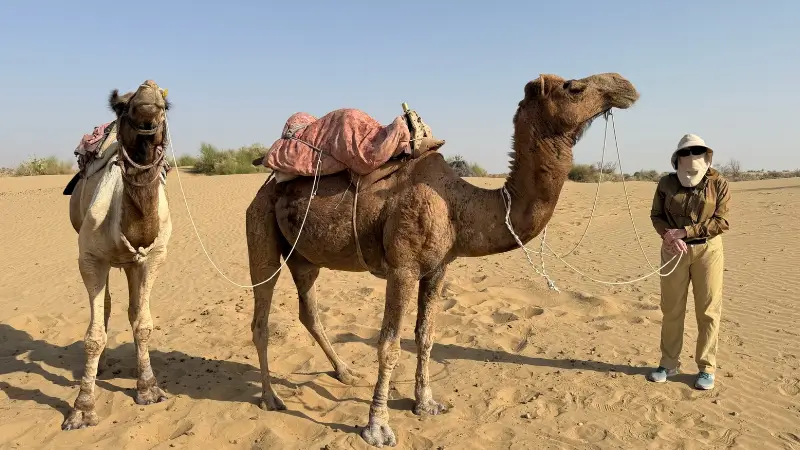
The same quiet dune can feel very different depending on who you are travelling with, so it pays to match the camp to the group. Couples often want privacy above everything else. For them, a private open-dune setup or a small tented camp with only a handful of tents works best.
A romantic desert camp in Jaisalmer can include a candlelit dinner on the sand, a bed placed a little away from the crew and a slow sunrise breakfast. Honeymooners and couples marking an anniversary usually ask for the private setup and are happy to pay the extra for it. Families with children benefit from a tented camp with attached bathrooms, regular meal times and a bit more structure. Children love the camel ride, the fire and helping to make flatbread, but they also appreciate a proper bed and a toilet nearby.
Choose a camp that allows children to sleep with parents in a family tent, and ask whether milk, mild food and extra blankets are available. Older travellers or those with limited mobility should look for a camp reachable mostly by jeep, with a short or optional camel ride and attached bathrooms. Mention any needs early; operators can often arrange a tent close to the dining area and avoid steep dune climbs. Solo travellers often enjoy the open-dune format most, because sitting around a fire with a small group and the crew is a natural way to meet people.
Look for operators who mix small groups on shared nights and who have strong reviews from solo guests. Women travelling alone should read reviews from other women and feel free to ask the operator directly about sleeping arrangements and crew. Photographers and stargazers should choose dates close to the new moon, when the sky is darkest, and pick an open-dune setup with no lights.
Ask the crew to keep the fire low after dinner and to let you wander a little way from camp with a tripod. Groups of friends often book a private dune for the whole party, which lets them stay up late without disturbing anyone. Whatever kind of traveller you are, be honest with the operator about your expectations. A clear conversation before booking, covering comfort, privacy, food and budget, is the simplest way to make sure the camp you get matches the night you have been imagining. A two-minute phone call or a short exchange of messages with the person who will actually run the camp tells you more than any brochure, and it gives the crew a chance to prepare properly for your group.