Offbeat Desert Safari in Jaisalmer: Beyond Sam Sand Dunes
Overview
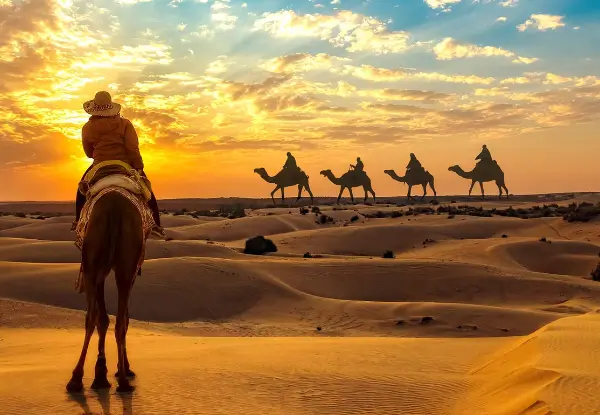
Most people who arrive in Jaisalmer have already seen the same photograph a hundred times: a line of camels on a ridge of sand, a red sky, and a row of jeeps parked just out of frame. That photograph is almost always taken at Sam Sand Dunes, about 42 kilometres west of the city. Sam is famous for good reasons, but by five o'clock on a winter evening it can hold thousands of visitors, loud music from a dozen camps and a steady stream of quad bikes.
An offbeat desert safari in Jaisalmer is the answer for travellers who want the same golden sand without the noise. It uses smaller dunes, village tracks and open scrubland that most tour buses never touch. The camel walks at its own pace, the guide has time to talk, and the only lights after dark are the cooking fire and the stars. This guide covers where these quieter dunes are, how a typical afternoon-to-morning trip runs hour by hour, what it really costs, what to wear in each season and how to tell an honest operator from one that simply drives you to Sam and calls it remote.
How an Offbeat Route Differs from Sam Sand Dunes
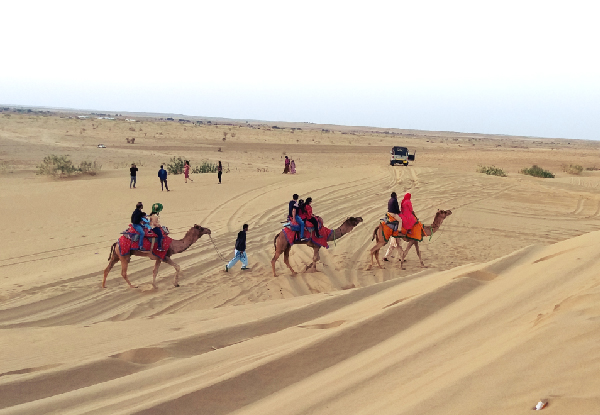
The first difference is the number of people. On a busy December evening at Sam, the main ridge can feel like a fairground, with photographers selling prints, children selling drinks and camel owners competing for riders at roughly 300 to 600 per short ride. On a non-touristic camel safari, the group is usually your own party plus one or two camel handlers. You may pass a herder moving goats to a water point or a farmer checking his fields, but you will rarely see another tourist group once the jeep drops you at the starting village. The second difference is the shape of the land. Sam has tall, clean dunes that are easy to reach by road, which is exactly why every camp is built there.
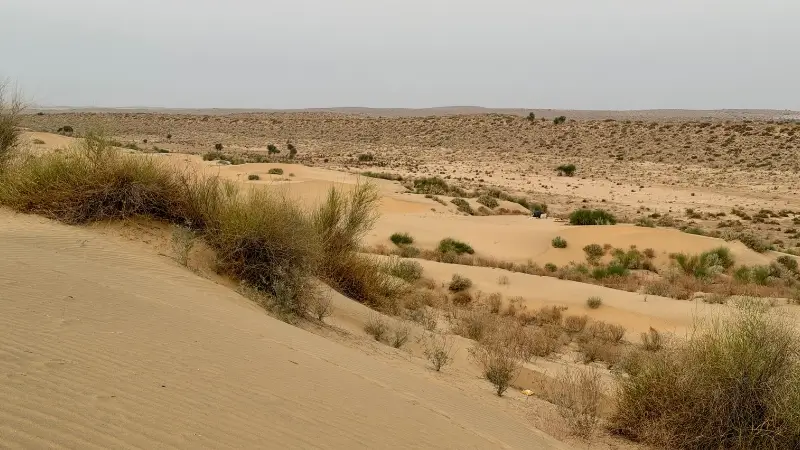
The offbeat dunes near Jaisalmer are lower and more scattered, broken by patches of thorny scrub, rocky plateaus and the odd village pond. Many travellers find this landscape more honest, because it is how most of the Thar Desert really looks: not an endless sea of sand, but sand, stone, shrubs and small settlements living together. The third difference is time.
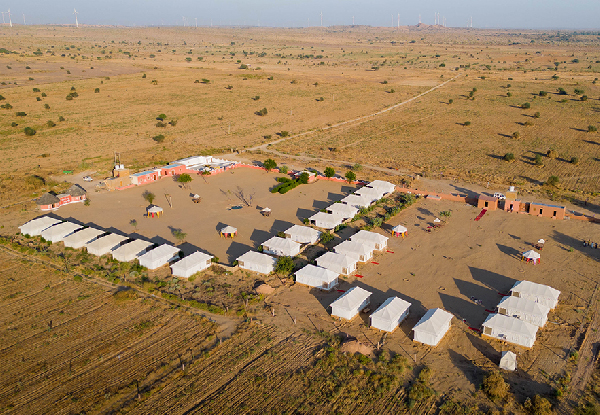
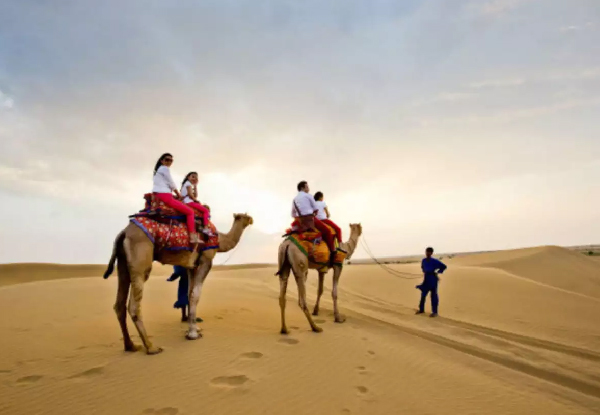
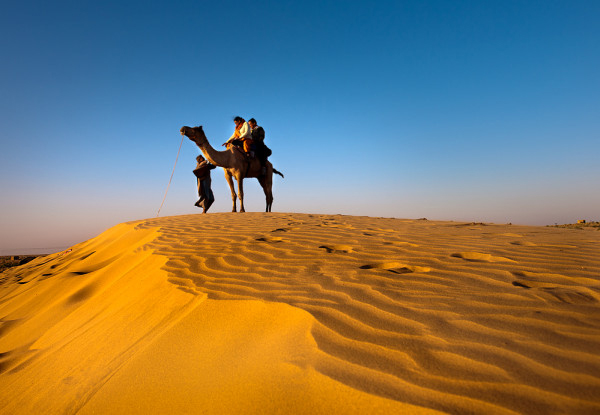
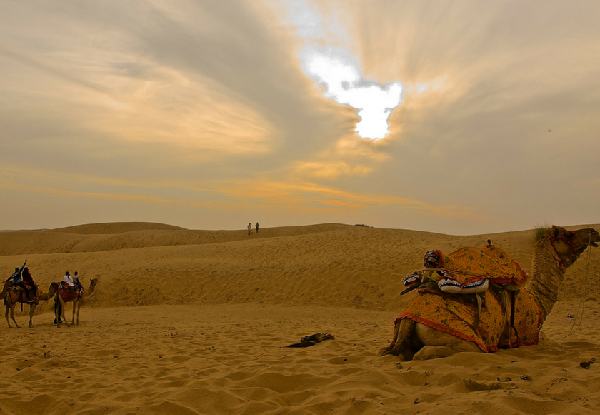
A standard Sam package often gives you a 20-minute camel ride timed for the sunset crowd, then moves you straight to a cultural show and buffet. An offbeat desert safari usually gives you one and a half to two hours on the camel, a slow sunset on a ridge you have to yourself, dinner cooked over an open fire and a night either under the sky or in a simple tent with no amplified music. The fourth difference is the guide. On the quieter routes the person leading your camel is often from a family that has worked with camels for generations. He knows which wells still hold water, which plants the camels eat and how to read the wind before a dust storm.
Ask questions and you get real answers rather than a memorised script. The last difference is what you remember. Visitors to Sam tend to remember the crowd and the show. Visitors who take the quieter route tend to remember the silence after sunset, the sound of a camel chewing in the dark and the cold sand under their feet at dawn. If those details matter more to you than a stage performance, the offbeat route is the better choice, and it costs only slightly more than a mid-range Sam camp once the extras at Sam are added up.
Discover the Hidden Side of Jaisalmer
Escape the usual tourist routes and explore the quieter beauty of Jaisalmer’s golden dunes. Experience scenic desert landscapes, authentic local charm, and a more personal adventure with Real Desert Man Safari. Make your Rajasthan journey truly unforgettable.
WhatsApp Now Contact Us
Where the Quiet Dunes Actually Are
The phrase "offbeat" gets used loosely, so it helps to know the real geography. Most quiet routes run in the belt between Jaisalmer and Sam, but off the main road. Villages such as Kanoi and Damodara sit within reach of the Sam highway yet have their own smaller dune fields where camels can walk for an hour without meeting a single jeep. Further south, the area around Kuldhara and Khaba, both abandoned settlements, has rocky ground mixed with low dunes, which makes for a varied ride with ruins in the background.
Kuldhara is about 18 kilometres from the city and Khaba a little further, so many offbeat itineraries start with a stop at one of them. Khuri, roughly 45 to 50 kilometres southwest of Jaisalmer, is often sold as the quiet alternative to Sam. It is quieter, but its main dune ridge now has its own cluster of camps, so the truly peaceful part of a Khuri desert safari lies in the dunes around the village rather than at the main viewpoint. A good operator will use these smaller pockets rather than the obvious ridge.
The deep desert safari in Jaisalmer goes further still, into areas where the camel is the only practical way to move. These routes link several small dune fields over two or three days, with nights spent beside herders' grazing grounds or near village water tanks. The terrain is a mix of firm gravel, soft sand and scrub, and you may cover 15 to 25 kilometres a day on camelback. Be wary of anyone who promises "untouched dunes where no tourist has ever been" within 20 minutes of the city. The desert around Jaisalmer has been crossed by caravans, herders and soldiers for centuries, and what you are really paying for is distance from the crowd, not a place nobody has seen.
Ask your operator three simple questions before booking: which village does the camel ride start from, which dunes will you sleep on, and will you see another camp from your sleeping spot? A genuine answer will name actual villages and give you a rough distance. A vague answer such as "special secret dunes" usually means the jeep will take you to a quieter corner of Sam. Some travellers also ask to see photographs of the night camp taken by previous guests, which is a quick way to check whether the setting really is remote. Remember too that the Indian border lies further west, and some areas beyond Sam need permits, so a reliable local operator matters for routes that go deeper.
A Real Afternoon-to-Morning Itinerary with Timings
The most popular format is the overnight trip that runs from about 2:00 pm to 11:00 am the next day, and it is worth knowing how the hours actually unfold. Pickup from your hotel, guesthouse or the railway station is usually at 2:00 pm. Many operators also store luggage in their office for free, which helps if you are leaving Jaisalmer the next day.
The jeep heads out of the city and reaches Kuldhara by around 2:45 pm. You spend 30 to 45 minutes walking through the ruined lanes while the driver or guide tells the story of the families who left the settlement. From there the jeep follows smaller roads to the starting village and you meet your camels between 3:45 and 4:15 pm. The overnight camel safari in Jaisalmer then begins.
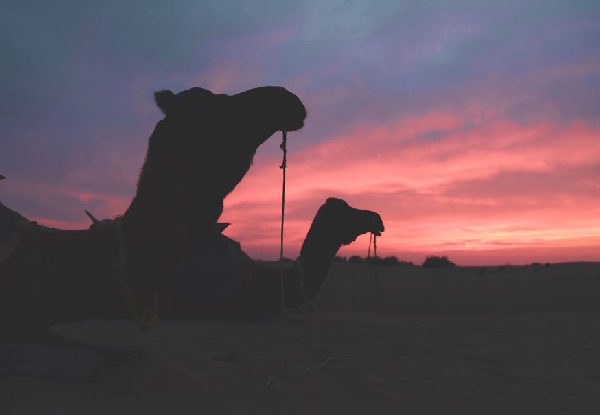
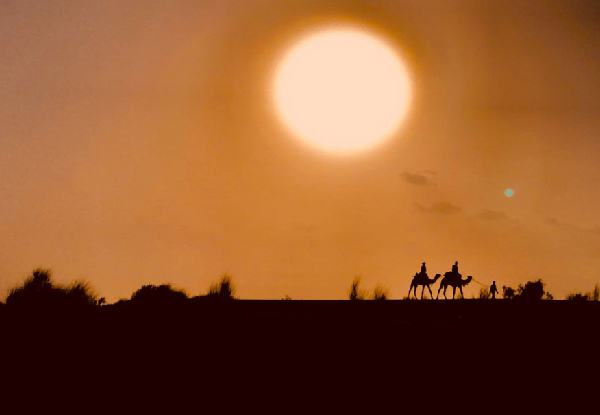
Expect about 90 minutes in the saddle, with a short stop halfway so you can stretch your legs. In winter the sun sets between 5:45 and 6:15 pm, so you reach the sleeping dune just as the light turns orange. In April and October sunset is closer to 6:30 to 7:00 pm, which gives a slightly later and warmer ride. Once the camels are unloaded, the crew lights a fire, puts on a pot of spiced tea and serves fried snacks while the sky darkens.
Dinner is normally ready by 7:30 to 8:00 pm and is simple: lentils, a seasonal vegetable, rice and flatbread cooked on the coals. Guests are often invited to help roll the bread, which many travellers later describe as the best part of the evening. After dinner there is time around the fire. Some crews sing traditional desert songs, others simply talk about camels, weather and village life. Bedding is laid out on the sand or on folding rope cots by 9:00 pm. In winter you will get several heavy quilts, because night temperatures drop to 5 to 8 degrees Celsius in December and January. Sunrise comes between 7:00 and 7:20 am in winter.
The crew makes tea first, then breakfast of toast, eggs or porridge, and fruit. Depending on the route, you either ride the camels back to the jeep for 30 to 45 minutes or walk a short distance to the pickup point. You are usually back at your hotel between 10:30 and 11:00 am, sandy, rested and with a full day still ahead. Shorter versions exist too. A sunset camel safari in Jaisalmer without the overnight stay runs from 2:00 pm to about 9:00 pm and includes dinner on the dunes before the drive back, which suits travellers with an early train next morning.
Camel, Jeep or On Foot: Choosing How to Move
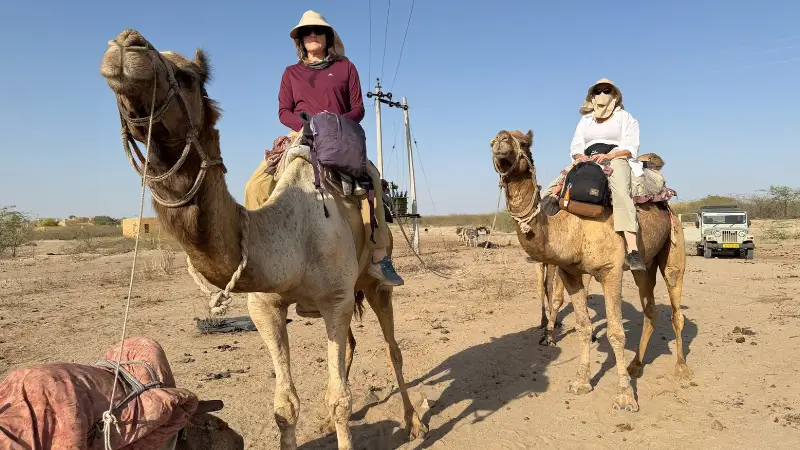
The camel is the classic choice, and for good reason. It moves at walking pace, it can cross soft sand that would bog down a car, and from the saddle you see far across the scrub. A well-trained camel is calm and steady. Mounting and dismounting are the only tricky moments, because the animal rises back legs first and you lurch forward before it straightens. Lean back as it rises and forward as it kneels, hold the front of the saddle and you will be fine. Most adults are comfortable for 90 minutes. Beyond two hours, the inside of the thighs starts to ache, so on multi-day trips the handlers mix riding with short walks.
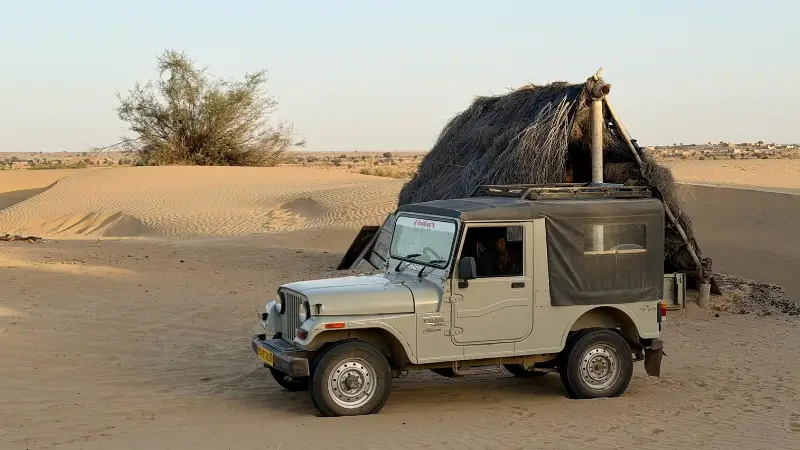
Children over five usually ride with a parent or on their own camel with the handler walking alongside. A jeep safari in Jaisalmer covers more ground and is ideal for reaching Kuldhara, Khaba or the far edge of a dune field quickly. On offbeat routes the jeep is mostly a transfer vehicle rather than a thrill ride. Dune bashing, where a driver races up and over steep dunes, is mostly done at Sam and is the opposite of a quiet experience, so do not expect it on a non-touristic trip.
A private jeep for the afternoon transfer and next-morning return is normally included in the package price. Walking is underrated. Some travellers, including people with back problems or those who simply prefer not to ride animals, ask to walk beside the camels instead. Good operators allow this without fuss, and a slow walk over the dunes at sunset is a lovely way to feel the sand and hear the silence. On firm ground you will cover about three to four kilometres an hour. On soft sand it is closer to two, so allow for that. A mixed approach works best for most groups. Take the jeep to the starting village, ride the camel to the sunset point, walk the last stretch to camp if you feel like it, and ride or walk back in the cool morning.
Tell your operator in advance if anyone in the group has knee, hip or back issues so a suitable camel is chosen and the route is adjusted. Pregnant travellers are usually advised to skip the camel and take a short walk or jeep instead. Whatever mix you choose, wear closed shoes for the walking stretches because thorny shrubs and hot sand can catch out anyone in sandals. Long trousers also help on the saddle, since shorts quickly lead to chafing.
Experience the Thar Desert Beyond the Ordinary
Leave the standard sightseeing trails behind and discover the natural beauty of Jaisalmer’s desert landscapes. Enjoy a memorable offbeat safari with Real Desert Man Safari and experience Rajasthan from a fresh perspective.
WhatsApp Now Contact Us
Costs, Entry Fees and What a Fair Price Looks Like
Prices around Jaisalmer vary widely, and the cheapest offers often hide extra charges. A fair way to compare is to look at what is included and then add up the extras you would otherwise pay. A shared offbeat overnight camel safari with jeep transfers, a 90-minute ride, simple dinner, breakfast and bedding under the stars generally costs between Rs.2,500 and Rs.4,000 per person in the peak season from October to March. Small luxuries such as a tent with a bed and a private bathroom raise this to about Rs.3,500 to Rs.5,500 per person.
A private trip for a couple, with your own camels, crew and sleeping spot, typically falls between Rs.7,000 and Rs.12,000 for two people. Multi-day deep desert safari routes of two or three nights run from about Rs.5,500 to Rs.9,500 per person, depending on group size, food and whether a support jeep follows the camels. Christmas, New Year and the Desert Festival in late January or February push prices higher, often by 25 to 50 percent, and some dates are sold out weeks ahead. Taxes are usually added at five percent on tour packages, so check whether a quote says "plus tax". Entry fees are small but real. Kuldhara charges a modest fee per person plus a vehicle fee, usually totalling well under Rs.200 for a car with two people. Khaba Fort charges a small ticket as well.
Ask whether these are included, because some operators add them on the day. Compare these figures with a standard Sam evening package, which often looks cheaper at Rs.1,500 to Rs.2,500 but can climb quickly once you add a longer camel ride, a jeep ride over the dunes, drinks and tips. By the end of the night many visitors to Sam spend the same or more and still share the dune with hundreds of others. Tipping is customary but optional. Around Rs.200 to Rs.500 per guest for the camel crew on an overnight trip is generous and appreciated. Finally, ask how the price is quoted. Some operators list a price per adult, while others list a price for two people sharing one tent or bed, with single travellers paying about one and a half times the listed figure. Clarifying this in writing before payment avoids surprises later and makes it easy to compare quotes fairly. A short written confirmation listing the pickup time, inclusions, total price and cancellation terms is standard practice with reliable operators, and you should not hesitate to request one.
Best Months, Weather and What to Pack
The peak season for an offbeat desert safari in Jaisalmer runs from October to March, when daytime temperatures sit between 22 and 30 degrees Celsius and the nights are cool to cold. November, December and February are the sweet spot: clear skies, comfortable afternoons and crisp nights perfect for sleeping outdoors. December and January nights are properly cold, often dropping to 5 degrees or lower, so the quilts provided by the crew really matter, and you will want warm layers of your own too. October and March are warmer, with afternoons around 32 to 35 degrees, but the evenings on the dunes are still pleasant. April to June is hot, with afternoon temperatures between 40 and 47 degrees. Some operators still run short evening safaris in this period, starting later around 5:00 pm and returning by 10:00 pm, and overnight stays are possible on cooler nights, but long daytime rides are not wise. July to September brings occasional monsoon showers.
The desert turns faintly green, the sand is firmer and crowds are thin, which makes it an interesting if unpredictable time to go. Pack light but smart. For winter trips bring a warm jacket, a fleece or sweater, a woollen hat, warm socks and thermal leggings for the night. For every season bring sunglasses, sunscreen, a lip balm, a scarf to cover your face from wind and sand, closed shoes, a refillable water bottle and a small torch or headlamp. Wet wipes and hand sanitiser are useful since there is no running water on the open dunes. Keep your phone and camera in a zip bag because fine sand gets everywhere. If you take medicines, carry enough for the trip.
Leave large suitcases at the operator's office or your hotel and carry only a small daypack, because the camels have limited space and the handlers will not appreciate a 20-kilogram bag. Dust storms can blow through between April and June. If one starts, the crew will usually turn the camels' backs to the wind and wait it out, which rarely takes more than 30 minutes. For photography, the best light comes in the hour before sunset and the 30 minutes after sunrise. On moonless nights in winter the Milky Way is clearly visible, so a phone with a night mode or a small tripod will reward you. Keep spare batteries in an inside pocket at night, since cold drains them quickly, and dim your phone screen when others are trying to watch the sky.
Respectful Travel on Quiet Dunes
Quiet dunes stay quiet only if visitors treat them well. The first thing to ask is how the camels are cared for. Healthy camels have a full hump, clean eyes, no open sores under the saddle and enough rest between trips. Responsible operators rotate their animals, avoid overloading them and rest them during the hottest part of the day. If a camel looks thin or injured, say so; good crews will respect your concern and swap the animal.
The camel safari in the Thar Desert is also a livelihood for many families who have worked with these animals for generations. Choosing an operator that hires handlers from nearby villages and pays them fairly keeps that tradition alive, which is far better than supporting a large camp that brings in outside staff and treats camels as props. Waste is the second issue. Plastic bottles and snack wrappers last for years in the desert, and you will sadly see them around Sam.
On an offbeat trip, carry your rubbish back in a bag, refill your water bottle from the crew's large containers rather than buying many small bottles, and avoid leaving tissues on the sand. Toilet stops in the open are normal on these trips; walk a short distance away, dig a small hole in the sand and cover it afterwards. Third, respect the villages you pass. Ask before photographing people, especially women, and be prepared for a polite no. Offering a printed photograph or simply showing the image on your screen is often appreciated.
Avoid giving sweets or money to children, which encourages begging; if you wish to help, ask your operator about supporting a local school or water project instead. Dress modestly in villages, covering shoulders and knees. Fourth, keep noise and light low at night. Many travellers choose the offbeat route precisely for the silence and the stars, so loud music from a phone speaker spoils it for everyone, including the crew who are used to quiet nights. Fires should be kept small and only lit by the crew using dead wood or gathered fuel. Finally, take nothing from the desert except photographs and sand on your shoes. Desert plants grow very slowly, and the small lizards, beetles and birds you spot are part of a fragile system. Leave them where they are and the dunes will look the same for the next guest who comes looking for peace.