Sam Sand Dunes vs Khuri Sand Dunes: Which Is Better for Your Jaisalmer Trip?
Overview
Almost every traveller who books a desert night in Jaisalmer asks the same question first: Sam Sand Dunes or Khuri Sand Dunes? Both sit in the Thar Desert west and southwest of the city, both offer camel rides, camps and sunsets, and both appear on every travel list. Yet they feel very different once you arrive. Sam is the busy, festive, activity-packed choice, while Khuri is smaller and quieter, with a village close by. This comparison looks at distance, crowds, camps, prices, sunset and stargazing, and explains a third option many visitors never hear about until they arrive: open dunes away from both main tourist strips.
Location, Distance and Getting There
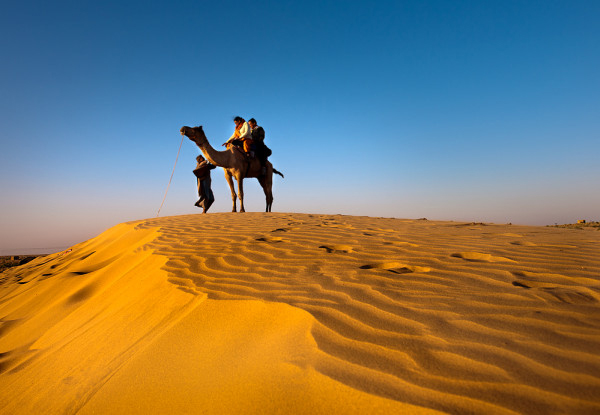
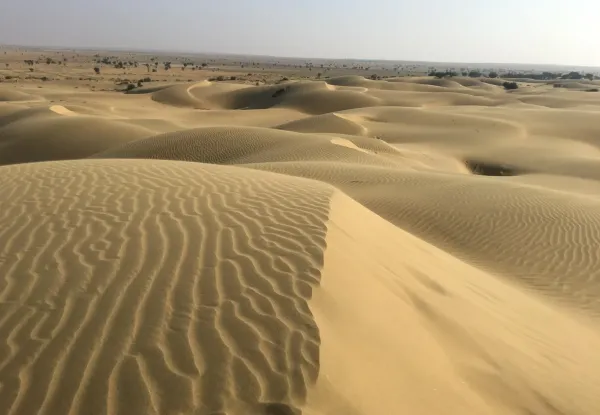
Sam Sand Dunes lie about 40 to 45 kilometres west of Jaisalmer, on a good two-lane road that passes the cenotaphs at Bada Bagh's turning, small villages and stretches of open scrub. The drive takes 50 minutes to an hour in a private car. Sam has been the main desert tourism area of Jaisalmer for decades, so the road ends at a long strip of camps, parking lots, camel stands and food stalls lined up along the base of the dunes. The dunes themselves are tall, bare and classic in shape, with ridges rising 30 metres and more, which is why Sam features in so many film shoots and photographs.
Khuri Sand Dunes lie about 45 to 50 kilometres southwest of Jaisalmer, around an hour to an hour and fifteen minutes by road. The route passes the abandoned village of Kuldhara and smaller settlements, and ends at Khuri village, which still has traditional mud houses with painted walls and thatched roofs. The dunes begin a short distance outside the village. They are slightly lower than Sam's highest ridges but spread over a wide area, with patches of shrubs between them. Fewer vehicles use this road, and the arrival feels calmer.
Getting to either area is easiest by private car or as part of a safari package. A sedan from Jaisalmer to Sam and back with waiting time costs about Rs.2,000 to Rs.3,000, and to Khuri about Rs.2,500 to Rs.3,500. Shared jeeps and local buses run on both roads, but timings are irregular and unsuitable for sunset trips with a return late in the evening. Most travellers book a package that includes pickup from the hotel around 2:00 to 3:00 PM, a stop at Kuldhara, the camel ride and either a return after dinner or an overnight stay.
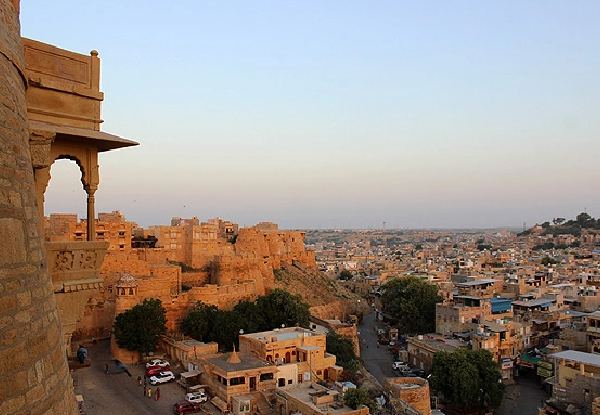
Kuldhara is worth timing well. The abandoned village, deserted overnight according to local tradition by its Paliwal Brahmin inhabitants, lies about 18 kilometres from Jaisalmer and fits easily into a trip to either dune area. It has a small entry fee per person plus a vehicle charge, and is open from morning until sunset. Afternoon visits around 3:00 PM work best before heading to the dunes for sunset. Khaba Fort, another abandoned settlement with a small museum, is also nearby and can be added on a slower day.
Both areas have mobile network coverage near the main camps, though signals weaken on the open dunes. Neither Sam nor Khuri has ATMs worth relying on, so carry cash for tips, drinks and extra activities. Medical facilities are limited to basic clinics in the villages, with the district hospital back in Jaisalmer, which is one more reason to choose an operator with experienced staff and reliable vehicles.
Crowds, Camps and Activities
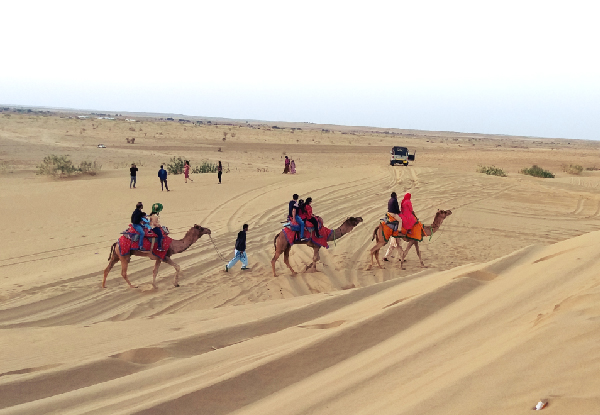
The single biggest difference is the number of people. Sam Sand Dunes host well over a hundred commercial camps, some with sixty or more tents, and during peak season from late October to February the dune front fills with thousands of visitors every evening. Camel stands line the base of the dunes, jeeps race along the ridges, music plays from several camps at once and vendors sell tea, snacks and souvenirs. Families with children and groups of friends often enjoy this festival-like atmosphere, with everything available within a few hundred metres.
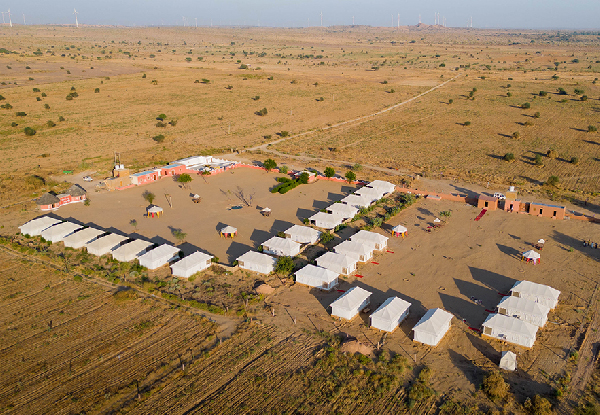
Khuri has far fewer camps, many of them smaller family-run properties with mud huts, round cottages and simple tents. Evenings are quieter, with a single cultural programme at each camp rather than competing speakers. Jeep safaris and adventure activities are limited, and the village feel is stronger. Travellers looking for a calm sunset, a long camel ride and a peaceful dinner often prefer Khuri, while those who want quad bikes, parasailing and a party night usually choose Sam. Khuri also suits photographers who want dune shots without dozens of people in the frame.
Activity prices at Sam are well established. A camel ride at Sam Sand Dunes for 30 to 45 minutes costs around Rs.400 to Rs.800 per person, and longer rides of one to two hours cost Rs.1,000 to Rs.1,500. A jeep safari on the dunes costs about Rs.500 to Rs.1,000 per person for 20 to 30 minutes, or Rs.2,500 to Rs.4,000 for a private jeep. Quad biking runs Rs.800 to Rs.1,700 for a short ride, and jeep-towed parasailing costs about Rs.800 to Rs.1,700 per person. At Khuri, camel rides cost slightly less, typically Rs.300 to Rs.700 for a short ride, and longer treks into the dunes are easier to arrange.
Camp standards vary in both areas. At Sam, budget camps with basic tents start around Rs.1,500 to Rs.2,500 per person including dinner and the show, mid-range Swiss tent camps cost Rs.3,000 to Rs.5,000, and luxury camps with air-conditioned cottages, private sit-outs and premium buffets can cost Rs.8,000 to Rs.20,000 per tent. Khuri's camps generally run from Rs.2,000 to Rs.5,000 per person, with mud-hut stays and simpler food. Check recent reviews carefully, because quality differs widely between neighbouring camps and photographs online are often several years old.
The cultural evening follows a similar pattern in both places: welcome drinks, Rajasthani folk music, Kalbelia dance, sometimes a fire act, and a vegetarian buffet with dishes such as dal baati, gatte curry and Ker Sangri. At Sam, the show is usually bigger and louder, while at Khuri it is more intimate. Guests who want to see the performers up close and talk with them afterwards often enjoy the smaller format more.
Sunset, Stargazing and Overall Value
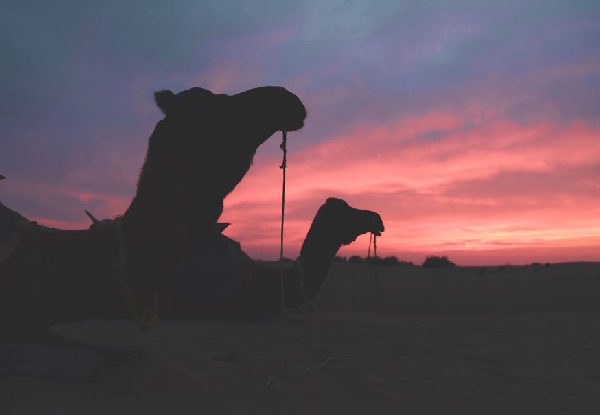
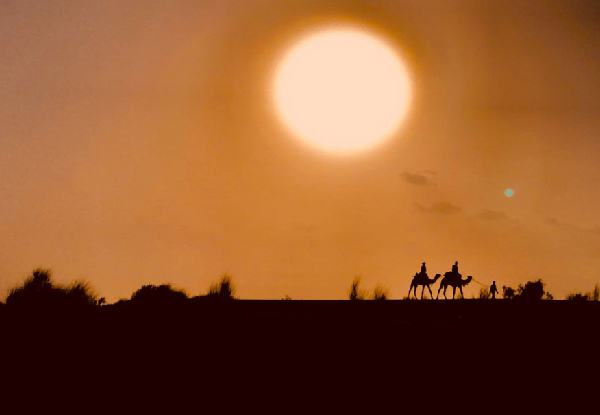
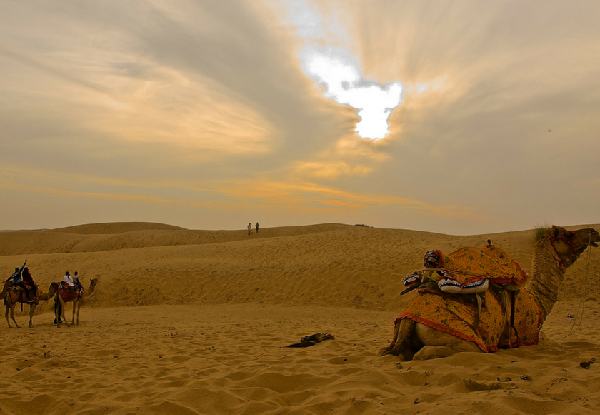
Sunset at Sam is dramatic because the dunes are high and bare, giving clean ridges against an orange sky. The challenge is the crowd. On a busy evening, hundreds of people gather on the same few ridges, with camels and jeeps moving through the frame. Arriving by 4:30 PM in winter and walking a little further from the main strip helps a great deal. At Khuri, sunset is softer but more peaceful, and it is usually possible to find a dune with only a handful of people in view. Photographers who want silence often rate Khuri higher for the experience, even if Sam's scenery is more classic.
Stargazing favours Khuri and the open desert. Sam's camps use floodlights, generators and loud music until about 10:00 PM, and the glow from dozens of camps affects the sky. Khuri has less artificial light, though its camps still use lights after dark. For truly dark skies, you need to sleep away from any camp cluster, which brings in the third option discussed below. On moonless winter nights, the Milky Way is clearly visible from the remote dunes, and guests often see shooting stars and satellites crossing the sky for hours.
Value depends on what you want. Sam gives the most activities for the money, with every adventure and entertainment option in one place, which suits families with energetic children and groups on a short visit. Khuri gives more calm for similar money and a closer look at village life, which suits couples, older travellers and anyone who finds crowds stressful. For a single evening without an overnight stay, Sam is easier because of its many short packages. For a full night, the quieter option generally feels better value.
Seasonal timing affects both choices. In late December and around New Year, Sam's camps run special gala nights with DJs, buffets and fireworks, and prices can double, while Khuri camps also raise rates but stay calmer. During the Jaisalmer Desert Festival in February, the final day's events usually move to the Sam dunes, bringing huge crowds and very high camp prices. In October, March and early April, both areas are less crowded and camps offer better rates, though afternoons can be hot.
Safety is good in both areas when you use established operators, but camel handling and jeep driving standards vary. Choose rides with experienced handlers, avoid jeep drivers who race over steep ridges with passengers standing, and keep children seated in vehicles. Keep valuables in your tent or with your guide during dune walks, and carry a torch for moving around camps after dark, since paths between tents are often unlit.
The Third Option: Quiet Dunes Away from Both Strips
Many visitors assume Sam and Khuri are the only places to see dunes near Jaisalmer, but the Thar has wide stretches of sand between villages that see very few tourists. Real Desert Man Camel Safari, founded by Sawai Dan, who grew up in a desert village in a family of camel herders, built its reputation on these quieter routes. A private non-touristic desert safari follows camel tracks between villages to dunes where only your group sets up camp, with dinner cooked over an open fire and beds placed directly on the sand under a dark sky.
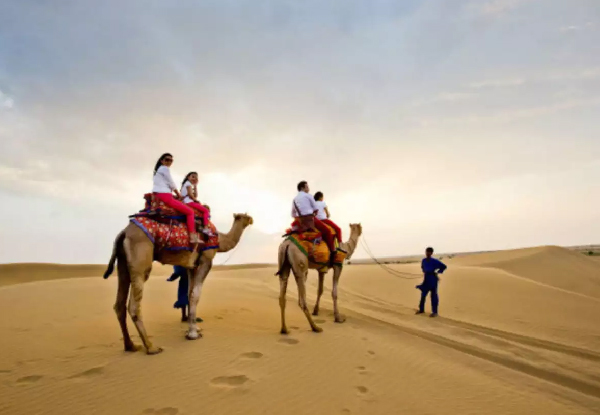
This approach keeps the best parts of both areas. You still get tall dunes, a long camel ride at golden hour and a proper dinner, as you would at Sam, along with the quiet and village connection of Khuri, but without other camps in sight. Our overnight camel safari costs Rs.2,500 plus tax per adult on a two-sharing basis and runs from 2:00 PM to 11:00 AM the next morning, including transport, a Kuldhara stop, about one and a half hours of camel riding, dinner, the night on the dunes and breakfast. For more comfort, the luxury overnight camping tour at Rs.3,500 plus tax per adult includes a Swiss tent with attached bathroom, folk music and a vegetarian buffet.
For travellers who want to see Khuri specifically, our Khuri sand dunes Jaisalmer page explains the routes and options available there, and the full range of camel, jeep and camp combinations sits on the desert safari in Jaisalmer page. Longer trips such as the three-day deep desert safari at Rs.5,500 plus tax move between villages and dunes, with lunch under trees during the hot hours and two nights in the open, which gives the most complete picture of desert life.
A common pattern among our guests is to see Sam briefly and then sleep somewhere quiet. You can stop at the main Sam dunes for half an hour to see the famous ridges and the camel stands, then continue with our team to calmer dunes for sunset, dinner and the night. This combination answers the curiosity many travellers have about Sam without forcing them to spend a whole evening inside a crowded camp, and it costs nothing extra when arranged at the time of booking. Families can also add a short jeep ride or quad bike session at Sam before moving on, paying the activity operator directly at standard rates.
So which is better? Choose Sam if you want maximum activities, a lively atmosphere and an evening trip without staying overnight. Choose Khuri if you want calmer dunes, a village nearby and a smaller camp. Choose quiet offbeat dunes if you want the desert to yourself, a long camel ride, the darkest possible sky and a night that feels personal rather than staged. Message Sawai Dan on WhatsApp at +91-8769424955 with your dates and group, and the team will suggest the right dunes for your style and season.