Shopping in Jaisalmer: What to Buy, Best Markets & How to Avoid Tourist Traps
Overview
Jaisalmer is one of the best shopping towns in Rajasthan, and also one of the easiest places to overpay. The lanes below the fort are packed with embroidered textiles, camel leather bags, silver jewellery, carved yellow sandstone, puppets and patchwork quilts, many of them made by families in nearby villages. At the same time, commission-driven shops, fake antiques and gem scams target visitors who arrive without a sense of fair prices. This guide to shopping in Jaisalmer covers what is worth buying, what each item should roughly cost, which markets to visit and when, and the tourist traps that catch people every season, so you come home with good pieces at honest prices.
What to Buy in Jaisalmer and What It Should Cost
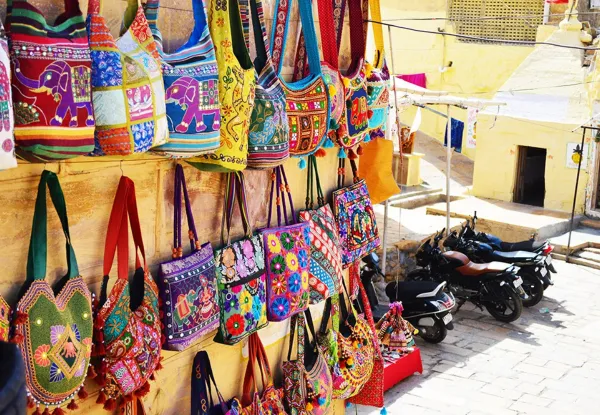
Mirror-work embroidery is the signature craft of the Thar. Women in desert villages stitch small round mirrors, coloured threads and appliqué into cushion covers, wall hangings, bags and bedspreads, often using patterns passed down through families. In Jaisalmer's markets, a mirror-work cushion cover costs about Rs.300 to Rs.900, a wall hanging Rs.800 to Rs.3,500, and a large hand-embroidered bedspread Rs.2,500 to Rs.8,000 depending on the density of work and age of the fabric. Old pieces stitched from recycled wedding textiles can cost far more. Look closely at the back of the embroidery: hand stitching is slightly uneven, while machine work is perfectly regular and should cost much less.
Camel leather products are another local speciality. Bags, wallets, belts, notebooks with leather covers, lampshades and slippers are sold everywhere around the fort. A small wallet costs about Rs.250 to Rs.600, a notebook Rs.300 to Rs.900, a messenger bag Rs.1,200 to Rs.3,500 and a large travel bag Rs.3,000 to Rs.6,500. Painted camel leather lampshades, which glow warmly when lit, sell for Rs.600 to Rs.2,500. Genuine camel leather is slightly coarse with visible pores and a distinctive smell, while cheaper cow or buffalo leather is sometimes passed off under the same name, so buy from shops that let you handle many pieces and compare.
Silver jewellery is excellent value in Jaisalmer. Tribal-style anklets, heavy bangles, rings, earrings and pendants are sold by weight, with a making charge added on top. Prices follow the daily silver rate, so ask the shop to weigh each piece on a digital scale and state the rate per gram before you agree. Simple silver rings cost Rs.500 to Rs.1,500, earrings Rs.800 to Rs.3,000, and heavy anklets Rs.4,000 to Rs.15,000 or more. Genuine sterling silver should carry a 925 hallmark. The goldsmiths' lane known as Sonaron Ka Bas also sells gold jewellery for buyers who know prices well.
Yellow sandstone and fossil stone items make lasting souvenirs. Jaisalmer's golden sandstone is carved into small elephants, candle holders, coasters, boxes and miniature havelis, priced from about Rs.200 for small pieces to Rs.5,000 or more for detailed carvings. Fossil stone, a darker local rock containing tiny shell fossils from an ancient sea, is used for plates, bowls and paperweights costing Rs.300 to Rs.2,500. Stone is heavy, so wrap it well and consider shipping larger pieces.
Smaller gifts fill any remaining space in your bag. Rajasthani puppets cost Rs.300 to Rs.1,500 per pair, tie-dye and wave-pattern scarves Rs.300 to Rs.1,200, block-printed cotton quilts Rs.1,500 to Rs.4,500, and handmade paper notebooks Rs.150 to Rs.600. Food gifts are popular too: boxed Ghotua sweets from the old sweet shops in Bhatia Market cost about Rs.250 to Rs.500 per box, while spice blends and desert pickles are available in small jars from Rs.150 to Rs.400.
Discover Authentic Rajasthani Handicrafts
Discover traditional jewellery, embroidered fabrics, leather accessories and handcrafted treasures across Jaisalmer. Explore local shopping streets and experience the artistic charm of Rajasthan at your own pace.
WhatsApp Now Contact Us
Best Markets and Shopping Streets in Jaisalmer
Manak Chowk is the busiest shopping square in Jaisalmer, sitting right at the entrance to the fort. It has been a trading hub since medieval times, when caravans passed through the city, and today its shops sell textiles, leather goods, jewellery, kites, paintings and souvenirs. Most shops open around 10:00 AM and close around 8:00 PM, with the evenings especially busy. Because of its location, prices start high, but quality is good if you choose carefully. Our own office sits close by in the Manak Chowk and Amar Sagar Pol area, so guests often combine shopping here with a chat about their desert trip.
Sadar Bazaar is the main market of the modern town, where locals buy clothing, household goods and wedding shopping alongside tourists. It is a good place for long scarves, shawls, leather footwear, cotton fabrics and jewellery, with prices generally lower than inside the fort. Pansari Bazaar, one of the oldest street markets in the city, is known for traditional handicrafts, home décor, puppets and painted wooden items. Bhatia Bazaar combines cloth shops, embroidery, dry fruit sellers and the famous old sweet shops. Sonaron Ka Bas, the goldsmiths' quarter, specialises in silver and gold jewellery, often made in workshops a few steps away.
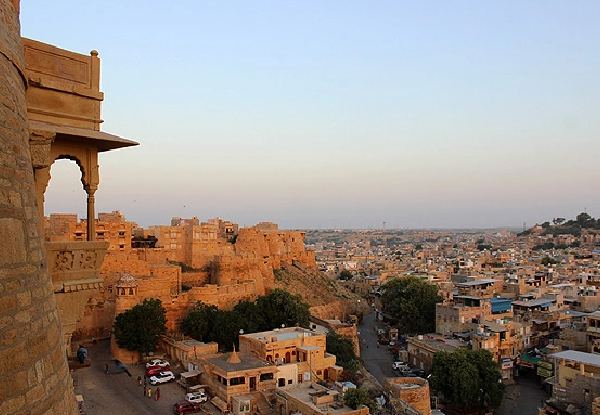
Inside the fort, the lanes leading to the palace and the Jain temples are lined with small shops selling embroidered bags, silver, paintings and leather goods. Shopping here has charm, since you are inside a living twelfth-century fortress, but space is tight and prices are higher than in town. Many shopkeepers in the fort have run family businesses for generations and are happy to explain the origin of each item. Morning hours from 9:00 AM to 11:00 AM are calmer, before the main tour groups arrive.
Seema Gram, near the fort area, houses a Khadi village industries showroom where prices are fixed and products are made by registered artisans and cooperatives. It is useful for checking fair rates before bargaining in the street markets, and for buying hand-spun cotton, wool shawls, rugs and handicrafts without negotiation. Showrooms of this type are generally open from around 9:00 or 10:00 AM to 8:00 or 9:00 PM. Some travellers start their shopping here to set a benchmark, then go to Manak Chowk and Sadar Bazaar with clearer price expectations.
For a structured visit, our shopping and craftsmanship tour in Jaisalmer takes you to artisan workshops where you can watch stone carving, embroidery and leather work, and then to trusted shops with transparent pricing. A half-day guided walk of this kind usually costs Rs.1,500 to Rs.3,000 per person for a private guide. The guide handles introductions, translates where needed and explains the difference between genuine handwork and factory-made copies, which can save far more than the tour costs if you intend to make big purchases.
Tourist Traps and How to Avoid Them
The most common trap in Jaisalmer is the commission shop. Some drivers, guides and hotel staff earn a share of everything you buy at certain stores, sometimes 30 to 50 percent, which is simply added to the price you pay. If your driver insists on stopping at a particular emporium, or a friendly stranger offers to show you his cousin's shop, the price will reflect that commission. You are free to say no, walk away and shop independently. Reputable tour operators, including Real Desert Man Camel Safari, do not force shopping stops on any tour, and our drivers take you where you ask to go.
The second trap is the fake antique. Old-looking boxes, door panels, coins, textiles and paintings described as centuries old are mostly recent copies, aged artificially with tea, smoke or sandpaper. Genuine antiques over a hundred years old cannot legally be exported from India without permission from the Archaeological Survey of India, so a seller who promises easy export of a true antique is either mistaken or misleading you. Buy decorative pieces because you like them, at prices that reflect their real age, and treat any antique claim with polite scepticism.
The third and most serious trap is the gem resale scam, which has targeted foreign travellers in Rajasthan for years. A friendly local or shop owner suggests that you can buy gemstones cheaply here and sell them abroad for a large profit, or that a "partner" overseas will buy them from you on arrival. The stones are usually worth a fraction of the price paid, and the overseas buyer never exists. Never buy gems as an investment, never sign papers promising to carry goods for others, and never hand over your credit card to be charged "later". If someone pushes this idea, end the conversation.
Fake materials also deserve care. Pashmina is often sold as wool blends or acrylic, silk can be polyester, and camel leather can be another hide. Ask to see the product label or certificate, test silk by its texture and warmth, and remember that a genuine pure pashmina shawl will cost several thousand rupees, not a few hundred. For silver, insist on a 925 hallmark and a weight check. For any expensive purchase, ask for a proper GST bill with the shop's name and address, which helps if you need to return or dispute the item.
Bargaining is normal in street markets but not in fixed-price showrooms. In Manak Chowk, Sadar Bazaar and the fort lanes, a fair final price is often 30 to 50 percent below the first quote for textiles and souvenirs, and 10 to 20 percent below for silver once the weight is agreed. Smile, take your time, and be ready to walk away, since the shopkeeper will often call you back with a better offer. Avoid haggling hard over small amounts with elderly artisans or village women selling their own work, where a few rupees mean much more to them than to you.
Explore Jaisalmer’s Colourful Markets
Discover Jaisalmer’s vibrant bazaars, traditional handicrafts and unique desert souvenirs. Add authentic local shopping experiences to your journey and bring home beautiful memories of Rajasthan’s rich culture.
WhatsApp Now Contact Us
Shopping Route, Timings, Payments and Shipping
A relaxed shopping route starts in the morning at the Khadi showroom near Seema Gram to set price benchmarks, continues through the fort lanes before 11:00 AM, and pauses for lunch on a rooftop facing the fort walls. In the afternoon, Pansari Bazaar and Bhatia Bazaar suit handicrafts and sweets, while early evening in Manak Chowk and Sadar Bazaar brings the liveliest atmosphere, with shops lit up and locals out for their own shopping. Many shops close briefly in the early afternoon, and most markets wind down by 8:30 to 9:00 PM.
Payments in Jaisalmer have changed in recent years. Most shops now accept UPI payments for Indian visitors, and larger stores accept credit and debit cards, sometimes with a small surcharge of two to three percent. Street stalls and village sellers prefer cash. Foreign visitors can use international cards in established shops, and some airports offer UPI-linked prepaid wallets for tourists. Keep Rs.3,000 to Rs.10,000 in cash for markets, as ATMs near the fort can run out on busy weekends and festival days.
Shipping large items home is common. Many established shops in Jaisalmer offer packing and international courier services for rugs, bedspreads, stone carvings and lampshades. Courier charges vary by weight and destination, with a 5 kilogram parcel to Europe or North America typically costing Rs.6,000 to Rs.12,000 by international courier, and more for heavy stone. Get the shipping cost, tracking method and expected delivery time in writing, keep the receipt, and pay by card where possible for added protection. India Post's international parcel service is cheaper but slower and needs you to pack items yourself.
Time your shopping around desert trips. Most Real Desert Man safaris start between 2:00 and 3:00 PM and return the next morning by 11:00 AM, so mornings before departure and afternoons after return are ideal for shopping. You can leave purchases and luggage safely at our office or at The Rising Haveli while you sleep on the dunes, and collect everything when you return. Guests on longer Jaisalmer tour packages can ask for a guided shopping hour to be built into the sightseeing day.
Finally, buy what you love and what supports real craft. Village embroidery, hand-carved stone and handmade leather sustain thousands of families across the Thar, and a fair price paid directly to an artisan means more than any bargain. If you want introductions to women's embroidery groups or village artisans during a desert trip, mention it when booking, and our team will try to include a visit on the way to or from the dunes.