Stay with Camel Herders in the Thar: A Night with Desert Nomads
Overview
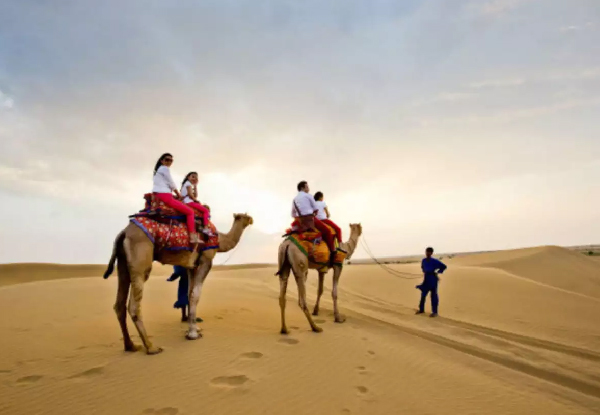
Long before tourists came to ride them, camels were the lifeline of the Thar. They carried salt, grain and cloth along caravan routes, ploughed fields after the rains, hauled water and gave milk, wool and dung for fuel. The families who bred and herded them moved across the desert with the seasons, reading the land for grazing and water in a way few outsiders ever learn. Today far fewer families live this way, yet around Jaisalmer some herders still follow their animals across the scrub and dunes, sleeping in the open beside the herd.
To stay with camel herders in the Thar is to spend a night inside that world. You walk with the herd as it grazes in the late afternoon, sit by a small fire while milk is boiled for tea, sleep on the sand with dozens of camels resting nearby and wake to the sound of calves calling for their mothers.
It is the most raw and honest way to experience the desert, and also one of the rarest. This guide covers who the herders are, how a night with them unfolds, how the herd is managed, what sleeping and food arrangements look like, what multi-day treks involve, what it costs and how to visit respectfully.
Who the Camel Herders of the Thar Are
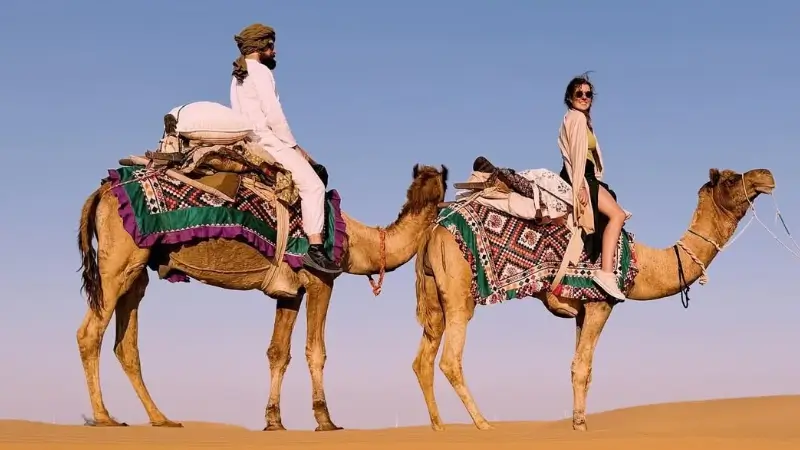
Camel herding in western Rajasthan is a hereditary occupation, passed from father to son and mother to daughter over many generations. Several pastoral communities across the region have traditionally bred camels, sheep and goats, and some families specialised in camels alone. Their knowledge is extraordinary. A good herder can identify each of his animals from a distance, knows its mother and calves, can tell from its walk whether it is ill and can find water in places that look completely dry.
The nomadic life of the Thar Desert has always been flexible rather than fully wandering. Most herding families have a home village where women, children and older relatives live, with fields and a few houses. The men, and sometimes whole families, move with the herd for weeks or months at a time, following grazing and water. In winter the herd may range widely, since camels need little water in cool weather. In summer they stay closer to wells, ponds and village water points. Around Jaisalmer, the camels you see are mostly of a lighter, faster riding breed suited to sand, along with heavier working breeds from neighbouring districts.
Camels here graze on thorny shrubs, tree pods and leaves, desert grasses and whatever crop stalks farmers leave after harvest. A healthy adult camel can go several days without water in winter and drink well over 100 litres in one sitting when it reaches a trough. Females carry their young for about 13 months, and most calves are born during the cooler months, so a winter visit often means seeing very young calves wobbling beside their mothers. This way of life is under pressure. Roads, trucks and tractors have replaced the camel for transport and ploughing. Grazing land has shrunk as canal irrigation, solar farms and fencing have spread.
A state law that protects camels from slaughter also restricts selling them outside Rajasthan, which reduced the market for herders. National livestock counts show India's camel numbers falling from around a million to roughly a quarter of that over about two decades, and most of the remaining animals live in Rajasthan. Many young people from herding families now work in safari tourism, drive jeeps or move to cities. That is why time spent with a working herd is both a privilege and a small form of support. A camel herder homestay pays the family directly, values their knowledge and gives younger members a reason to stay connected to the herd.
Experience Authentic Desert Life with Thar Camel Herders
Go beyond ordinary tourism and discover the traditional lifestyle of camel-herding communities in the Thar Desert. Experience Rajasthan’s rural heritage, connect with local traditions, and enjoy a truly distinctive desert journey with Real Desert Man Safari.
WhatsApp Now Contact Us
A Night at a Herder's Camp, Hour by Hour
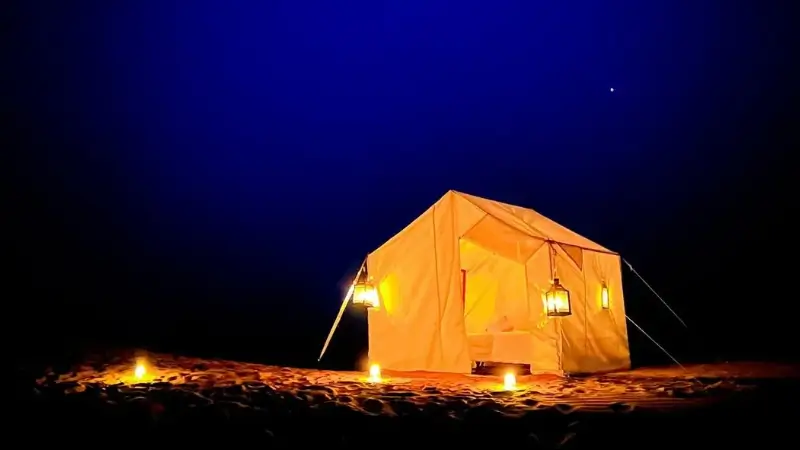
A night with herders is usually arranged as an overnight trip from Jaisalmer, starting in the afternoon. Pickup from the city is typically between 1:30 and 2:30 pm. The jeep drives 40 to 70 kilometres into the scrubland, often towards the area between Sam, Khuri and the Desert National Park, where herders find grazing.
The final stretch may be on sandy tracks, and in some cases you continue by camel or on foot for 30 to 60 minutes to reach the herd. You meet the herders between 3:30 and 4:30 pm, usually while the camels are spread out grazing. This is a good time to walk alongside them.
The herders call to the animals with particular sounds, guide strays back with a stick or a whistle and keep a constant eye on calves. Your guide will translate questions and explain what is happening. Expect to walk two to four kilometres at an easy pace over the next hour or so. As the sun sinks, between 5:45 and 6:15 pm in winter, the herd is slowly gathered towards the night resting spot, often a sheltered hollow between dunes or a patch of firm ground near shrubs. Calves are tied close to their mothers so they do not wander, and the herders check each animal.
If the family milks its camels, this happens around dusk. You can watch, and sometimes try. Camel milk is thinner than cow milk and slightly salty, and it is drunk fresh, boiled into tea or used to make a light yoghurt. By 7:00 pm a small fire is burning, fuelled by dry wood and dung, and tea is boiling.
Dinner, usually ready around 8:00 pm, is simple: thick flatbread cooked on the coals, a lentil or bean curry, perhaps onions and green chillies, and plenty of tea made with camel milk. After dinner the herders talk, sing or tell stories, and the camels settle into a low murmur of chewing and shifting. Beds are laid on the sand near the fire by 9:00 pm. In winter you will be given several heavy quilts, and night temperatures can fall to 4 or 5 degrees Celsius.
The herd stirs before dawn. Around 6:00 to 6:30 am the herders are up, checking animals and lighting the fire for tea. Calves are released to feed from their mothers, and milking may happen again. Breakfast of flatbread, tea and perhaps leftover curry follows around 7:30 am. Sunrise over the herd, between 7:00 and 7:20 am in winter, is often the most beautiful moment of the trip. You walk with the herd for a short while as it moves off to graze, then return to the jeep, reaching Jaisalmer between 10:30 am and noon.
Life Around the Herd: Grazing, Water and Milk
Spending a night with herders gives you a close view of how pastoral life in Jaisalmer actually works, and much of it revolves around three things: grazing, water and milk. Grazing is a daily strategy. Herders choose areas based on recent rain, the condition of shrubs and trees, and how many other herds have passed through. They avoid overgrazing a spot and will move several kilometres in a day if needed. Camels browse rather than graze close to the ground, stretching their necks to strip leaves from thorny trees and nibbling shrubs that other animals avoid. Watching them feed, you notice how they reach high branches, how their split lips handle thorns and how they spread out so as not to exhaust any single tree.
Herders sometimes lop a few branches to bring leaves within reach of younger camels. After the monsoon harvest, farmers often allow herds onto their fields to eat leftover stalks, and in return the camels' dung fertilises the soil. This old partnership between herders and farmers still survives in some villages. Water is arranged days in advance. In winter camels may drink only every few days, but in summer they need water daily. Herders know every pond, well and trough in their range and when each is likely to hold water. At a village water point you may see dozens of camels drinking in turns, each taking a long, noisy drink.
Some troughs are filled by pumps; others still rely on a bucket and rope. If your visit includes a trip to a water point, it is a lively and memorable scene. Milk is both food and income. Herding families drink camel milk fresh, boil it for tea and sometimes sell it in villages or to dairies that collect it. Camel milk has gained interest in recent years for its nutritional value, and a few small cooperatives in Rajasthan now process it.
You can taste it fresh at the camp, and many visitors are surprised by its mild, slightly salty flavour. Wool is another product. In spring, camels are sheared, and the coarse hair is spun into rope, blankets and bags. You may see older herders twisting camel hair into rope by hand during quiet hours. Dung is gathered and dried for fuel, which is why the herders' fire often smells sweet and smoky. Every part of the herd has a use, and very little is wasted. Asking the herders about these details turns a simple overnight stay into a lesson in how people have thrived in one of India's harshest landscapes.
Sleeping, Eating and Comfort at a Herders' Camp

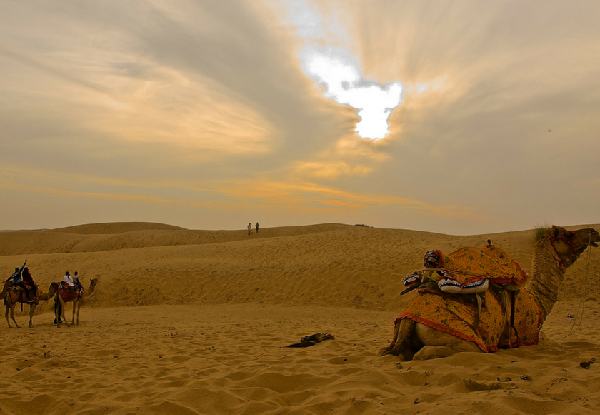
A night with desert nomads is deliberately simple, so knowing the practical details in advance makes it far more comfortable. Sleeping is in the open on the sand. The herders or your guide lay out thin mattresses or folding rope cots, with clean sheets, pillows and heavy quilts. You sleep near the fire and within sight of the herd. Some operators carry a small tent as a backup for wind or rain, and you can ask for one in advance if you prefer more privacy. Expect noise during the night: camels grunt, shift and occasionally get up, and calves sometimes call out. Most guests find it soothing after the first hour; light sleepers should bring earplugs.
Food is cooked by the herders on the fire and is basic but filling. Flatbread, a pot of lentils or beans, onions, chillies and tea made with camel milk form the core. Your operator usually brings extra supplies such as vegetables, rice, eggs, biscuits and fruit to supplement the herders' meal, along with bottled or filtered drinking water.
If you have dietary needs, mention them while booking so the operator can pack accordingly. Toilets do not exist at a herders' camp. You walk a short distance into the dunes with a torch, dig a small hole and cover it afterwards. Washing is limited to a jug of water and a basin, so bring wet wipes, hand sanitiser and a small towel. Electricity is absent. Bring a fully charged power bank and a good torch or headlamp. Mobile signal may be weak or missing, so let family know you will be offline.
Warmth is the main comfort issue in winter. Night temperatures between December and January can fall close to freezing in open areas. Bring thermal underlayers, a fleece, a warm jacket, a woollen hat, gloves and thick socks. Keep your clothes for the next day inside your quilt so they are warm when you dress in the morning. In spring and autumn the nights are mild, and a light jacket is enough. In summer, herder stays are best avoided or kept very short because of the heat. Safety is generally not a concern with a reputable operator. Your guide stays with you throughout, and the herders know the area intimately.
Keep a respectful distance from adult camels, especially males during the cooler breeding months, when they can be restless. Do not approach a mother with a young calf without the herder's guidance. With a little preparation, the simplicity of the camp stops feeling like a hardship and becomes the very reason the night feels so special.
Plan Your Camel Herder Stay in the Thar Desert
Ready to experience a different side of Rajasthan? Enquire about a stay with camel herders in the Thar Desert and discover a distinctive cultural experience near Jaisalmer with Real Desert Man Safari.
WhatsApp Now Contact Us
Multi-Day Treks with Herders
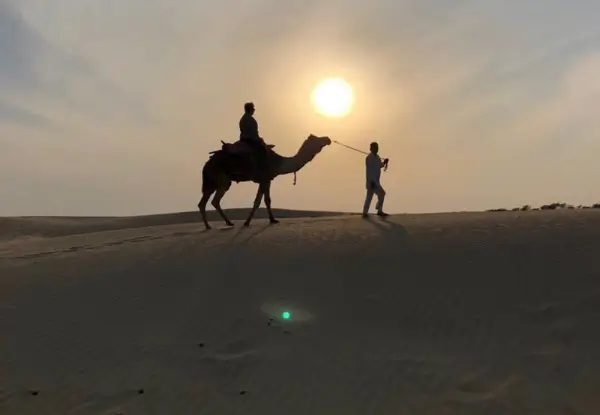
For travellers with more time, a camel trek with herders across two or three days offers a deeper version of this experience. Rather than meeting the herd for one night, you travel with it or alongside a small group of herders and their pack camels, covering a stretch of desert between villages, dunes and grazing grounds. A typical two-night trek begins in the afternoon like the overnight trip. You join the herders around 3:30 to 4:00 pm, walk or ride with them until sunset and camp in the open.
The next day starts at dawn with tea and milking. After breakfast you move with the herd for three to four hours in the cool morning, covering about 8 to 12 kilometres. Around noon everyone stops in the shade of a tree, ideally near a water point, for lunch and a long rest through the hottest hours. Herders often nap, mend equipment or twist rope. In the late afternoon the group moves again for another two to three hours before making camp for the second night.
On the final morning you walk or ride a short distance to meet the jeep and return to Jaisalmer by late morning. Daily distances depend on grazing and water, so routes are never fixed far in advance. You may ride a camel for part of each day, but expect to walk a lot, since herders themselves usually walk beside their animals. Good walking shoes, a sun hat and a light scarf for dust are essential.
A support jeep can carry heavier bags and extra water on some routes, especially for groups. Three-night treks follow the same pattern and can reach more remote areas, sometimes towards the edges of the Desert National Park, where you may see chinkara gazelles, desert foxes, vultures and other birds.
Some parts of these areas need permits, which your operator will arrange. Treks are best between November and February, when days are mild and nights are cold but clear. October and March are possible, with warmer afternoons. Treks are not run in the hot months. Fitness requirements are moderate. You should be comfortable walking 8 to 15 kilometres a day on mixed sand and gravel, and with sleeping outdoors for consecutive nights.
Older travellers and children over about ten can manage with a support jeep and shorter walking stages. These treks are physically simple but mentally rich. With no schedule beyond the herd's needs, days stretch out, conversations deepen and the desert's quiet starts to feel normal rather than strange.
Costs and How a Herder Stay Is Arranged
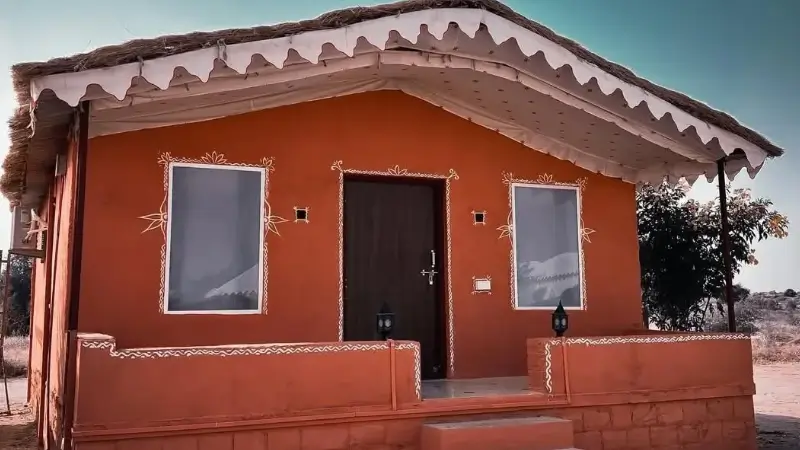
Because herding families move with their animals, a stay with them cannot be booked like a hotel room. It is arranged on request through a local operator who knows the herders personally and coordinates timing, location, food and transport. Prices therefore vary with distance, group size and season, but the figures below reflect realistic peak-season costs from October to March.
A single night with camel herders, including return jeep transfers from Jaisalmer, a guide, all meals, bedding, drinking water and payment to the herding family, typically costs Rs.3,500 to Rs.6,000 per person on a shared basis.
A private night for a couple, where only your party joins the herd and the guide stays with you, generally ranges from Rs.9,000 to Rs.15,000 for two. Two-night camel herder treks cost roughly Rs.7,500 to Rs12,000 per person, and three-night treks about Rs.11,000 to Rs.16,000 per person, including meals, guiding, camels and a support jeep where needed. Permits for restricted areas, if required, are usually added at cost. Most quotes add five percent tax. Children above ten can usually join at a reduced rate, while younger children are better suited to a tented camp.
A fair arrangement means a significant portion of the price goes directly to the herding family for hosting, cooking and guiding the herd's route. Ask your operator how much this is; many pay Rs.1,500 to Rs.3,000 per group per night to the family, plus any fees for camels used for riding. Tips are welcome but optional, and a practical gift is often appreciated more than cash. Good choices include a strong torch, a solar lantern, warm blankets for winter, a new water container or school supplies for the children back in the home village. When arranging a stay, ask your operator a few clear questions.
How long has the operator worked with this herding family? How far is the herd likely to be from Jaisalmer on your dates? How much walking is involved? What bedding, food and water will be supplied? Is a backup tent available? What happens if the herd moves unexpectedly or weather turns? A reliable operator will answer honestly, admit that exact locations can change and keep you updated in the days before your visit.
Book at least one to two weeks in advance in peak season, as only a few herder stays can be hosted each week without disturbing the families' work. Confirm the final price, pickup time, inclusions and cancellation terms in writing, and keep the guide's phone number handy for the day of travel.
Camel Welfare and Respect for a Disappearing Way of Life
A stay with herders only does good if it is done with care for both the animals and the people. Camel welfare in Jaisalmer is a real concern, especially around the busiest tourist dunes where some animals are overworked, poorly fed or kept in tight tethers all day.
Spending time with a working herd is a chance to see how camels live when they are allowed to graze freely, rest when tired and move in a natural group. Healthy camels have a full hump, clear eyes, clean nostrils and a smooth coat with no open sores. Calves stay close to their mothers and feed regularly.
Notice how herders treat their animals: most know each camel by name or marking and speak to them constantly. If you ever see clear mistreatment, raise it with your operator. As a guest, keep your behaviour gentle. Do not chase, feed or touch camels without asking the herder first. Never stand directly behind a camel or between a mother and calf. Keep noise low around the herd, especially at night.
If you ride a camel during the stay, choose one the herder recommends and dismount if it seems tired. Respecting the people matters just as much. Herding families are proud of their skills and history, and many feel that their way of life is overlooked.
Ask questions with genuine interest, about their animals, routes, children and hopes for the future. Avoid treating them as a spectacle. Ask before taking photographs, particularly of women and children, and accept a polite refusal. Sharing your photographs with them later through your operator is a kind gesture. Dress modestly and follow your hosts' lead on seating, eating and sleeping arrangements.
Women travellers may be offered a separate sleeping spot; accept graciously. Leave no trace in the grazing areas. Carry all rubbish back to the city, use refillable water bottles and avoid soap or chemicals near water points the herd relies on.
Finally, consider how your visit can support the future of herding. Buying camel-wool products, choosing operators who employ herders fairly and spreading the word about responsible camel tourism all help make herding a viable livelihood.
When younger family members see that visitors value their knowledge and are willing to pay fairly for it, they have one more reason to keep the herd and the skills that go with it. A night with camel herders is short, but its effect on how you see the desert, and on the family who hosted you, can last much longer.