Street Food in Jaisalmer: Best Local Dishes, Where to Eat & What Not to Miss
Overview
Food in Jaisalmer tells the story of the desert. Water was scarce, fresh vegetables rare and summers brutal, so cooks learned to work with millet, gram flour, dried desert beans, buttermilk and long-lasting spices. The result is a cuisine of crisp fried snacks, rich curries made without vegetables, and sweets that keep for days in the heat. This guide to street food in Jaisalmer covers the dishes you should try, the shops and corners where locals actually eat, what each plate costs, the best hours to visit and how to enjoy it all without upsetting your stomach before a desert trip. Dish names are given as they appear on local menus, with plain English descriptions so you know exactly what you are ordering.
Breakfast and Snack Classics on the Streets
The day in Jaisalmer starts with onion kachori, known locally as pyaaz kachori. It is a round, flaky pastry stuffed with spiced onion filling and deep-fried until golden, usually served with a tangy tamarind chutney, a green coriander chutney or a ladle of yoghurt-based curry. Kachori stalls fire up their pans from about 7:00 AM, and by 11:00 AM the best batches are gone. Expect to pay Rs.25 to Rs.50 per kachori at street stalls and Rs.60 to Rs.120 for a plate with chutneys and curry at sit-down shops.
Two names come up again and again for kachori. Chandan Shree Restaurant near Hanuman Circle is a reliable sit-down option, popular with locals and travellers for onion kachori, dahi kachori topped with yoghurt and crunchy gram flour noodles, and sweets such as ghewar. A meal here costs about Rs.150 to Rs.300 per person. Near Manak Chowk on the fort road, small family kachori shops have served the same recipes for generations, with snacks at Rs.50 to Rs.100 per person and crowds of local office workers every morning. A row of breakfast stalls near Gandhi Chowk also fries kachori, samosas and spicy fritters through the morning.
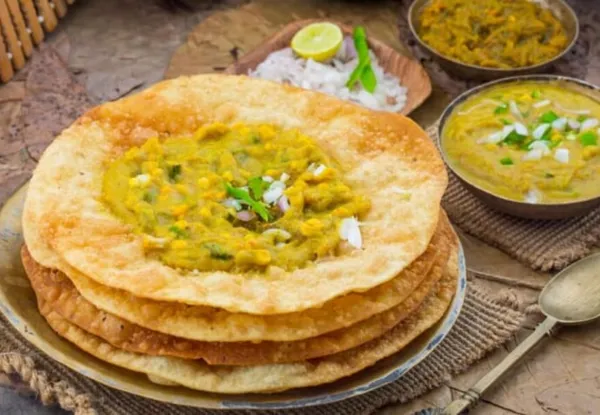
Mirchi vada is Jaisalmer's favourite spicy snack: a large green chilli, slit open, stuffed with spiced potato, dipped in gram flour batter and fried until crisp. The heat varies from mild to fierce depending on the chilli, so ask the vendor or try one bite first. A mirchi vada costs Rs.20 to Rs.40. Locals also love dal pakwan, a crisp fried flatbread served with a thick spiced lentil curry, chopped onions and chutneys, especially around Gopa Chowk near the fort, where it costs about Rs.50 to Rs.100 per plate. Samosas, bread pakoras and sweet jalebis complete the breakfast spread.
Evening snacks bring out a different set of stalls. As the sun drops behind the fort, carts around Gandhi Chowk, Hanuman Circle and Gopa Chowk sell roasted corn, spiced chickpeas, fried pakoras, potato patties and chaat, a mix of crisp wafers, potatoes, yoghurt and chutneys. Prices range from Rs.30 to Rs.100 per plate. These evening stalls are busiest between 6:00 PM and 9:00 PM, and eating standing up while watching the fort walls turn gold is one of the simplest pleasures in Jaisalmer.
Tea is the fuel that ties it all together. Small tea stalls across the city serve strong, milky spiced tea in small cups for Rs.10 to Rs.20, often brewed with ginger and cardamom. In winter mornings, when temperatures in Jaisalmer drop close to 8°C, locals gather around tea stalls before work, and joining them for a cup is an easy way to start conversations and pick up local food recommendations.
Taste the Authentic Flavours of Jaisalmer
Discover Jaisalmer through its delicious street food, traditional Rajasthani snacks and local flavours. Add authentic food experiences to your desert holiday and explore the city's culinary charm with us.
WhatsApp Now Contact Us
Sweets and Desserts You Should Not Leave Without
The signature sweet of Jaisalmer is Ghotua, a round sweet made from gram flour, sugar, clarified butter and dried milk, flavoured with cardamom and sometimes saffron. It is softer and richer than most Indian sweets and is found almost nowhere outside the city. The most famous place to buy it is the old family sweet shop of Dhanraj Ranmal Bhatia in Bhatia Market, where the recipe has reportedly been passed down for many generations. A single Ghotua costs about Rs.25 to Rs.50, and a gift box costs around Rs.250 to Rs.500 depending on size, which makes it a popular souvenir to carry home.
Panchdhari laddoo is another Jaisalmer favourite, a sweet ball made with five ingredients and traditionally offered at festivals and family celebrations. Ghewar, a honeycomb-like disc of fried batter soaked in sugar syrup and topped with cream, dry fruits or silver leaf, is especially popular around the monsoon festival of Teej but sold through the cooler season in good sweet shops. A plain ghewar costs about Rs.80 to Rs.150, and a cream-topped version Rs.150 to Rs.300. Jalebi, the spiral of fried batter soaked in syrup, is sold hot in the mornings for about Rs.20 to Rs.40 per serving.
Evenings in Jaisalmer have their own sweet ritual: saffron milk. Several shops around Hanuman Circle and the main market heat large pans of milk with sugar, saffron and dry fruits and serve it hot in clay cups after dinner. A cup costs Rs.40 to Rs.80 and is warming on cold winter nights. In summer, the same shops switch to kulfi, a dense frozen milk dessert flavoured with pistachio, saffron or mango, sold on sticks or in clay pots for Rs.40 to rs.100.
Makhaniya lassi, a thick sweet yoghurt drink topped with cream, is served in tall glasses at shops across the city for Rs.50 to Rs.100. It is filling enough to replace a light meal. One important caution applies: some licensed shops in Jaisalmer also sell lassi and cookies containing bhang, a cannabis preparation. Its effects are strong and unpredictable and can last many hours, so always confirm you are ordering a plain lassi, especially before a camel ride or long drive.
Sweet shops in Jaisalmer open early and stay open until about 9:00 or 10:00 PM. Many sell by weight, with mixed sweets priced at about Rs.400 to Rs.900 per kilogram depending on ingredients. Ask for a small mixed box of 250 grams to try several kinds without overbuying. Sweets made with milk are best eaten within a day or two, while gram flour sweets such as Ghotua keep longer and travel better.
Main Meals, Desert Curries and Non-Vegetarian Specials
The most famous Rajasthani meal is dal baati churma. Baati are hard wheat dough balls baked in hot coals or an oven, cracked open and soaked in clarified butter. They are eaten with dal, a spiced lentil curry, and churma, a sweet crumble of crushed wheat, sugar and butter. A full plate costs Rs.200 to Rs.450 at local restaurants. It is heavy, so many travellers share one portion at lunch and rest afterwards in the shade, as desert families have done for generations.
Ker Sangri is the dish that best represents the desert. It is made from sangri, the long dried beans of the khejri tree, and ker, small sour berries from a desert shrub, cooked with yoghurt, chillies and spices into a tangy, earthy curry. Both ingredients are foraged and sun-dried, which is why this dish could be cooked even in the driest months. Ker Sangri costs about Rs.200 to Rs.350 as a single dish and appears in most Rajasthani thali meals. Gatte curry, made from steamed gram flour dumplings in a spiced yoghurt gravy, is another staple, as is kadhi, a yoghurt and gram flour curry often eaten with rice or millet flatbread.
A Rajasthani thali is the easiest way to taste many dishes in one meal. A typical thali includes two or three curries, dal, rice, millet or wheat flatbreads, pickle, buttermilk and a sweet, with refills offered generously. Thalis cost Rs.250 to Rs.400 at simple restaurants and Rs.600 to Rs.1,200 at heritage hotels and rooftop restaurants near the fort. Rooftop dining facing the fort at sunset is popular, so arrive by 6:00 PM in winter to get a good table.
For non-vegetarians, Jaisalmer offers two famous curries. Laal maas is a fiery red mutton curry cooked with dried red chillies, yoghurt and whole spices, once a hunting dish of Rajput households. Mutton saag combines mutton with a spinach-based gravy. Trio, a long-running restaurant near Gandhi Chowk, is widely known for its mutton saag and Rajasthani non-vegetarian dishes, with main courses costing about Rs.450 to Rs.800. Several rooftop restaurants around the fort also serve laal maas for Rs.450 to Rs.900 per portion. Many old-city restaurants, especially near the Jain temples and inside the fort, are strictly vegetarian, so check before ordering.
Beyond Rajasthani food, Jaisalmer's tourist cafes serve wood-fired pizzas, pasta, Israeli and Korean dishes, South Indian dosas and good coffee, reflecting decades of international visitors. A dosa corner near Gopa Chowk has fed locals for years with crisp dosas for Rs.80 to Rs.200. These options are useful after several days of rich curries, though the real reason to eat in Jaisalmer remains its desert cooking.
Discover the Culinary Side of Jaisalmer
Experience the city's rich food culture beyond its golden forts and sandy landscapes. Discover local street food favourites and make your Jaisalmer holiday a delicious cultural adventure with us.
WhatsApp Now Contact Us
Food Safety, Timings and Eating in the Desert
A few habits keep street food enjoyable. Eat at busy stalls where food is cooked fresh in front of you and served hot, since high turnover means fresher ingredients and cleaner oil. Avoid raw salads, pre-cut fruit and chutneys that have sat uncovered in the sun, especially in your first days. Drink bottled or filtered water, skip ice in street drinks and carry hand sanitiser. Spice levels in Jaisalmer can be high, so ask for less chilli if your stomach is sensitive, and keep oral rehydration salts in your bag for emergencies.
Timing matters too. Kachori and breakfast stalls are best from 7:00 AM to 11:00 AM. Lunch thalis are served from about 12:00 noon to 3:00 PM, with many restaurants quieter in the mid-afternoon. Evening snack stalls and saffron milk shops come alive from 6:00 PM, and most restaurants close their kitchens by 10:00 to 10:30 PM. During festivals such as Diwali, Holi and the Desert Festival in February, some shops close for a day or two, while special festive sweets appear in others.
For a guided tasting, our food walk tour in Jaisalmer covers the old city's best kachori, sweet and tea stops in two to three hours, with a local guide who explains each dish and handles ordering. A private food walk typically costs Rs.1,500 to Rs.3,000 per person depending on group size and tasting stops. It suits first-time visitors who want to try many dishes safely and learn the stories behind them, and it pairs well with the night walk tour in Jaisalmer through the lit-up lanes after dark.
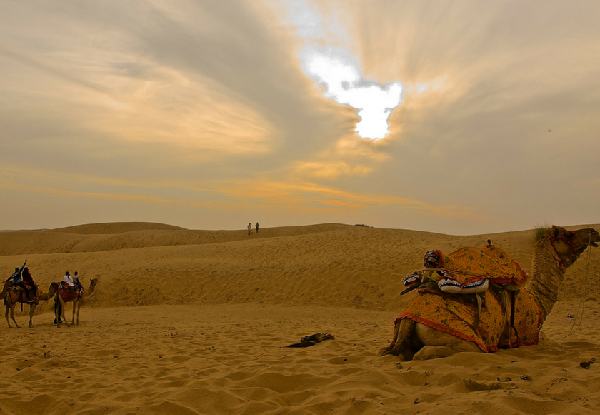
The most memorable meal for many guests is not in the city at all, but on the dunes. On our overnight camel safari, priced at Rs.2,500 plus tax per adult, the cook prepares a vegetarian dinner over an open fire on the sand, with lentils, seasonal vegetables, rice and flatbread baked directly on hot embers. Guests are welcome to help roll and cook their own bread, and the meal ends with sweet spiced tea under the stars. Breakfast the next morning comes with fresh tea and fried snacks before the ride back.
Special dietary needs are easy to arrange in Jaisalmer if you speak up early. Jain meals without onion, garlic and root vegetables, vegan food without dairy, and non-vegetarian dishes on desert nights can be prepared with advance notice. Message Sawai Dan on WhatsApp at +91-8769424955 with your food preferences when you book, and the team will tell you exactly what will be served on each meal of your trip.