Kuldhara Village – An Unspoken Story of Bygone Time
Overview
Deep in the silence of the Thar Desert, not far from the golden glow of Jaisalmer, lies a place where time seems to have stopped. A place where walls still stand, but voices are gone. A place where stories exist, but answers do not. This is Kuldhara Village, one of the most mysterious and talked-about abandoned settlements in Rajasthan.
Unlike other historical sites that celebrate glory and architecture, Kuldhara carries an entirely different identity. It is not just a destination; it is an experience filled with unanswered questions, folklore, and a haunting sense of absence. Walking through its ruins feels like stepping into a story that was never completed.
The Silence That Speaks – First Impressions of Kuldhara
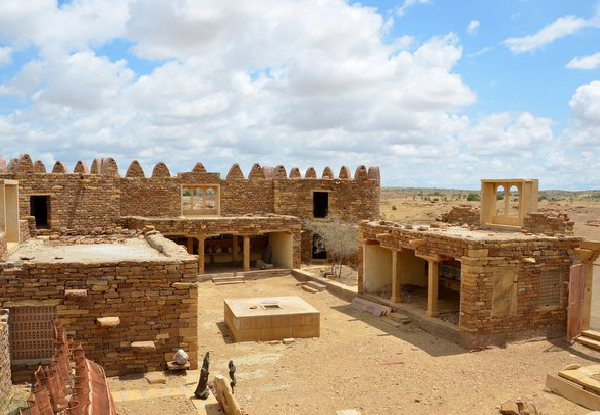
The moment you arrive at Kuldhara Village Jaisalmer, the first thing you notice is the silence. It is not the peaceful silence of nature but a heavy stillness that feels almost unnatural. The village is spread across a wide desert area, with rows of abandoned houses made from sandstone, all standing without roofs, without doors, and without life.
Unlike ruins that are destroyed over time, Kuldhara appears frozen. The layout of the village is still visible, with streets, homes, and structures arranged in an organised pattern. It feels as if the people left suddenly, leaving everything behind.
There are no signs of rebuilding, no signs of habitation, and no clear explanation that satisfies the curiosity of visitors. This absence of closure is what makes Kuldhara different from any other historical place in Rajasthan.
Step Into the Mystery of Kuldhara
Step Into the Mystery of Kuldhara
Discover the haunting beauty and untold stories of Kuldhara Village. Walk through its silent streets.
The Legend Behind the Abandonment of Kuldhara
The most widely told story about Kuldhara revolves around the Paliwal Brahmins, a prosperous community that once lived in this region. According to local folklore, Kuldhara was not just a single village but part of a larger group of settlements inhabited by this community.
The story suggests that a powerful minister, often referred to as Salim Singh, developed an interest in a young girl from the village. His intentions were not honourable, and he used his authority to pressure the villagers into agreeing to his demands.
Faced with a situation that threatened their dignity and values, the entire community made a collective decision. Instead of surrendering, they chose to leave. It is believed that overnight, all the residents of Kuldhara and surrounding villages abandoned their homes and disappeared into the desert.
Before leaving, the villagers are said to have cursed the land, declaring that no one would ever be able to settle there again. This story, passed down through generations, forms the foundation of Kuldhara’s haunted reputation.
Is Kuldhara Really Haunted or Just Misunderstood History?
The idea of Kuldhara being haunted is deeply rooted in local belief systems. Many visitors and even locals claim to have experienced unusual sensations while walking through the village. Some speak of hearing faint sounds, while others describe a strange energy that makes them uneasy.
However, there is no scientific evidence that proves the presence of paranormal activity. The haunting atmosphere can also be explained by the environment itself. The open desert, the absence of sound, and the visual emptiness create a psychological effect that can make the place feel eerie.
What makes Kuldhara truly mysterious is not whether it is haunted but the fact that its story remains incomplete. The lack of concrete historical records leaves room for interpretation, allowing folklore and imagination to fill the gaps.
This blend of history and mystery is what continues to attract travellers to Kuldhara ghost village.
Connection Between Kuldhara and Lodurva – A Deeper Historical Layer
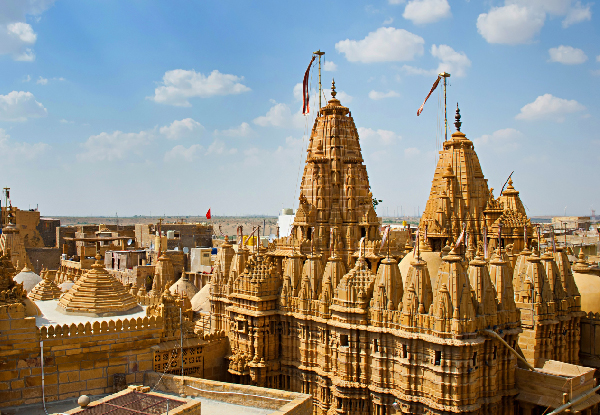
While Kuldhara is known for its mysterious abandonment, nearby Lodurva offers another layer of history that helps complete the story of this region. Lodurva was once the capital of the Bhatti dynasty before Jaisalmer was established.
The presence of ancient temples and ruins in Lodurva indicates that this region was once a thriving centre of culture and trade. It was located along important desert trade routes, which made it both prosperous and vulnerable to invasions.
Understanding Lodurva provides context to Kuldhara’s story. It shows how this part of Rajasthan evolved over time, shifting from trade hubs to abandoned settlements due to changing political and social conditions.
The Love Story of Mumal and Mahendra – Romance in the Desert
Among all the stories associated with this region, the tale of Princess Mumal and Mahendra stands out as one of the most emotional and enduring legends. This story is deeply connected to Lodurva and adds a human dimension to the history of the desert.
Mumal, known for her extraordinary beauty, lived in a palace called Kak Mahal. Her charm was so renowned that it attracted suitors from distant regions. Among them was Mahendra, a prince who fell deeply in love with her.
Their story, however, did not have a happy ending. Misunderstandings and circumstances led to separation and tragedy, turning their love into a tale of longing and loss. The ruins of the palace still exist, standing as a silent witness to this story.
This legend is still remembered in Rajasthani folklore, songs, and art, showing how deeply it is embedded in the cultural memory of the region.
A Silent Tale Buried in the Sands of Time
Hidden in the heart of the Thar Desert, Kuldhara Village stands as a haunting reminder of a once-thriving community that vanished overnight.
Architectural Remains – What the Ruins Reveal
The structures in Kuldhara are not random ruins but carefully planned constructions that reflect the lifestyle of its former residents. The houses are built using local sandstone, designed to withstand extreme desert conditions.
Each house follows a similar layout, with rooms arranged around open courtyards. This design allowed for ventilation and temperature control, making the interiors more comfortable.
The streets are aligned in a grid-like pattern, indicating organised urban planning. This suggests that the village was once a well-developed settlement with a strong sense of community.
Even in its abandoned state, the architecture of Kuldhara speaks of its past prosperity and the skills of its inhabitants.
Why No One Settles in Kuldhara Today
One of the most intriguing aspects of Kuldhara is that it remains uninhabited even today. Despite its location and potential, no one has successfully settled in the village.
Some attribute this to the curse mentioned in the folklore, while others believe it is due to practical reasons such as lack of water and harsh living conditions. The desert environment itself makes long-term settlement difficult.
However, the psychological impact of the village’s history also plays a role. The stories associated with Kuldhara create a perception that discourages habitation, reinforcing its abandoned status.
Experiencing Kuldhara Today – What Travellers Feel
Visiting Kuldhara Village Jaisalmer today is less about sightseeing and more about experiencing a story. The atmosphere of the place changes depending on the time of day. During daylight, the ruins appear calm and historical. As evening approaches, the same place begins to feel more mysterious.
Walking through the empty streets, observing the broken walls, and imagining the lives that once existed there creates a unique emotional experience. It is not a place filled with activity but one filled with imagination.
For many travellers, Kuldhara becomes one of the most memorable parts of their Jaisalmer journey, not because of what is visible but because of what is missing.
Why Kuldhara Remains One of the Most Fascinating Places in Rajasthan
Kuldhara stands apart from other destinations because it does not offer clear answers. It invites curiosity, interpretation, and imagination. Whether you believe in its haunted stories or see it as a historical mystery, the village leaves a lasting impression.
It represents a moment in time where an entire community chose to disappear rather than compromise their values. This decision, whether fully accurate or partly symbolic, adds depth to its story.
The combination of history, folklore, architecture, and mystery makes Kuldhara Village one of the most fascinating places to visit in Rajasthan.