Jaisalmer Village Experience: A Day in Real Thar Desert Life
Overview
Jaisalmer's golden fort and carved mansions draw the crowds, but the life that built them lies a short drive away, in the villages scattered across the Thar. Here families still plaster their walls with clay and dung, draw water from deep wells and community tanks, grow pearl millet on the rare rains and keep camels, goats and cattle on land that looks almost empty from the road.
A Jaisalmer village experience is a chance to spend unhurried hours inside that world rather than just photographing it through a car window. You can sit in a courtyard while flatbread is cooked on a clay stove, walk with a herder to a water point, watch a woman stitch mirror work onto a quilt or listen to musicians whose families have sung desert ballads for centuries.
This guide sets out what village life looks like today, how a full day usually runs hour by hour, what you will eat, where the water comes from, which crafts you can see, what a fair price looks like and which villages around Jaisalmer are worth your time. It is written for travellers who want a real day in Thar desert village life, not a staged show.
What a Desert Village Looks Like Today
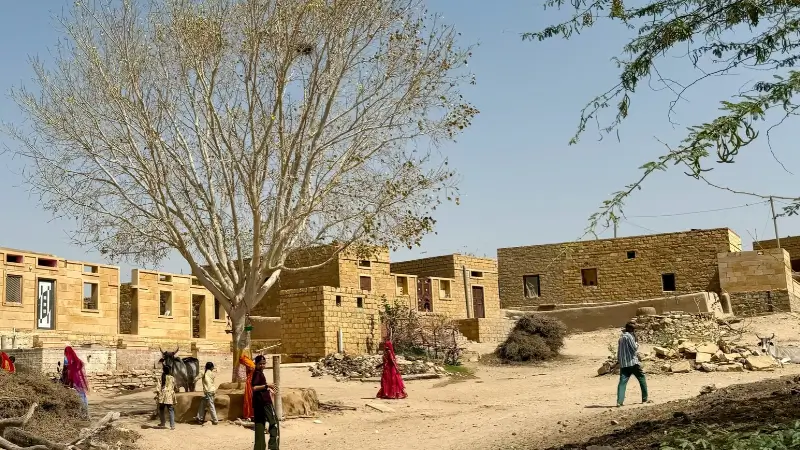
The first surprise for most visitors is that a desert village is not a single cluster of houses. Many settlements around Jaisalmer are spread out as small family hamlets, each a few hundred metres from the next, with sand tracks linking them. A typical home sits inside a low boundary wall made of stone or thorny branches.
Inside are two or three buildings: a rectangular room built of local yellow stone or mud brick, a round hut with a conical thatched roof, and a separate kitchen space. The walls are coated with a mix of clay and cow dung, which keeps the interior cool in summer and warm in winter. Women redo this plaster regularly and often decorate it with simple white patterns around the doorway. Floors are packed earth, swept clean every morning. Furniture is minimal: rope cots used for sitting by day and sleeping by night, a few steel trunks for clothes and bedding, and shelves cut into the walls for utensils. Yet modern life is very present.
Small solar panels sit on many roofs, powering a light bulb, a fan and phone charging. Motorbikes are parked beside camel carts. Young people check their phones, and many villages now have a school, a small shop selling biscuits and soap, and a mobile tower within range. A Jaisalmer village tour shows this mix honestly: an ancient way of building and farming side by side with water tankers, satellite dishes and children in school uniforms.
Livestock is at the heart of daily life. Families keep goats and sheep for milk, meat and wool, cows for milk and dung, and camels for transport, ploughing and occasionally for hire to safari operators. The animals are usually brought back to an enclosure inside or beside the compound at night. Around the homes you will see small fields fenced with thorny brush. In the monsoon these are sown with pearl millet, cluster beans and moth beans. For most of the year they lie dry and sandy. Trees are few but precious, especially the hardy thorny trees whose pods and leaves feed goats and whose branches provide shade at noon.
Many villages also have a shrine to a local folk deity or saint, a community water tank and an open ground where men gather in the evening. Visiting these places with a guide from the area helps you see the logic behind every wall, tree and pond, and turns what first looks like a bare landscape into a carefully managed home.
Discover the Authentic Soul of Rural Rajasthan
Go beyond Jaisalmer’s famous landmarks and experience the charm of traditional Rajasthani village life. Discover local customs, cultural traditions, and the warmth of rural communities with Real Desert Man Safari. Make your journey more meaningful with an authentic village experience.
WhatsApp Now Contact Us
A Full Day in the Village, Hour by Hour
A full village safari in Jaisalmer usually begins early to make the most of the cool morning. Pickup from your hotel is typically at 8:00 am. The jeep heads out of the city towards villages on the Sam or Khuri side, a drive of 35 to 60 minutes. Some itineraries stop first at Kuldhara, the abandoned settlement about 18 kilometres from Jaisalmer, so that you see a village that was emptied before you visit one that is very much alive. Around 9:00 to 9:30 am you arrive at the first hamlet.
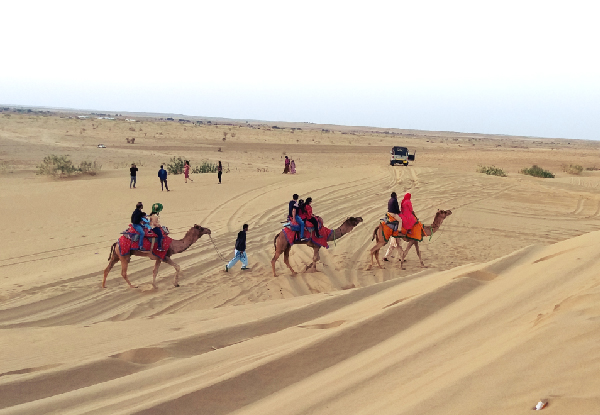
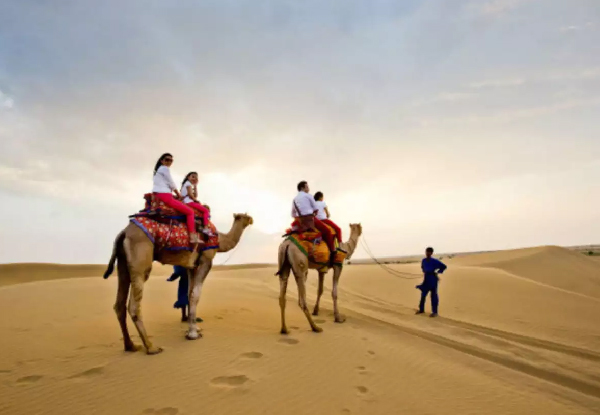
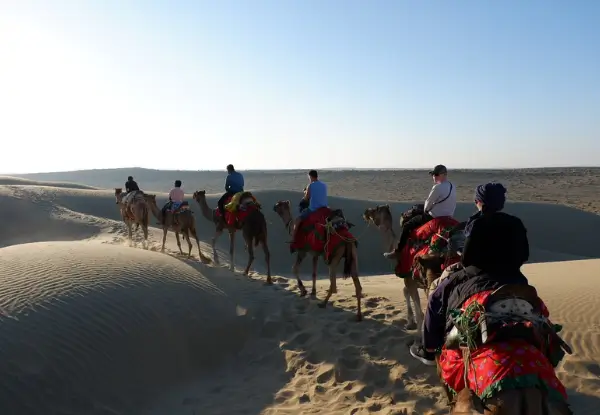
The host family usually offers a cup of sweet spiced tea and a seat on a rope cot in the courtyard. This first hour is the most interesting: women are finishing morning chores, children are leaving for school, and men are taking animals out to graze. Your guide will introduce you, translate questions and explain what you are seeing. Between 10:00 am and noon, you walk or ride a camel to nearby points of interest. This might be the village well or water tank, a field where millet is being harvested in October, a potter's yard, or a grazing ground where a herder is watching goats. Many operators include a camel ride of 45 to 60 minutes during this stretch, since camels move easily across sandy tracks between hamlets. Lunch is the highlight for most visitors and is usually served between 12:30 and 1:30 pm. It is cooked by the host family over a clay stove and eaten in the shade of a tree or inside a cool room.
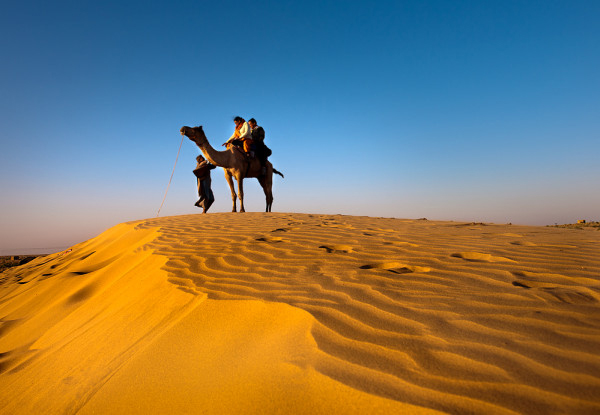
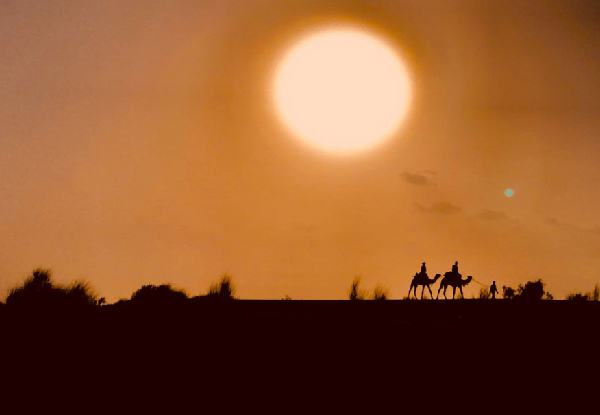
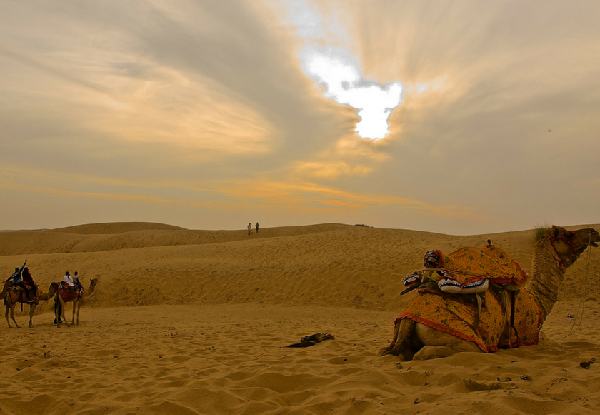
After lunch the village slows down. In winter the sun is pleasant and people sit outside talking or mending. In warmer months everyone rests until about 3:30 pm. This is a good time to watch craftwork, such as embroidery, rope-making or leather stitching, or simply to rest yourself. From 3:30 to 5:30 pm, you may visit a second hamlet, a local shrine, or ride camels to a dune for sunset. In winter the sun sets around 5:45 to 6:15 pm, and the light over fields and mud houses at this hour is beautiful. Day trips return to the city by 7:00 to 7:30 pm. Many travellers combine the village day with a night on the dunes and return the next morning around 10:30 or 11:00 am. A shorter half-day version, running from 2:00 pm to about 7:00 pm, is also common and suits those with limited time.
Food Cooked the Village Way
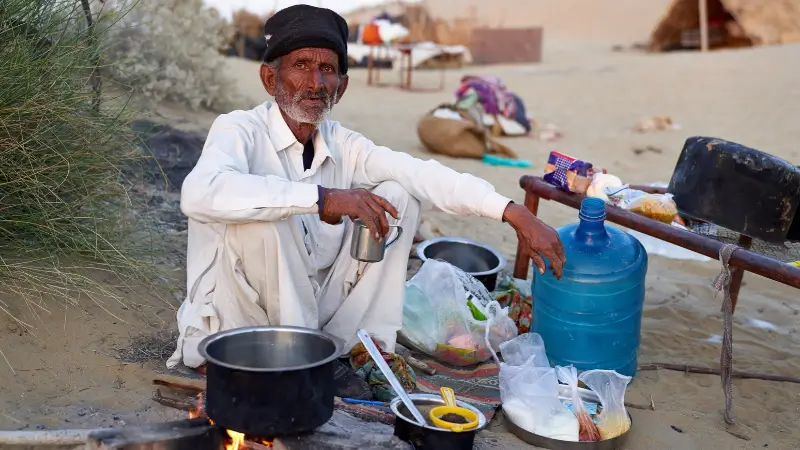
Food is where a village experience in Jaisalmer feels most personal. Desert cooking grew out of scarcity: little water, few fresh vegetables and long, hot summers. The result is a cuisine that relies on grains, pulses, dairy and dried ingredients, and it is far tastier than that description suggests. The staple is flatbread made from pearl millet flour. It is mixed with water, patted between the palms into a thick round and baked on a clay griddle over a wood or dung fire.
Millet bread is heavier and nuttier than wheat bread and keeps people full through long working days. In winter it is often eaten with a dollop of white butter and a lump of jaggery. Lentils are cooked slowly in heavy pots with chillies, garlic and a few spices. Buttermilk, made by churning yoghurt and water, is drunk with almost every meal and is the best thing you can have on a hot day. One of the signature dishes of the desert is a dry curry of wild desert beans and small berries gathered from local trees and shrubs, dried in the sun and stored for the whole year. It has a tangy, slightly sour flavour and pairs well with millet bread. Gram flour dumplings in a yoghurt gravy are another favourite, as are spicy fritters during the cooler months. Vegetables such as cluster beans, okra and bottle gourd appear when available, and tinned or packed goods from the village shop fill the gaps. Most rural families around Jaisalmer are vegetarian at home, although some herding families eat goat meat on special occasions.
Sweets are simple: a coarse wheat or millet porridge cooked with jaggery and clarified butter, or a crumbly sweet made from flour and sugar. Meals are eaten seated on the floor or on rope cots, using the right hand to tear bread and scoop up curry. Guests are usually given a steel plate and offered second and third helpings; it is polite to accept a little more and then firmly say you are full. Many hosts will happily let you try rolling and baking a flatbread yourself, which always leads to laughter. If you have allergies or cannot eat spicy food, tell your guide before the day begins so the host can adjust the meal. Drinking water is a sensitive point. Hosts will offer water from their pots, which is usually from a well or tank. Unless you are used to local water, politely carry your own bottle, which your operator should provide.
Water, Wells and the Daily Work of Survival
Nothing explains desert life better than water. Jaisalmer district receives very little rain, often less than 200 millimetres in a year and sometimes far less, and it comes in a few short monsoon weeks. For centuries, every village was laid out around how to catch, store and share that water. On a Thar desert village tour you will see several systems still in use.
The most common is the village pond, a natural depression where rainwater collects. Its catchment area is kept clean, and people and animals draw from it for months after the monsoon. Many households also have an underground rainwater tank: a round, plastered pit with a domed cover, built in a courtyard or field where water runs off a hard surface. These tanks can hold enough drinking water for a family for much of the year. Deep wells are the third source. In some areas groundwater lies 50 to 100 metres down and can be salty, so wells with sweet water are precious and shared.
Older villages have wells with stone platforms and pulleys where camels or oxen once pulled up heavy leather buckets; today electric or diesel pumps have largely replaced them, but the structures remain. Since the arrival of the canal network in parts of western Rajasthan, some villages now receive piped water or regular tankers, and new farming has spread where canal water reaches.
Yet in many hamlets around Jaisalmer, women and girls still carry water in metal pots balanced on their heads, sometimes walking a kilometre or more. Watching this, and perhaps trying to lift a full pot yourself, gives a sense of how hard daily life can be. Water shapes everything else too. Bathing uses very little water, often a single bucket. Dishes are scrubbed with sand or ash before a quick rinse. Animals are watered at troughs beside the pond or well at fixed times. Fields are sown only after good rain, and in drought years families depend more heavily on their herds and on work in the city.
Asking your guide or host about these systems is one of the most rewarding parts of the day. Many older villagers can tell stories of droughts, of walking miles to fetch water and of the first time a pipeline or canal arrived. As a visitor, the best way to respect this is to use water sparingly while you are there, carry your own drinking water and never waste what is offered.
Experience the Real Rajasthan Beyond the Tourist Trail
Discover a different side of Jaisalmer through its traditional villages, local lifestyles, and rich cultural heritage. Connect with the region’s traditions and enjoy a memorable experience beyond ordinary sightseeing.
WhatsApp Now Contact Us
Crafts, Music and the People Behind Them
Villages around Jaisalmer are home to some of the most skilled craftspeople and musicians in Rajasthan, and a good rural tourism experience in Rajasthan lets you meet them in their own homes rather than in a shop. Embroidery is everywhere. Women stitch bold patterns in red, orange, yellow and black thread onto cotton, adding small round mirrors that catch the light. These pieces become quilts, cushion covers, wall hangings and the backs of blouses.
A large hand-stitched quilt can take several weeks to finish. If you see one you like, ask the price directly; a fine quilt may cost anywhere from Rs.3,000 to Rs.12,000 depending on size and detail, and buying from the maker means the full amount stays in the family. Patchwork quilts made from old fabric are another speciality and are usually cheaper.
Leatherwork is practised by certain families, who make camel saddles, water bags, sandals and decorated pouches. Potters shape storage jars, water pots and cooking vessels from local clay and fire them in simple kilns. Rope-making from goat hair and plant fibre is still common, and you may see an older man twisting rope by hand while chatting. Wool from sheep and camels is spun into thick yarn and woven into blankets and rugs. Music is just as important.
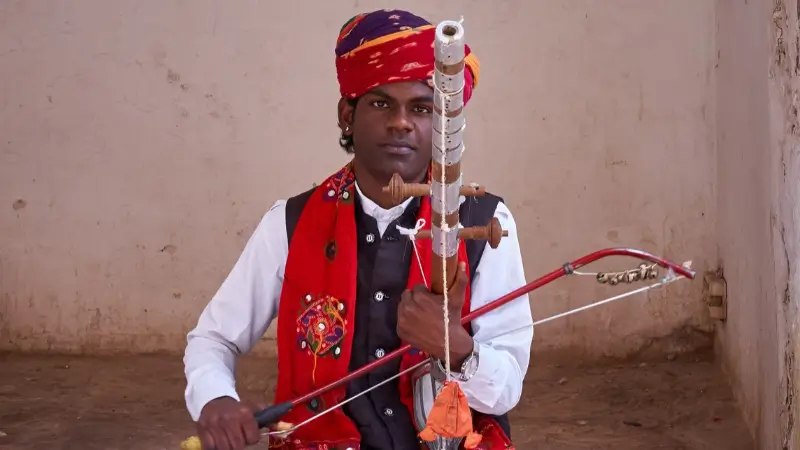
The desert has hereditary musician communities who have performed for patrons for generations, singing long ballads of love, heroism and devotion. Their instruments include bowed string fiddles, plucked strings, small hand clappers made of wood, and drums. Hearing them in a village courtyard, with no microphone and a small audience, is very different from a show at a big camp.
The famous musical village tour offered by some Jaisalmer operators takes guests to such a family for a session followed by lunch with the musicians. Expect a contribution of Rs.1,000 to Rs.2,500 per group for a private performance, usually included in the package.
Folk dancers, especially women from snake-charming communities, are known for spinning dances in black skirts embroidered with silver. In villages these performances are often linked to weddings and festivals rather than tourism. If you are lucky enough to be invited to a wedding or fair, accept with gratitude and follow your host's lead. Whatever you watch, give credit where it is due. Ask names, buy directly where possible and resist the urge to bargain hard over a few rupees with an artisan who may have spent days on a single piece.
Costs, Etiquette and Fair Payment
A Jaisalmer village tour is usually sold either as a half day, a full day or as part of a combined desert package. Prices vary with group size, transport and whether a camel ride is included. A half-day village visit by jeep, from 2:00 pm to about 7:00 pm with tea, a village walk and a sunset stop, generally costs Rs.2,500 to Rs.4,000 per person. A full day with a camel ride, home-cooked lunch, craft visits and transfers costs roughly Rs.3,500 to Rs.5,500 per person.
A private jeep with driver for a full day of village hopping, booked separately, runs from Rs.3,500 to Rs.5,000 per vehicle, excluding meals and contributions to families. Combined packages with a village day and an overnight desert camp typically fall between Rs.7,000 and Rs.9,500 per person for two nights, with luxury tents at the higher end. Kuldhara and Khaba charge small entry and vehicle fees, together usually under Rs.200 per car for two people. Most quotes add five percent tax. Where does the money go? Ask your operator how host families are paid. A fair arrangement gives the family a set fee for hosting and cooking, often Rs.500 to Rs.1,500 per group, plus the full price of any craft you buy.
Avoid tours that rush you from house to house without any payment to the hosts. Etiquette matters as much as money. Dress modestly, covering shoulders and knees. Remove shoes before entering a home or kitchen. Use your right hand to eat and to give or receive things. Ask before taking photographs, especially of women, and accept a no with a smile.
Do not hand out sweets, pens or money to children, as this encourages begging; if you want to help, ask your operator about donating to a school or water project. Keep your voice low in homes and near shrines. Accept tea when offered, even if you drink only a little. Avoid public displays of affection, which are uncomfortable for many rural families. If you would like to give a gift to your hosts, practical items such as a good torch, a solar lamp or school supplies for the family's children are better received than cash pressed into someone's hand. Most importantly, give time. The best village days are slow, with room to sit, talk and simply watch. Rushing to fit five villages into one afternoon leaves you with photographs but no real sense of the place.
Villages Worth Visiting Around Jaisalmer
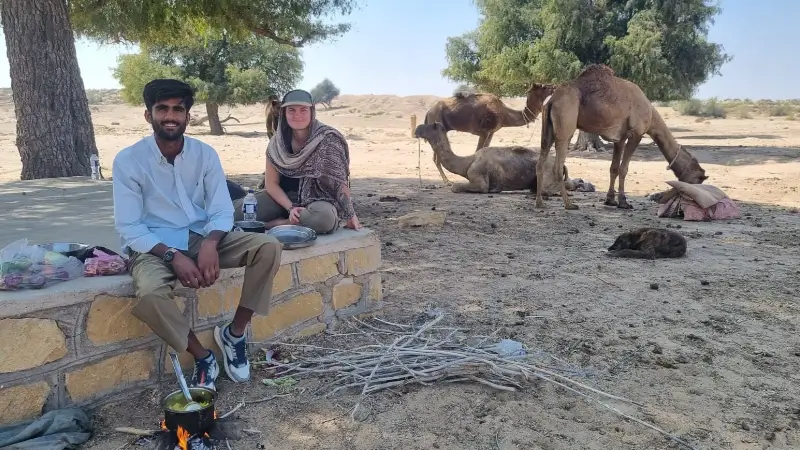
Several villages and settlements around Jaisalmer make good bases for a day, and each offers something slightly different. Kuldhara, about 18 kilometres southwest of the city, is the best-known abandoned village in Rajasthan. According to local history, the families who lived here left the settlement overnight a few centuries ago, and its roofless stone houses, lanes and temple remain. It is a quiet, atmospheric stop that sets the scene before visiting a living village.
Visit in the morning or late afternoon, since there is little shade at noon. Khaba, a little further on, has a small fort on a ridge with a museum and wide views over the ruined village below, and it attracts fewer visitors than Kuldhara. Kanoi and Damodara lie along the road towards Sam and are surrounded by smaller dunes. They are popular starting points for camel rides and offer a good mix of herding and farming families.
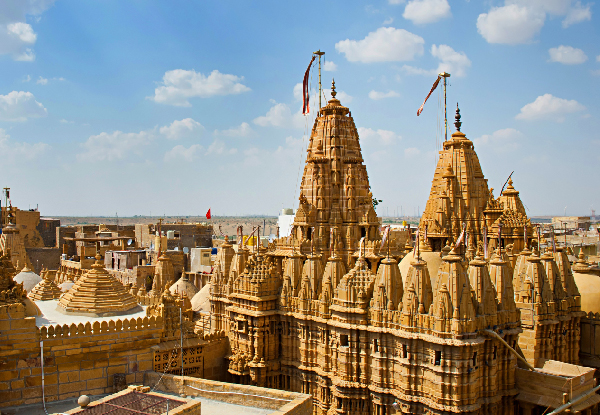
Khuri, about 45 to 50 kilometres southwest of Jaisalmer, is a larger village known for its round mud houses with thatched roofs, decorated walls and nearby dunes. The main dune ridge has camps, but the old part of the village remains traditional and welcoming. Lodurva, about 15 kilometres northwest of the city, was the old capital of the region before Jaisalmer was founded. Its beautifully carved Jain temple, rebuilt in yellow sandstone, is worth a visit; entry is free or nominal, with a small fee for cameras.
The surrounding fields and hamlets give a gentle introduction to rural life. Amar Sagar, about seven kilometres from the city, combines a reservoir, a temple and a small settlement and is often added to a half-day trip. Further afield, villages towards the Desert National Park offer a chance to see wildlife such as chinkara gazelles and desert birds, though some areas require permits and longer drives.
Your operator will suggest the best combination for the season. In October, after the monsoon, fields near Khuri and Kanoi may be golden with millet ready for harvest. In winter, the cooler weather suits long walks and extended camel rides. In spring, festivals and weddings are common, which can mean music, colour and an unexpected invitation.
The most important thing is not how many villages you see but how much time you spend in each one. Two well-chosen hamlets, a long lunch and a sunset on a nearby dune will tell you more about the Thar than a rapid tour of six.